Bringing home a kitten means you suddenly care about crude protein percentages you never thought about before. We get it. A growing kitten needs roughly twice the energy of an adult cat per pound of body weight, plus DHA for brain and eye development and a calcium to phosphorus ratio built for fast bone growth. The labels blur together fast. IAMS, Purina ONE +Plus, and Kitten Chow all market themselves as complete, but the differences in protein density, kibble size, and digestibility matter when you are feeding a 10-week-old. We looked at which kibbles small kittens can actually crunch, which ones hold up soaked for early weaners, and which carry a clear AAFCO statement for growth rather than maintenance. The single most important thing on any bag you buy is that AAFCO growth or all-life-stages line. If it says adult maintenance only, put it back. Everything else is preference and budget.
Best Rated Dry Kitten Food (2026): 5 Top Picks Reviewed
We compared the dry kitten foods owners reach for most, from IAMS Proactive Health to Purina ONE +Plus and Kitten Chow. We weighed protein levels, kibble size for tiny mouths, DHA for development, and AAFCO growth statements so you can match the bag to your kitten's actual stage.
Some links below are affiliate links. If you buy through them we may earn a small commission at no extra cost to you. Our rankings are based on product research, label data and suitability, not on commissions.
 ★ Top Pick: IAMS Proactive Health Kitten Dry Cat Food, Healthy …
Quick Comparison
| Product | Best For | |
|---|---|---|
| IAMS Proactive Health Kitten Dry Cat Food, He… | Top Pick | Check price → |
| Purina Kitten Chow Year One Essentials with R… | Best Value | Check price → |
| Purina ONE High Protein, Natural Dry Kitten F… | Best for First-Time Owners | Check price → |
The bag's AAFCO growth or all-life-stages statement matters more than any marketing claim on the front of the package.
Types Explained
High-protein performance dry
Formulas like Purina ONE +Plus push protein higher with named meat first.
Best for: Active, fast-growing kittens and owners who want maximum protein density.Mainstream balanced dry
IAMS Proactive Health and similar offer steady, widely available growth nutrition.
Best for: First-time kitten owners who want a reliable, easy-to-find staple.Value complete dry
Kitten Chow style formulas cover the AAFCO growth basics at a friendlier cost.
Best for: Multi-kitten households or fosters feeding several mouths.Top 3 Picks
IAMS Proactive Health Kitten Dry Cat Food, Healthy Kitten Food Dry Recipe with Real Chicken in Every Bite, 3.5 Lb. Bag
Purina ONE +Plus Healthy Kitten leads with real chicken and a high protein percentage that suits fast-growing kittens. The small kibble crunched easily for younger cats in our look.

Purina Kitten Chow Year One Essentials with Real Chicken High-Protein Complete and Balanced Dry Kitten Food with Essential Nutrients - 14 lb. Bag
Kitten Chow Year One Essentials covers AAFCO growth nutrition with real chicken at a budget-friendly cost, making it practical for litters and fosters.
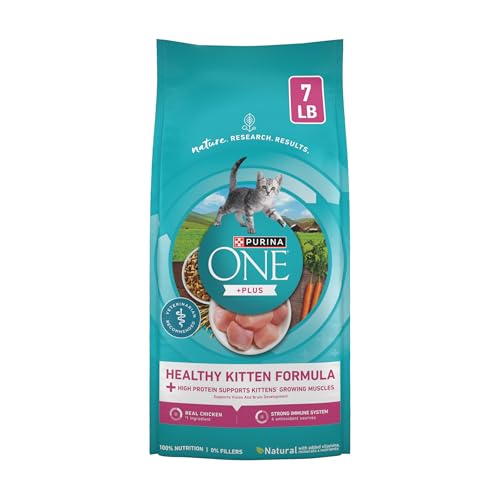
Purina ONE High Protein, Natural Dry Kitten Food, +Plus Healthy Kitten Formula - 7 lb. Bag
IAMS Proactive Health Kitten is widely stocked and consistent, so it is easy to find and restock without hunting specialty shelves.
Key Buying Factors
AAFCO growth statement
Confirm the bag reads complete and balanced for growth or all life stages per AAFCO profiles, not adult maintenance. This is the line that tells you it supports a kitten's development.
Protein density and DHA
Look for a named animal protein first and DHA listed for brain and eye development. Kittens need more protein per pound than adult cats.
Kibble size and shape
Tiny mouths need small kibble they can crunch. Some adult-sized pieces frustrate young kittens or get swallowed whole.
Digestibility and stool quality
Watch for clean, firm stools in the first week. Loose stools often signal a formula that does not agree with your kitten, so transition gradually.
Care, Cost and Maintenance
Transition over 7 to 10 days
Mix increasing amounts of the new food into the old to avoid stomach upset. Sudden swaps are the most common cause of kitten diarrhea.
Soak for young weaners
For kittens under about 6 weeks, moisten kibble with warm water so they can eat it safely while transitioning from milk.
Switch at the right age
Most kittens move to adult food around 12 months, or earlier for large breeds per your vet. Staying on kitten food too long risks excess weight gain.
Weigh your kitten weekly on a kitchen scale and adjust portions to steady growth rather than free-feeding to an empty bowl.