Tap water carries chlorine, chloramine, heavy metals, and dissolved solids that wreck sensitive aquarium chemistry, which is why serious reef and planted-tank keepers run reverse osmosis. We compared RO and RO/DI systems sized for home aquariums, focusing on how clean the output is and how manageable the system is to install and maintain. In our evaluation we looked at stage count, whether the unit adds deionization for near-zero total dissolved solids, production rate, and the practicality of cartridge changes. We weighed manufacturer specs against aggregated owner feedback on fitting leaks and membrane longevity. What we like is matching purity to your livestock, since a 4-stage RO/DI is the standard for reef and shrimp tanks while a simpler RO unit can suffice for hardier setups. Always test output with a TDS meter to confirm the system performs as rated.
Best Reverse Osmosis System For Aquarium (2026): 5 Top Picks Reviewed
We compared reverse osmosis systems built for aquariums on stage count, purity output, and ease of setup for reef and planted tanks. Our picks deliver the clean water that sensitive livestock and fine-tuned chemistry depend on.
Some links below are affiliate links. If you buy through them we may earn a small commission at no extra cost to you. Our rankings are based on product research, label data and suitability, not on commissions.
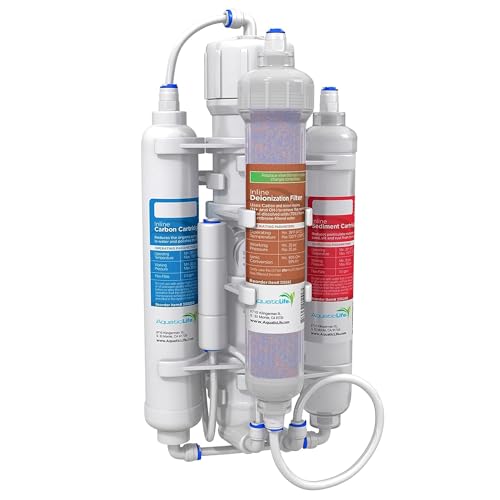 ★ Top Pick: Aquatic Life RO Buddie 4-Stage Aquarium Water Filte…
Quick Comparison
| Product | Best For | |
|---|---|---|
| Aquatic Life RO Buddie 4-Stage Aquarium Water… | Best Overall | Check price → |
| Aquatic Life Twist-in 4-Stage RO/DI Aquarium … | Best for Easy Maintenance | Check price → |
| 4-Stage Aquarium Reverse Osmosis System with … | Best Value | Check price → |
| Geekpure 4 Stage Portable Aquarium Reverse Os… | Best Budget | Check price → |
| iSpring RCC1D Tankless RO/DI System, 5 Stage … | Best Premium | Check price → |
The right system is the one whose output purity matches your livestock, since reef and shrimp tanks demand near-zero TDS from RO/DI while hardier setups tolerate simpler RO, and a TDS meter is the only way to confirm you are getting what you paid for.
Types Explained
4-stage RO/DI system
Combines reverse osmosis with deionization resin to drive total dissolved solids toward zero for sensitive tanks.
Best for: Reef tanks, shrimp tanks, and any setup needing near-zero TDS waterPortable 4-stage RO system
A compact reverse osmosis unit with a flushing valve, easy to move and connect for periodic water changes.
Best for: Renters and keepers who need a movable, store-away water sourceTankless multi-stage RO/DI
A higher-stage system with deionization that produces purified water on demand without a storage tank.
Best for: Larger tanks and frequent water changes where on-demand output helpsTop 5 Picks
Aquatic Life RO Buddie 4-Stage Aquarium Water Filter System, Reverse Osmosis RO/DI Filtration Unit for Fish Tank, Fountains, and More, 50 GPD (Gallons Per Day)
We like the Aquatic Life RO Buddie 4-Stage Aquarium Water Filter Systemstage system because it pairs reverse osmosis with DI capability in a compact, established design for aquarium use. In our evaluation its 4-stage RO/DI setup hits the purity reef and shrimp tanks need.
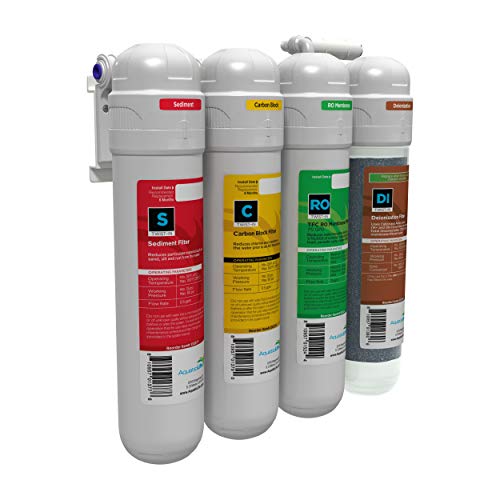
Aquatic Life Twist-in 4-Stage RO/DI Aquarium Water Filter System - Reverse Osmosis Filtration with Sediment, Carbon, Membrane & DI Resin - 75 GPD
We chose the Aquatic Life Twist-in 4-Stage RO/DI Aquarium Water Filter System - Reversestage RO/DI for its twist-in cartridges that make filter changes quick and clean. We like that the easy-access design lowers the hassle of routine media swaps.
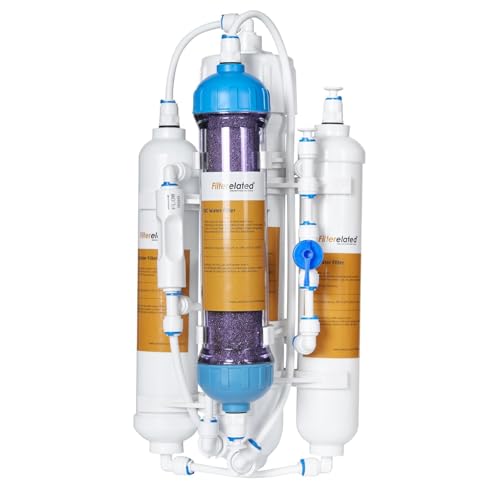
4-Stage Aquarium Reverse Osmosis System with Flushing Valve Portable RO+DI deionized Water Filtration,Colour Changing DI Filter,100 GPD-TDS Close to 0 ppm
We recommend this 4-stage RO/DI system for its flushing valve and portable build that extends membrane life and moves easily. Its deionization stage delivers the low TDS sensitive tanks require.

Geekpure 4 Stage Portable Aquarium Reverse Osmosis RO Drinking Water Filtration System 100 GPD - with DI Filter TDS Close to 0 ppm
We picked the Geekpure 4-stage portable RO system for delivering reverse osmosis filtration in a movable, store-away format. Its portable design suits keepers who need clean water without a permanent install.

iSpring RCC1D Tankless RO/DI System, 5 Stage De-ionization Reverse Osmosis Water Filter System, 150 GPD Tankless RO Water Filter System for Aquarium with DI Water Filter
We like the iSpring RCC1D tankless 5-stage RO/DI for adding deionization and on-demand output without a storage tank. Its extra stage and tankless design suit larger tanks and frequent water changes.
Key Buying Factors
Stage count and DI
More stages mean more contaminant removal. A 4-stage RO/DI adds a deionization resin for near-zero TDS, which reef and shrimp tanks need; a basic RO unit suits less sensitive setups.
Output purity (TDS)
The goal is to strip dissolved solids. RO alone leaves some TDS; RO/DI drives it toward zero. Verify with a handheld TDS meter, since membrane wear raises output readings over time.
Production rate
Gallons-per-day ratings tell you how long a water change batch takes. Higher output suits large tanks; a slower unit is fine for a nano tank but tests your patience on a big reef.
Cartridge and membrane access
You will replace prefilters and resin regularly. Twist-in or clearly accessible cartridges make maintenance quick, while fiddly housings turn a simple swap into a chore.
Fittings and leak resistance
Quick-connect fittings and quality tubing reduce the leaks that plague cheap systems. Secure connections matter since these run under household water pressure.
Footprint and mounting
Some units mount on a wall, others sit portable under a sink or in a stand. Match the size and format to where you will actually run and store the system.
Care, Cost and Maintenance
Test TDS regularly
Check output with a TDS meter after setup and periodically thereafter. A rising reading signals the membrane or DI resin is spent and needs replacing to protect sensitive livestock.
Flush and replace on schedule
Use the flushing valve where fitted and change prefilters, membrane, and DI resin per the manufacturer's interval. Spent media stops purifying and can foul output.
Remineralize when needed
Pure RO/DI water lacks minerals. For most tanks you must remineralize or buffer to the right parameters before use, since fish and inverts need stable, appropriate water chemistry.
Buy a cheap handheld TDS meter alongside the system and read your output from day one. It is the only reliable way to know your membrane and DI resin are still working before bad water reaches your tank.