Quick answer
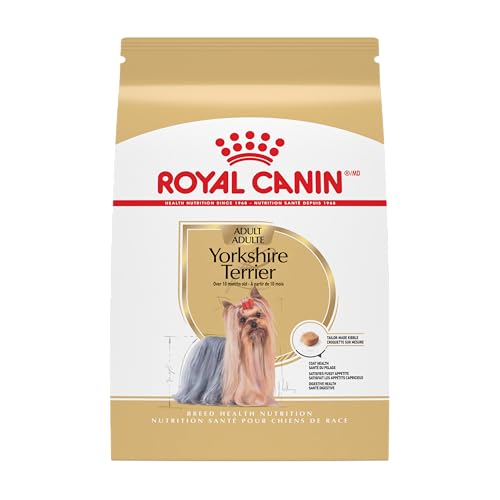
For most adult Yorkshire Terriers, our top overall pick is Royal Canin Yorkshire Terrier Adult Dry Dog Food. It is purpose-built for the breed with a tiny, easy-to-grab kibble shape, a calorie density that suits a toy dog’s fast metabolism, and a nutrient mix aimed at coat and skin support. If your Yorkie has a sensitive stomach, Hill’s Science Diet Small Paws Sensitive Stomach and Skin is a gentler choice. On a tighter budget, Diamond Naturals Small Breed Adult delivers a solid grain-inclusive recipe for less per pound, and for a Yorkie puppy, Royal Canin Small Puppy is formulated for the higher energy needs of small-breed growth.
Why Yorkies need the right food
The Yorkshire Terrier is a true toy breed, typically weighing around 4 to 7 pounds. That small size drives almost every feeding decision. Toy breeds have a fast metabolism relative to their body weight, so they need calorie-dense food in small portions, and very young or very small Yorkies can be prone to hypoglycemia (low blood sugar) if meals are skipped, which is why frequent small meals are often recommended for puppies.
Yorkies are also predisposed to dental disease. Their crowded little jaws trap plaque easily, so a kibble sized and shaped for a tiny mouth, fed alongside regular tooth brushing and veterinary dental care, helps. The breed is famous for its long, silky, hair-like coat, so diets that include named animal protein and omega fatty acids can support skin and coat condition. Some Yorkies have sensitive stomachs or food sensitivities, and the breed can be picky, so palatability and digestibility matter. Because they are small, even a little extra weight is a lot proportionally, making portion control and calorie awareness especially important for this breed.
What to look for in a Yorkie food
Start with a complete-and-balanced statement that the food meets AAFCO nutrient profiles for the right life stage (adult maintenance, growth, or all life stages). Look for a named animal protein as a leading ingredient, such as chicken, lamb, or salmon, rather than vague “meat” terms. Choose a small-breed or specifically Yorkie formula so the kibble size fits a toy mouth and the calorie density matches a small dog’s needs.
For coat and skin, omega-3 and omega-6 fatty acids (often from fish oil or named animal fats) are useful. If your Yorkie has a touchy stomach, look for a limited, highly digestible ingredient list, and consider added prebiotics. On the grain-free question, the FDA has investigated reports of canine DCM in dogs eating certain diets, especially some grain-free or legume-heavy formulas, and is still gathering information; we treat grain-inclusive diets as the safer default unless your vet advises otherwise. Finally, pick a brand with a transparent recall history and clear feeding guidance, and confirm the formula matches your dog’s life stage and body condition.
How we chose these foods
- We focused on small-breed and breed-specific formulas with a kibble size suited to a toy mouth like a Yorkie’s.
- We confirmed each food carries an AAFCO complete-and-balanced statement for the relevant life stage.
- We favored recipes that lead with a named animal protein rather than unnamed meat sources.
- We looked at calorie density, since toy breeds need concentrated nutrition in very small portions.
- We treated grain-inclusive recipes as the safer default given the ongoing FDA DCM investigation, and flagged grain-free options as a vet-guided choice only.
- We checked each brand’s public recall history and the clarity of its feeding and ingredient information.
- We compared using public label data and established nutrition principles rather than any personal endorsement.
- Never ranked a food higher just because it pays a commission.
Foods to avoid or feed with care
- Oversized large-breed kibble: hard for a tiny Yorkie mouth to chew and can discourage eating.
- Grain-free or legume-heavy diets fed by default: given the ongoing FDA DCM investigation, feed these only if your vet specifically advises it.
- Recipes built on unnamed “meat meal” or heavy fillers with little named animal protein.
- Foods loaded with added sugars, salt, or artificial dyes, which add no nutritional value for a small dog.
- Generic “all life stages” food for a tiny puppy without confirming it is appropriate, since puppies and hypoglycemia-prone Yorkies need careful feeding.
- Human foods that are toxic to dogs, including chocolate, grapes, raisins, onions, garlic, and xylitol-sweetened items.
For more, browse our dog food guides, our dog nutrition articles, and our dog health resources. Always confirm any major diet change with your own veterinarian, who knows your Yorkie’s history.


