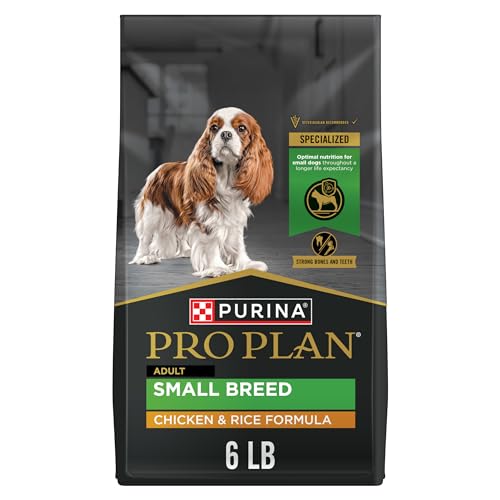
Quick answer
For most Cavalier King Charles Spaniels, our editorial team leans toward Royal Canin Cavalier King Charles Spaniel Adult Dry Dog Food as the top overall pick because it is purpose-shaped for the breed’s small jaw, carries an AAFCO complete and balanced statement for adult maintenance, and keeps calorie density and kibble size sensible for a 13 to 18 pound dog. If your Cavalier has a touchy gut, Hill’s Science Diet Small Paws Sensitive Stomach & Skin fits better. On a tight budget, Diamond Naturals Small Breed Adult is the value choice, while puppies and seniors have their own picks below. Always confirm any diet change with your veterinarian, especially given the breed’s known heart considerations.
What to consider for Dry Dog Food For Cavalier King Charles Spaniel
Cavaliers are a small toy breed, typically 13 to 18 pounds, with a few breed-specific traits that shape food choice. They are prone to obesity because they are food-motivated and not highly active, so portion control and a moderate calorie density matter a great deal. The breed also carries a well-documented predisposition to mitral valve disease, a heart condition, which means many owners and veterinarians prefer a complete and balanced diet that is not grain-free or legume-heavy unless a veterinarian advises otherwise. Dental crowding is common in small mouths, so a small kibble that encourages chewing helps. Their long, feathered coat and sometimes sensitive skin benefit from steady omega-3 and omega-6 levels. None of these traits are treated by food alone, so for any diagnosed condition, follow your veterinarian’s guidance.
What to look for in a dog food
Start with the label. Look for an AAFCO complete and balanced statement for the correct life stage, either “adult maintenance,” “growth,” or “all life stages,” and match it to your dog’s age. The first ingredient should be a named meat such as chicken, lamb, salmon, or turkey, not a vague “meat meal.” For an adult Cavalier, a practical target is roughly 22 to 28 percent protein and 12 to 16 percent fat on a dry-matter basis, with calorie density that lets you feed a satisfying portion without overfeeding. Because this is a small breed, choose a small-breed or small-bite formula so the kibble suits a small jaw and supports dental chewing. Omega-3 fatty acids, often from fish oil or flaxseed, support skin and coat, and many small-breed recipes include them. These are general guidelines, not medical rules, so adjust with your veterinarian for any health condition.
How we chose these picks
- We compared only foods that are currently sold and carry a clear AAFCO complete and balanced statement for a defined life stage.
- We prioritized recipes with a named meat as the first ingredient over generic “meat meal” labeling.
- We favored small-breed or small-bite kibble sizes appropriate for a Cavalier’s small jaw and dental crowding.
- We checked protein, fat, and calorie levels against practical ranges suitable for a small, obesity-prone breed.
- We noted omega-3 and omega-6 content for skin and coat support, which matters for the breed’s long feathered coat.
- We reviewed each brand’s public recall history and manufacturing transparency where available.
- We weighed real owner-reported trade-offs such as cost, palatability, and availability, and listed at least one honest con per pick.
- Never ranked a product higher just because it pays a commission.
What to avoid
- Foods that list only an unnamed “meat meal” as the protein source, with no named animal protein you can identify.
- Defaulting to grain-free or legume-heavy recipes. The FDA investigation into a potential link between certain diets and canine dilated cardiomyopathy is ongoing, and a grain-inclusive diet is the safer default unless your veterinarian advises otherwise, which is especially relevant for a breed with heart sensitivities.
- Feeding an all-life-stages food to a large-breed puppy, which has different calcium and growth needs. While Cavaliers are small, this is a general rule worth knowing if you have multiple dogs.
- Abrupt diet switches. Transition over 7 to 10 days by gradually mixing the new food in to reduce the chance of digestive upset.
For more breed and feeding help, browse our dog guides, our dog food section, and our dog nutrition resources.