Quick answer
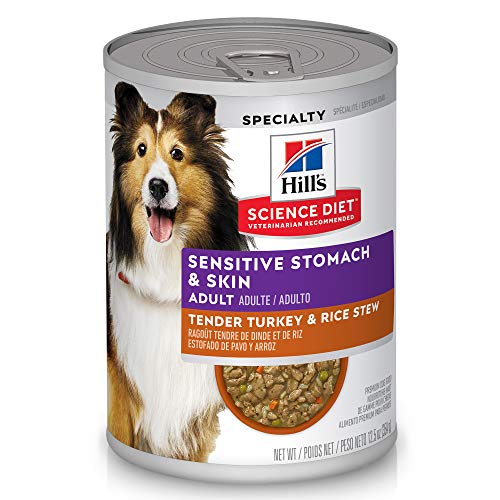
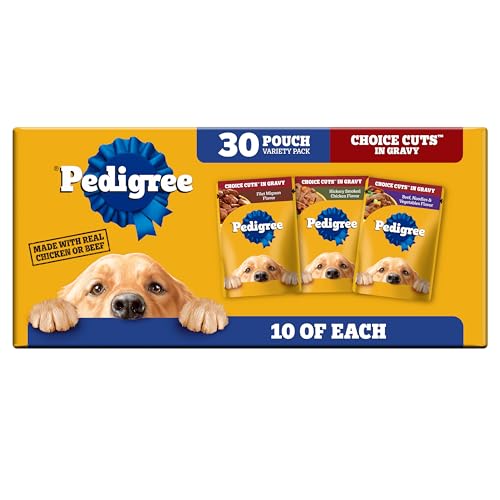
For most healthy adult Labradors, our top pick is Purina Pro Plan Complete Essentials Adult Chicken and Brown Rice Entree. It lists a named meat first, carries an AAFCO complete and balanced statement for adult maintenance, and pairs sensible protein with moderate calories, which suits a breed that tends to overeat and gain weight. If your Lab has a sensitive stomach, Hill’s Science Diet Adult Sensitive Stomach and Skin is a gentler choice. On a tight budget, Pedigree Choice Cuts in Gravy stretches further, while Royal Canin Labrador Retriever Adult Loaf is breed-tailored and Blue Buffalo Homestyle Recipe Adult offers a grain-inclusive recipe with no corn or wheat. Always confirm the right life stage and ask your veterinarian before changing diets for a dog with a medical condition.
What to consider for Wet Dog Food For Labrador
Labradors are one of the most weight-prone breeds, partly due to a documented genetic variant that increases appetite in many dogs, so calorie control matters more than for the average dog. Wet food is roughly 75 to 80 percent moisture, which means it is lower in calories per gram than kibble and can help a hungry Lab feel fuller, but it is also easy to over-serve if you go by volume rather than by the calorie content on the label.
Because adult Labs typically weigh 55 to 80 pounds and are active, joint health is a long-term concern. Many Labs carry hip and elbow dysplasia risk, so omega-3 fatty acids and added glucosamine or chondroitin can be a sensible supporting feature, though they are not a treatment for joint disease. Labradors are also enthusiastic, fast eaters prone to soft stools and food sensitivities, so a clearly named protein and a recognizable, limited ingredient list tend to sit better than vague mystery blends.
What to look for in a dog food
First, find the AAFCO complete and balanced statement on the label and confirm it matches your dog’s life stage. For an adult Lab, you want “adult maintenance” rather than “all life stages,” because all life stages food can be richer than a weight-prone adult needs.
Second, check that a named meat such as chicken, beef, lamb, or salmon is the first ingredient, not an unnamed “meat” or “animal” source. Third, look for sensible nutrition: for wet food on a dry matter basis, protein in the rough range of 25 to 40 percent and fat around 12 to 20 percent works for most active adult Labs, with calories typically near 350 to 500 per standard can. These are general ranges, not medical rules, and a dog with a health condition may need something different.
Fourth, confirm the food suits a large breed adult; some recipes are formulated specifically for large breeds. Finally, where relevant, value omega-3s and joint support like glucosamine and chondroitin, which may help support normal joint comfort but are not a cure. For any joint or weight concern, talk to your veterinarian first.
How we chose these picks
- We compared only products that are currently and widely sold for adult dogs from established brands with traceable manufacturing.
- We required an AAFCO complete and balanced statement for the appropriate life stage on each primary diet pick.
- We prioritized recipes that list a named meat as the first ingredient over vague protein sources.
- We favored sensible protein, fat, and calorie levels suited to a weight-prone, active large breed.
- We checked publicly available FDA recall and advisory history and avoided products with unresolved safety concerns.
- We weighed real owner-reported trade-offs such as stool quality, palatability, and value rather than marketing claims.
- We noted joint and omega support where the manufacturer documents it, without treating it as a medical treatment.
- Never ranked a product higher just because it pays a commission.
What to avoid
- Recipes that list only an unnamed “meat meal” or “animal by-product” as the protein source, with no named species.
- Defaulting to grain-free or legume-heavy recipes by habit. The FDA investigation into a potential link between certain grain-free diets and canine dilated cardiomyopathy is ongoing, and grain-inclusive food is the safer default unless your veterinarian advises otherwise for your specific dog.
- Feeding an “all life stages” formula to a large-breed Labrador puppy, since large-breed puppies need controlled calcium and calories that all life stages food may not provide.
- Abrupt diet switches. Transition over 7 to 10 days by gradually mixing old and new food to reduce the risk of stomach upset.
For more breed-specific advice, browse our dog guides, compare options in dog food, and read up on weight and joint topics in dog nutrition.