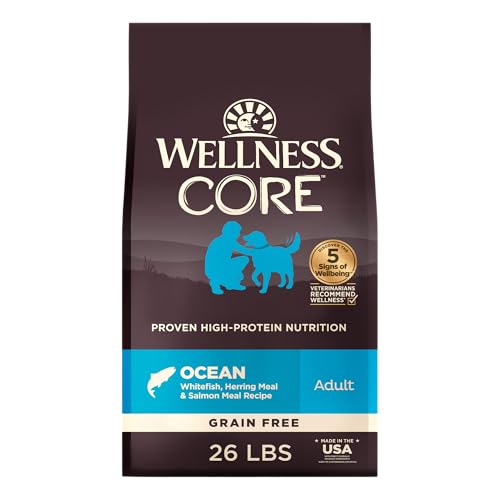
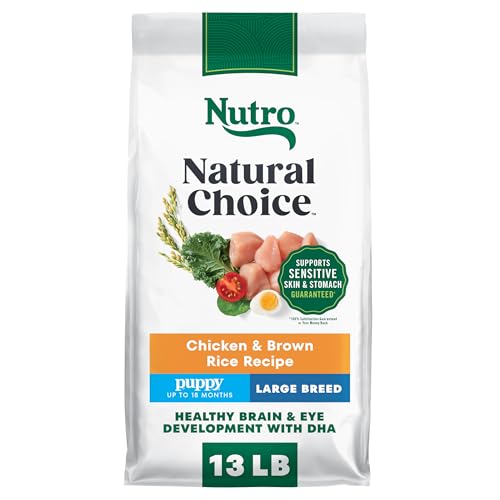
Quick answer
Our top pick is Purina Pro Plan Focus Puppy Large Breed Salmon & Rice Formula, which provides high-quality white fish protein, DHA for brain development, and controlled calcium for large-breed growth. For a budget-friendly option, Diamond Naturals Large Breed Puppy Formula with real salmon offers solid nutrition at a lower price. If your Rottweiler puppy has a sensitive stomach, consider Blue Buffalo Life Protection Large Breed Puppy Fish & Oatmeal.
What to consider for White Fish Dog Food For Rottweiler Puppies
Rottweiler puppies grow rapidly and need a diet that supports bone and joint development without promoting excessive growth. White fish, such as salmon or cod, provides easily digestible protein and omega-3 fatty acids that can help reduce inflammation and support a healthy coat. Because Rottweilers are prone to hip and elbow dysplasia, a large-breed puppy formula with controlled calcium (0.8% to 1.2% on a dry matter basis) and moderate fat (around 12% to 16%) is essential. Avoid all-life-stages foods, as they may contain too much calcium for large-breed puppies.
What to look for in a dog food
Choose a recipe that is AAFCO complete and balanced for growth or all life stages (but ensure it’s appropriate for large breeds). The first ingredient should be a named white fish like salmon, whitefish, or cod. Protein levels should be between 22% and 32% on a dry matter basis; fat between 12% and 18%; and calories around 350 to 400 kcal per cup. For large-breed puppies, calcium levels should be 0.8% to 1.2% and phosphorus 0.7% to 1.0%. Look for added DHA for brain development, and glucosamine and chondroitin for joint support. Omega-3 and omega-6 fatty acids from fish oil help maintain skin and coat health.
How we chose these picks
- Evaluated ingredient lists for named white fish protein sources and absence of unnamed meat meals
- Checked that formulas meet AAFCO nutrient profiles for growth and are specifically formulated for large-breed puppies
- Verified calcium and phosphorus levels fall within large-breed puppy recommendations
- Prioritized recipes with added DHA, omega-3s, and joint-supporting nutrients
- Considered brand reputation and commitment to quality control and research
- Reviewed customer feedback for palatability and digestive tolerance
- Compared price per pound to ensure value across different budgets
- Never ranked a product higher just because it pays a commission
What to avoid
- Avoid foods where the primary protein source is an unnamed “meat meal” instead of a named fish
- Be cautious with grain-free or legume-heavy recipes due to the ongoing FDA investigation into a potential link with canine dilated cardiomyopathy (DCM); grain-inclusive formulas are the safer default unless your vet advises otherwise
- Do not feed all-life-stages food to a large-breed puppy, as calcium levels may be too high
- Avoid abrupt diet switches; transition over 7 to 10 days to prevent digestive upset
For more dog food guides, visit our dog guides and explore dog food and dog nutrition categories.