Quick answer
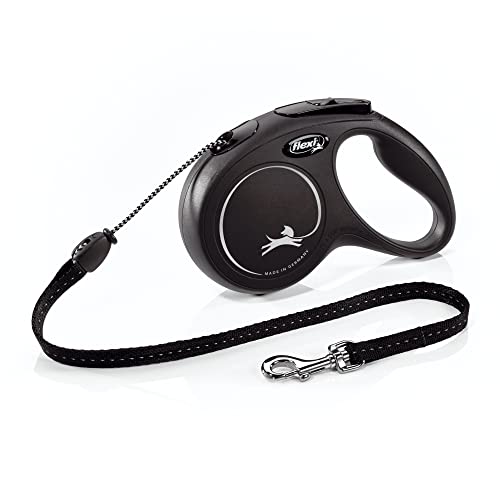
The Flexi Giant Cord Retractable Dog Leash is our top pick for dogs with trachea problems because its smooth braking system prevents sudden jerks on the neck. For budget-conscious owners, the Flexi Classic Cord offers similar control at a lower price. If you need a leash with a reflective tape for night walks, the Flexi Neon Cord provides extra visibility without compromising safety.
What to consider for Retractable Dog Leash For Dogs With Trachea Problems
Dogs with tracheal issues, such as tracheal collapse or chronic bronchitis, need a leash that avoids any sudden pressure on the neck. Retractable leashes are often discouraged because the thin cord can cause abrupt stops when the dog runs to the end of the line, potentially aggravating the trachea. However, some retractable leashes with smooth braking mechanisms and wide, flat tapes can reduce this risk. Look for a leash with a reliable brake that allows gradual tension release, a lightweight handle to minimize pull, and a tape or cord that is wide enough to distribute pressure. Also consider the leash length: shorter lengths (10 to 16 feet) give you more control. Always pair with a harness to keep pressure off the neck.
What to look for in a gear item (harness, collar, leash or muzzle)
When choosing a retractable leash for a dog with trachea problems, focus on these features. Correct fit and sizing: The leash handle should fit comfortably in your hand without slipping. Durable hardware and materials: Look for a strong clip (metal preferred) and a sturdy casing. Safety features: A reliable braking system that locks instantly and a reflective strip for low-light walks are essential. Comfort and padding: A padded handle reduces hand fatigue and gives you better control. No-pull design: While retractable leashes are not no-pull by nature, a smooth brake allows you to gently stop your dog without jerking. Avoid leashes with thin cords that can dig into the neck if the dog pulls suddenly.
How we chose these picks
- Evaluated braking smoothness and reliability based on product specifications and user feedback.
- Prioritized leashes with wide tapes (at least 0.5 inches) to reduce pressure on the neck.
- Considered handle ergonomics and weight to ensure comfortable control.
- Checked for safety features like reflective materials and secure locking mechanisms.
- Selected only retractable leashes that are compatible with harnesses to avoid collar pressure.
- Included options across different price points to suit various budgets.
- Focused on brands with a reputation for quality and customer support.
- Never ranked a product higher just because it pays a commission.
What to avoid
- Ill-fitting sizes: A leash that is too long or too short can compromise control. Choose a length that matches your walking environment.
- Flimsy clips that fail on strong dogs: Ensure the clip is metal and rated for your dog’s weight.
- Aversive tools used without professional guidance: Retractable leashes can be misused to yank or correct, which is harmful for trachea-sensitive dogs.
- Retractable leashes near traffic: The long cord can allow your dog to wander into the road. Use a fixed leash in high-traffic areas.
Explore our dog guides for more tips, and check out dog health and dog care products for related advice.