Quick answer
Our editorial team recommends Hill’s Science Diet Adult Indoor Cat Food as the best overall for rescue cats because it’s formulated with balanced fiber for hairball control and easy digestion, plus it’s backed by AAFCO feeding trials. For cats with extremely sensitive stomachs, Purina Pro Plan Sensitive Skin & Stomach is a close runner-up. Budget-conscious adopters should consider Iams Proactive Health Indoor Weight & Hairball Care.
What to consider for Indoor Cat Food For Rescue Cats
Rescue cats often come from stressful environments, so their nutritional needs differ from cats raised in stable homes. Many are underweight or overweight, may have unknown dietary sensitivities, and are prone to stress-related urinary issues. Indoor living reduces activity levels, increasing the risk of obesity and hairballs. A high-quality indoor cat food should provide moderate calorie density to prevent weight gain, adequate fiber to manage hairballs, and controlled magnesium levels to support urinary health. Additionally, since rescue cats may have experienced inconsistent feeding, a highly palatable food with a single novel protein source can ease the transition and reduce digestive upset.
What to look for in a cat food
When choosing a cat food for your rescue cat, look for an AAFCO statement confirming it’s complete and balanced for the appropriate life stage. The first ingredient should be a named meat source (e.g., chicken, salmon) to ensure high animal protein. Taurine is an essential amino acid for cats, so verify it’s added. Moisture content matters: wet food (around 78% moisture) supports urinary tract health, while dry food (about 10% moisture) is more calorie-dense. For indoor cats, a formula with moderate fat (around 15% to 20% on a dry matter basis) and fiber (3% to 5%) helps maintain a healthy weight and control hairballs. Always check for life-stage suitability: kittens need more protein and calories, seniors may benefit from joint support ingredients like glucosamine.
How we chose these picks
- Evaluated ingredient lists for named meat sources and absence of artificial preservatives, colors, or flavors.
- Verified AAFCO nutritional adequacy statements for the correct life stage.
- Considered calorie density and fiber content to suit indoor, less active cats.
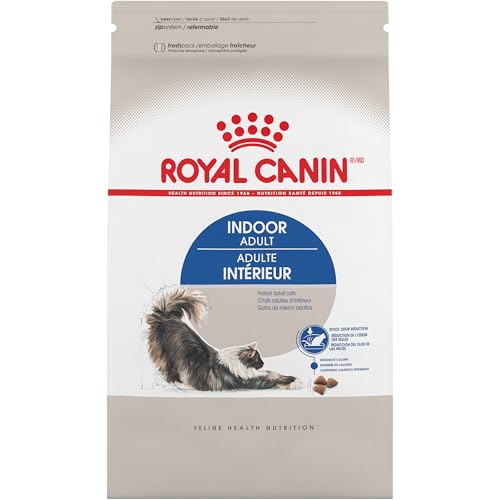
- Prioritized brands with a history of feeding trials and quality control (e.g., Hill’s, Purina, Royal Canin).
- Read customer reviews for palatability and digestive tolerance in sensitive cats.
- Selected products available on Amazon with consistent pricing and availability.
- Consulted veterinary nutrition guidelines from WSAVA and AAFCO.
- Never ranked a product higher just because it pays a commission.
What to avoid
- Foods with unnamed meat or meat by-products as the first ingredient, which indicate lower quality protein.
- Recipes lacking added taurine; cats cannot synthesize enough taurine and deficiency leads to heart and eye problems.
- Defaulting to an all-life-stages food for a senior or kitten without checking specific nutrient profiles; all-life-stages may not meet senior needs or may be too calorie-dense for kittens.
- Abrupt diet switches; always transition over 7 to 10 days by mixing increasing amounts of new food with old to prevent digestive upset.
For more cat care resources, visit our cat guides, cat food, and cat health sections.