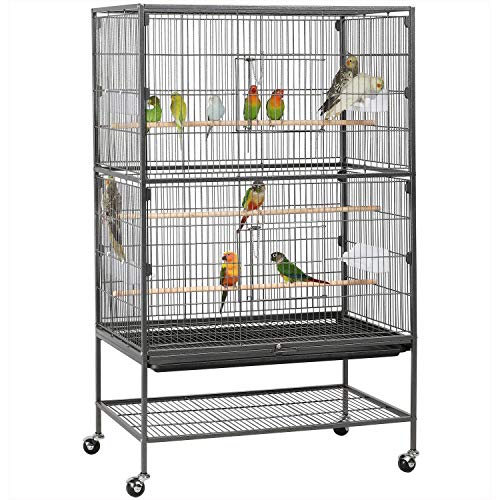
If you have ever stood in front of your budgie’s cage wondering whether that empty seed bowl means it is time to refill or if you are overfeeding, you are not alone. Getting the feeding schedule right for an adult budgie is one of the simplest ways to keep your bird healthy, active, and at a good weight. Unlike dogs or cats, budgies have a fast metabolism and need food available regularly, but not constantly. Let us walk through exactly how often to feed your adult budgie, what to offer, and how to tell if you are doing it right.
How Many Meals Per Day Does an Adult Budgie Need?
Most adult budgies do best with two small meals per day, one in the morning and one in the early evening. This mimics their natural foraging rhythm in the wild, where they eat small amounts throughout the day. You do not need to leave a full bowl of food out all the time. Instead, offer a measured amount of seed mix and pellets in the morning, and then a smaller serving of fresh vegetables or fruit in the evening. If your budgie empties the bowl within a few hours, you can offer a tiny top-up, but avoid letting the bowl stay full all day. Overfilling can lead to selective eating, where your bird picks out only the fatty seeds and leaves the nutritious pellets behind.
What Should a Daily Feeding Portion Look Like?
A good rule of thumb for an adult budgie is about one to two teaspoons of seed mix and one to two teaspoons of pellets per day, split between meals. For fresh foods, offer a small piece of leafy greens, carrot, or bell pepper about the size of your thumb tip in the evening. Remove any uneaten fresh food after two to three hours to prevent bacteria growth. A budgie that eats all of its fresh food quickly may need a slightly larger portion, while one that ignores it might need you to try different vegetables or chop them smaller. Remember that pellets should make up about 50 to 60 percent of the diet, with seeds as a smaller part, because seeds are high in fat.
Budgies in the wild spend up to 60 percent of their daylight hours foraging for food. Offering food in two meals plus a foraging toy with hidden treats can keep your bird mentally stimulated and physically active.
Should You Leave Food in the Cage Overnight?
It is perfectly fine to leave a small amount of dry seed mix and pellets in the cage overnight. Budgies sleep through the night and do not typically eat in the dark, but having a little food available means they can have an early morning snack before you wake up. Just make sure the bowl is clean and the food is not mixed with droppings or debris. If you notice your budgie waking up and eating right away, you are doing it right. If the bowl is still mostly full in the morning, you may be offering too much at night. Adjust the amount so that the bowl is nearly empty by morning.
How to Tell If Your Budgie Is Eating the Right Amount
The best way to know if your feeding schedule is working is to watch your bird’s weight and behavior. A healthy adult budgie should have a smooth, rounded chest without a prominent keel bone sticking out. You can gently feel the chest bone once a week. If it feels sharp or prominent, your bird may be underweight and you should offer a bit more food. If the chest feels very plump or you see fat pads around the abdomen, cut back on seeds and increase pellets and vegetables. Also watch for changes in droppings: normal droppings have a dark solid part, a white urate part, and a small amount of clear liquid. If droppings become very watery or the bird is not eating, contact your avian vet.
A consistent feeding schedule is the single best gift you can give your budgie’s digestion and mood. Birds thrive on routine.
Water and Treats: What Else Belongs in the Daily Routine?
Fresh, clean water must be available at all times, and you should change it at least once or twice a day. Budgies drink more than you might think, and they often dip food into water, so the bowl can get dirty fast. For treats, offer a small piece of millet spray or a healthy seed-based treat no more than once or twice a week. Treats should never replace a meal. If you are introducing new foods, do it slowly over a week by mixing a tiny amount with their regular food. For more tips on building a balanced diet, you can read our guide on best budgie pellets. And if you are wondering about safe vegetables, check out safe vegetables for budgies.
What About Feeding During Molting or Stress?
During molting, which happens once or twice a year, your budgie may need a little extra protein and energy. You can offer a small amount of hard-boiled egg (mashed with the shell) or a commercial molt supplement once or twice a week. During times of stress, such as moving to a new home or after a vet visit, your budgie might eat less. In those cases, keep the same schedule but offer favorite foods like millet to encourage eating. If your budgie stops eating entirely for more than 24 hours, contact your vet. For more on recognizing stress signs, see our article on budgie stress signs.
Feeding your adult budgie twice a day with a mix of pellets, seeds, and fresh foods, plus constant water, is a simple and effective routine. Watch your bird’s body condition and adjust portions as needed. And always remember: if you notice any sudden change in appetite, weight, or droppings, a quick check with an avian vet is the safest move. Your budgie will thank you with happy chirps and a healthy life.