If you’ve ever stood in the reptile aisle staring at heat bulbs, you know the struggle: so many options, and each one claims to be the best. When it comes to your bearded dragon, heat isn’t just comfort, it’s survival. They rely on external heat to digest food, stay active, and keep their immune system humming. So the question “is a ceramic heat emitter better for bearded dragon” is a good one to ask before you buy. The short answer? It depends on the situation. Let’s break it down so you can make the right call for your scaly buddy.
What Exactly Is a Ceramic Heat Emitter?
A ceramic heat emitter (CHE) is a screw-in bulb made of a ceramic element that heats up and radiates infrared heat. It produces no light at all, just warmth. Think of it like a space heater for your reptile’s enclosure. Unlike a basking bulb that glows bright yellow or white, a CHE stays dark while it works. That makes it a fantastic tool for nighttime heat, especially if your home gets chilly after the sun goes down. But because it gives off zero light, it won’t help your dragon with their day-to-day basking behavior. They need a bright light source to stimulate appetite, activity, and vitamin D synthesis (when paired with UVB). So a CHE is not a replacement for your daytime basking bulb, it’s a supplement.
When a Ceramic Heat Emitter Is the Better Choice
There are a few clear scenarios where a CHE wins over a traditional heat lamp. If your bearded dragon’s tank drops below 65°F (18°C) at night, a CHE is your best friend. Unlike red or blue “night” bulbs, which can disrupt your dragon’s sleep cycle, a CHE provides heat in complete darkness. That means your dragon can get the rest they need without being blasted by light. Another big plus: CHEs last a long time, often 5 to 10 years, and they don’t burn out as quickly as standard bulbs. They also work well in cooler rooms or if you live in a drafty house. Just remember, you’ll need a thermostat to control the temperature, because CHEs can get extremely hot and could overheat your tank if left unregulated.
When a Basking Bulb Is Still the Right Call
For daytime basking, nothing beats a bright white basking bulb. Your bearded dragon needs a distinct basking spot with temperatures around 95°F to 110°F (35°C to 43°C) for adults, and slightly higher for juveniles. A CHE can’t provide that focused, bright heat that encourages your dragon to climb and bask. Plus, the bright light helps regulate their circadian rhythm, so they know when it’s day and when it’s night. If you only used a CHE, your dragon might become sluggish, lose their appetite, or even develop metabolic issues because they’re not getting the visual cues they need. So for daytime, stick with a basking bulb. For a budget-friendly option that still does the job, check out our guide on choosing a small reptile heat lamp under 50 if you’re setting up a smaller tank.
How to Set Up a Ceramic Heat Emitter Safely
If you decide to add a CHE, safety is non-negotiable. First, you need a ceramic socket fixture that can handle the wattage, because plastic sockets can melt. Second, always use a thermostat with a probe placed near the basking spot to regulate the temperature. Set it to the desired night temp (around 70°F to 75°F / 21°C to 24°C) and let it cycle on and off. Third, make sure the CHE is positioned so your dragon can’t touch it directly, they can burn themselves. Use a wire cage or a lamp stand to keep it out of reach. And never use a CHE with a dimmer switch unless it’s specifically rated for it, because dimming can damage the emitter. If you’re also thinking about upgrading your dragon’s whole setup, you might want to look at our picks for the best reptile tanks of 2026 to ensure proper ventilation and heat retention.
Combining Heat Sources for the Perfect Environment
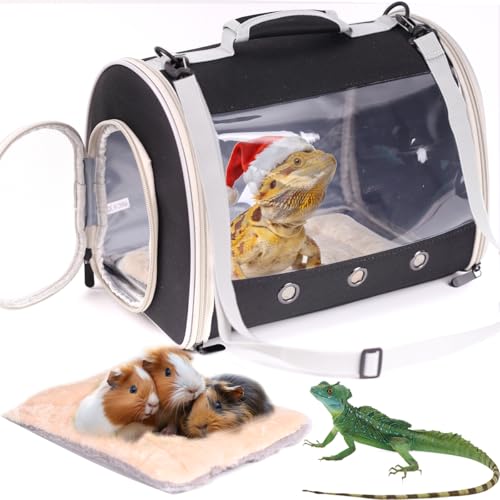
The ideal setup for most bearded dragons is a combination: a bright basking bulb for daytime, a UVB tube light for vitamin D, and a CHE for nighttime or backup heat. This way, you cover all bases. During the day, the basking bulb creates a warm, bright spot for your dragon to lounge and digest. At night, the CHE kicks in only if the temperature drops too low. Some owners also use a CHE during the day if their home is particularly cold, but they still keep the basking bulb on for light. If you’re traveling with your dragon to a cooler climate, an insulated reptile carrier can help maintain stable temps on the go, but you’ll still need a heat source once you arrive.
Always have a thermostat with a probe, not just a thermometer. A thermostat will turn the CHE on and off to keep temps steady, which saves energy and prevents overheating. You can grab a reliable one for around $20, and it’s worth every penny.
Common Mistakes to Avoid with Ceramic Heat Emitters
One big mistake is using a CHE as the only heat source 24/7. That can lead to a dragon that’s constantly cold and stressed, because they never get that bright basking spot they crave. Another mistake is placing the CHE too close to the substrate or decorations, which can cause burns or even start a fire. Always leave at least 6 inches of space between the CHE and any surface. Also, don’t forget to monitor humidity, because CHEs can dry out the air. If you notice your dragon’s skin looking flaky or their eyes sunken, check the humidity and consider adding a water dish or misting. And if you’re using a liner in the tank, make sure it’s heat-resistant. Our guide on lizard liners can help you pick one that won’t melt or off-gas under high heat.
“Heat without light is for the night, but light without heat is for the day. Your dragon needs both to thrive.”
So, Is a Ceramic Heat Emitter Better? Here’s the Verdict
For nighttime heat, yes, a ceramic heat emitter is better than any glowing bulb. It provides warmth without disturbing your dragon’s sleep, and it’s durable and efficient. But for daytime basking, a bright bulb is still essential. The best approach is to use both, each for its intended purpose. That way, your bearded dragon gets the full spectrum of heat and light they need to stay healthy and happy. If you’re just starting out or upgrading your setup, remember to always monitor temperatures with a reliable thermometer and adjust as needed. And if you ever have questions about your dragon’s health, don’t hesitate to ask your vet.
If you’re looking for more ways to keep your dragon comfortable, you might also consider a cozy sweater for those cooler evenings out of the tank, check out our bearded dragon sweater guide for some fun options. And if you’re planning a trip to the vet or a friend’s house, a good reptile carrier will keep your buddy safe and stress-free.