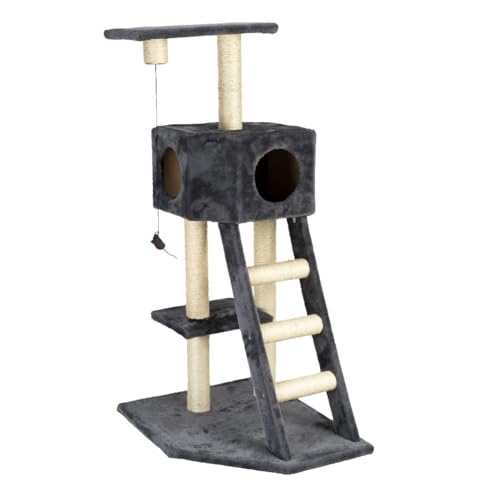
You bought the perfect scratching post, placed it by the window, and waited. And waited. Meanwhile, your cat is gleefully shredding the arm of your couch. If this sounds familiar, you are not alone. Cats can be incredibly picky about where and what they scratch, and a rejected post is rarely a sign of a “bad” cat. More often, it is a sign that the post does not match her instincts. Let us troubleshoot the real reasons behind the snub and get her scratching where she should be.
1. The Post is the Wrong Material or Texture
Cats have strong preferences for scratching surfaces. Some love the rough, shreddable feel of sisal rope, while others prefer the soft give of cardboard or the smooth texture of carpet. If your post is covered in a material your cat dislikes, she will avoid it. Watch what she naturally scratches: is it the nubby weave of your upholstery, the looped carpet on the stairs, or the wood of a door frame? Match the post material to that surface. For example, if she loves carpet, try a flat cardboard scratcher or a post wrapped in a similar looped fabric. If she prefers sisal, ensure the rope is tightly wound and not too slick. A post that feels wrong under her paws is a post she will ignore.
2. The Post is Not Stable Enough
Imagine trying to stretch and dig your claws into something that wobbles or tips over. Cats need a solid, anchored surface to get a good scratch. A flimsy post that shifts when she pulls is alarming and unsafe. Test your post: give it a firm tug. If it rocks or moves, she will not trust it. Look for a post with a heavy, wide base, or consider mounting a wall-mounted scratcher. Stability is non-negotiable. A cat who feels unstable will simply find a sturdier target, like your heavy oak table leg or the corner of the sofa.
3. The Location is Wrong (Too Hidden or Too Exposed)
Placement is everything. Cats scratch to mark territory visually and with scent glands in their paws. They want their mark to be seen. A post hidden in a dark corner or behind a door is useless. Conversely, a post placed in the middle of a high-traffic hallway might feel too exposed for a shy cat. The sweet spot is near where she already scratches, like next to the couch she is targeting, or near a doorway where she walks by frequently. Also, consider putting a post near her favorite sleeping spot. Cats often scratch right after a nap to stretch their muscles and renew their claw sheaths. A post near a calming collar or a cozy bed can create a positive scratching routine.
4. The Post is Too Short or Too Small
Cats need to fully extend their bodies to scratch properly. A post that is too short forces them to scrunch up, which is not satisfying. A good rule is that the post should be tall enough for your cat to stretch to her full length, from front paws to back paws, without her rear end touching the ground. For most adult cats, that means at least 30 to 32 inches tall. If you have a large breed like a Maine Coon, you may need an even taller post. Also, consider the horizontal surface: some cats prefer to scratch horizontally on the floor. If your cat is a floor-scratcher, a flat cardboard or sisal mat will work much better than a vertical post.
5. The Post Carries Unfamiliar Scents
New posts often smell like the factory, the warehouse, or the packaging. That artificial scent can be off-putting to a cat who relies heavily on smell. Before introducing a new post, rub it down with a clean, dry cloth to remove any dust. Better yet, rub it with a cloth that already smells like your cat, like a blanket she sleeps on. You can also rub a bit of catnip into the sisal or cardboard to make it irresistible. Avoid using strong cleaning products or perfumes near the post. A familiar, neutral scent invites investigation. If your cat is particularly anxious, a calming collar might help her feel more secure exploring new objects.
Cats have scent glands on their paws. When they scratch, they are leaving a visual mark and a chemical message that says, “I was here and I am relaxed.” This is why they often scratch after a good meal or a play session. It is a happy, confident behavior.
6. The Post is Dirty or Worn Out
Just like you might avoid a worn-out tool, cats can lose interest in a post that is too frayed, loose, or covered in old fur. A post that has been scratched to the point of being limp or shedding fibers is no longer satisfying to claw into. Check the condition of the sisal or cardboard. If it is shiny and smooth from use, it has lost its grip. You can refresh sisal by lightly misting it with water and letting it dry to tighten the fibers, but eventually, you may need to replace the post or re-wrap it. A fresh, textured surface is much more appealing. While you are at it, keep your cat’s claws healthy with a good nail grinder to reduce the need for heavy scratching to shed old sheaths.
7. She Does Not Know How to Use It (Yes, Really)
Some cats, especially kittens or rescues who never had a post, simply do not understand what it is for. They need a demonstration. Gently take her front paws and drag them down the post in a scratching motion. Do this when she is relaxed, not when she is already scratching the furniture. You can also play with a wand toy near the post, letting her pounce and grab the post in the process. Reward any interaction with the post, even just sniffing it, with a treat or praise. Positive reinforcement works wonders. If she is still hesitant, consider using a probiotic supplement to support her overall well-being, as a stressed or unwell cat is less likely to engage in new behaviors.
“A cat who scratches the wrong thing is not being naughty, they are being honest about what feels good. Listen to their claws, not your frustration.”
If you have tried everything and your cat still refuses the post, take a step back. Watch her for a few days. Where does she scratch? What time of day? What surface? The answer is usually right in front of you. Once you match the post to her natural preferences, she will likely switch over quickly. And remember, patience and a little bit of cat logic go a long way. Your sofa will thank you.