You notice your bearded dragon sitting under its basking spot with both eyes squeezed shut. It’s not sleeping, it’s just… closed. Your heart sinks a little. Is it just tired, or is something wrong? In my years of keeping beardies, I’ve learned that closed eyes during waking hours are rarely a casual quirk. It’s usually a sign that your pet is trying to tell you something, often about its environment or health. Let’s walk through the most common reasons and what you can do to help.
1. Lighting Problems: The Most Common Culprit
Bearded dragons need very specific lighting to thrive, and getting it wrong is a top reason for eye issues. Their eyes are sensitive to light intensity and UVB spectrum. If your UVB bulb is too strong, too close, or the wrong type (like a coil bulb instead of a tube), it can cause squinting and closed eyes. On the flip side, if the light is too dim or the day/night cycle is off, your dragon may feel lethargic and keep its eyes shut.
Check your setup: The basking bulb should produce a bright white light, not a red or blue one. The UVB tube should cover about two-thirds of the tank and be placed at the correct distance from the basking spot (usually 8-12 inches with a reflector). Replace UVB bulbs every 6 months, even if they still glow, because UVB output fades. If you suspect your lighting is off, consider upgrading to a small reptile heat lamp under 50 that offers better control, and always pair it with a proper UVB tube.
Bearded dragons have a third eye, called the parietal eye, on the top of their head. It doesn’t see images but detects light and shadows, helping them sense predators and regulate basking. That’s why proper lighting isn’t just about visibility, it’s about their whole nervous system.
2. Temperature and Hydration Issues
If your bearded dragon is too cold, its metabolism slows down, making it sluggish and prone to closing its eyes. The basking spot should be 95-105°F for adults, and the cool side around 75-80°F. If the tank is too hot, especially over 110°F, your dragon may close its eyes to shield them from the intense heat and glare. Dehydration is another factor. A dehydrated beardie will often have sunken, closed eyes. Ensure fresh water is available daily, and mist your dragon or offer a shallow soak a few times a week.
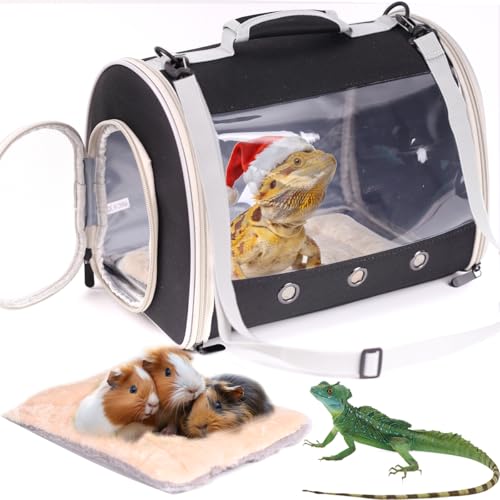
Use a digital thermometer with a probe to check temperatures at both ends of the tank, not just the ambient air. If you’re struggling to maintain a stable gradient, an insulated reptile carrier isn’t just for travel, it can also help stabilize temps in a drafty room if you need to move your dragon temporarily while you fix the enclosure.
3. Stress and Environmental Factors
Bearded dragons are sensitive to stress, and closed eyes can be a coping mechanism. Common stressors include loud noises, constant activity around the tank, other pets, or even a new environment. If you recently brought your dragon home or moved its tank, give it a week to settle in. Also, check the tank’s placement. If it’s in a high-traffic area or near a window where it sees birds, that can cause chronic stress.
Make sure your dragon has a secure hide where it can retreat. A cluttered tank with no privacy can make it feel exposed. If you need to move your dragon for cleaning or vet visits, use a reptile carrier that’s dark and secure to minimize stress during transport.
“A closed eye is a dragon’s way of saying, ‘I need a time-out from this world.’ Listen to it.”
4. Eye Infections or Foreign Bodies
Sometimes closed eyes are a direct sign of an eye problem. Look for discharge, swelling, or crustiness around the eye. A speck of substrate, like sand or wood chips, can get lodged under the eyelid and cause irritation. If you use loose substrate, consider switching to a solid liner like a lizard liner that’s easier to clean and won’t get in your dragon’s eyes.
If you notice any of these signs, gently flush the eye with sterile saline solution (like contact lens rinse) and see if that helps. If the issue persists for more than a day, or if the eye looks swollen or cloudy, it’s time to see a reptile vet. Don’t try to remove anything stuck in the eye yourself, as you could cause more damage.
5. Underlying Illness or Parasites
Closed eyes can also be a symptom of systemic illness. Respiratory infections, metabolic bone disease, or internal parasites can make your dragon feel miserable, leading to lethargy and eye closure. Other signs to watch for include lack of appetite, weight loss, abnormal stool, or difficulty breathing. If your dragon is showing any of these alongside closed eyes, a vet visit is essential.
Remember, you know your dragon best. If it’s acting differently for more than a day or two, don’t wait. A quick check-up can catch problems early. While you’re at it, ensure your dragon has a comfortable, clean environment. A proper reptile tank with good ventilation and easy-to-clean surfaces can prevent many health issues.
6. Shedding and Normal Behavior
Sometimes closed eyes are perfectly normal. During shedding, especially around the face and eyes, your dragon may keep its eyes closed more often because the skin feels tight or itchy. Also, when they’re basking and deeply relaxed, they might close their eyes to block out light while still absorbing heat. If your dragon is eating, active, and otherwise healthy, occasional eye closing is nothing to worry about.
But if it’s persistent, or if your dragon seems to be hiding more than usual, trust your gut. I once had a dragon who closed his eyes for two days straight, and it turned out his UVB bulb had died without me noticing. A simple replacement fixed everything.
This guide is for general information only. If your bearded dragon shows persistent eye closure, swelling, discharge, or other signs of illness, please consult a qualified reptile veterinarian. They can provide a proper diagnosis and treatment plan.