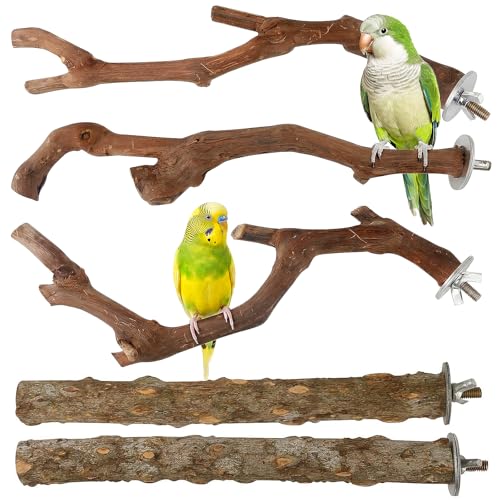
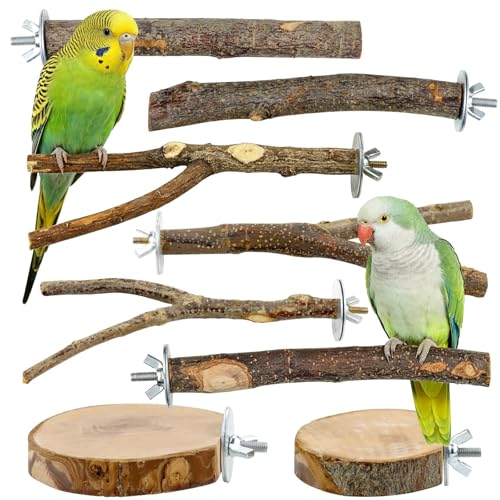
The best bird perch is a set of natural untreated wood branches in varied diameters, like grape or apple wood, that mimics how birds perch in the wild. For most cages, a multi-piece natural branch set offers the foot-health variety vets recommend at the best value.
3/4
How far a bird's toes should wrap around an ideal perch
3-5
Recommended perches of varied diameter per cage
0.4-1 in
Typical perch diameter range for parakeets and small parrots
8-10 hrs
Hours a bird stands on its roosting perch each night
A perch is not a cage accessory; it is the surface your bird stands on for most of its waking and sleeping life. The wrong perch keeps the foot locked in a single grip all day, which leads to pressure sores, overgrown nails, and the painful condition known as bumblefoot. As a vet, the single change I recommend most often is swapping smooth plastic or single-diameter dowels for natural wood branches that vary in thickness and texture.
When choosing a perch, look for bird-safe untreated wood such as grape, apple, or manzanita, with the bark left on for grip. Match the diameter to your species so the toes wrap about three-quarters of the way around without overlapping, and offer several sizes so the foot flexes through different positions. A good multi-piece set gives you that variety in one purchase and lets you rotate perches for cleaning.
Why this matters Birds sleep standing on their perches, which means the perch they choose at night carries their full weight for eight to ten hours straight. Placing your most foot-friendly natural branch at the highest point in the cage, where birds instinctively roost, does more to prevent bumblefoot than any single daytime perch. Many owners put the best perch low and unknowingly leave a smooth dowel as the nighttime spot.