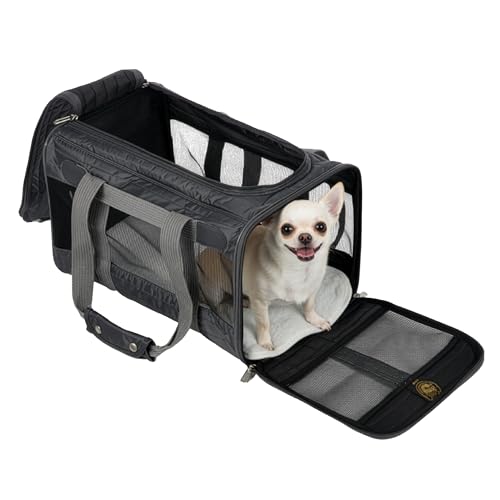
Quick answer
Our top pick is the Petmate Two-Door Top Load Pet Carrier for its spacious interior, sturdy construction, and easy top-loading access that reduces stress for large cats. If you need a carrier with extra ventilation for hot climates, the SportPet Designs Foldable Carrier is a close runner-up. For owners who fly frequently, the Sherpa Deluxe Carrier meets airline requirements and offers a comfortable padded shoulder strap.
What to consider for Cat Carrier For Maine Coons
Maine Coons are one of the largest domestic cat breeds, often weighing 15 to 25 pounds and measuring up to 40 inches from nose to tail. A standard carrier will be too cramped, so look for carriers with dimensions at least 30 inches long, 20 inches wide, and 20 inches tall. The carrier must support this weight without sagging; reinforced plastic or heavy-duty fabric with a sturdy frame is essential. Ventilation is critical because Maine Coons have thick coats and can overheat; multiple mesh windows or ventilation slots on all sides help. A top-loading door is ideal for getting a large cat in and out without forcing them through a front door. Easy-clean materials are a plus, as accidents can happen during travel.
What to look for in a cat carrier for Maine Coons
When choosing a carrier for a Maine Coon, prioritize size and weight capacity. Measure your cat from nose to tail and add a few inches for comfort. Check the carrier’s weight limit; many standard carriers max out at 15 pounds. Look for carriers with a solid base that won’t bow under weight. Ventilation is key: at least two mesh panels or ventilation slots. A top-loading door is highly recommended for easy access. For air travel, ensure the carrier meets airline size and material requirements. A comfortable carrying handle or shoulder strap helps manage the weight. Finally, consider a carrier that folds flat for storage when not in use.
How we chose these picks
- Evaluated size dimensions and weight capacity to ensure they fit large Maine Coons.
- Checked materials and construction for durability and safety.
- Assessed ventilation design to prevent overheating.
- Considered ease of loading and unloading, especially top-loading options.
- Reviewed airline compliance for travel-friendly picks.
- Read customer feedback for real-world insights on fit and durability.
- Never ranked a product higher just because it pays a commission.
What to avoid
- Carriers that are too small; your cat should be able to stand and turn around.
- Flimsy carriers that collapse under the weight of a large cat.
- Carriers with poor ventilation, especially in warm climates.
- Hard-sided carriers with sharp edges or rough interiors.
- Carriers that are difficult to clean, as accidents are common.
For more cat care tips, check out our cat guides, cat food, and cat care products sections.