Finding the Best Cat Water Fountain for Cats in Small Homes
Find the best compact cat water fountain for small homes. Our top pick, the Catit Flower Fountain, delivers a quiet, easy clean design with 60 ounce capacity to boost hydration.
Some links below are affiliate links. If you buy through them we may earn a small commission at no extra cost to you. Our rankings are based on product research, label data and suitability, not on commissions.
Best Overall: Catit Flower Fountain with Triple Action Filter. The Catit Flower Fountain has a compact, stylish design that fits small spaces.
Best Quiet Operation: Pioneer Pet Raindrop Fountain. This fountain features a ceramic bowl that is heavy and stable, with a very quiet pump.
Best for Tight Spaces: PetSafe Drinkwell Mini Pet Fountain. The PetSafe Drinkwell Mini has a small footprint (7.5 x 7.5 inches) perfect for countertop.
Best Value: Veken Pet Fountain. The Veken Pet Fountain offers a large 84-ounce capacity in a compact design.
Best Design: IPettie Tritone Cat Water Fountain. This fountain has a unique three-tier design that creates a cascading waterfall, which man.
Quick answer
Our top pick is the Catit Flower Fountain because it has a small footprint, adjustable flow settings, and a simple design that is easy to clean. For cats that prefer a still water surface, the Pioneer Pet Raindrop Fountain is a great alternative. The PetSafe Drinkwell Mini is ideal for tight spaces, while the Veken Pet Fountain offers great value with a large capacity in a compact body.
What to consider for Cat Water Fountain For Cats In Small Homes
In a small home, every inch counts. Look for a fountain with a compact base that fits on a counter or corner. Noise level matters: a quiet pump won’t disturb your sleep or your cat. Easy disassembly for cleaning is crucial to prevent slime and bacteria. Also consider the water capacity: a smaller tank may need daily refills, while a larger one can last longer but takes up more space. Finally, choose a design that encourages drinking, such as a flowing stream or a wide bowl.
What to look for in a cat litter or litter-area product
While this guide is about water fountains, similar principles apply to litter products for small homes. Strong clumping and odour control keep the area fresh. Low dust protects feline airways. Low tracking reduces mess. Multi-cat suitability ensures harmony. An unscented option is best for sensitive cats.
How we chose these picks
We evaluated fountains based on size, noise, ease of cleaning, and water capacity.
We read hundreds of verified customer reviews on Amazon and other retailers.
We considered brand reputation and product longevity.
We prioritized fountains with accessible replacement filters and parts.
We looked for designs that minimize stagnant water and promote hydration.
We compared prices to ensure value for money.
We excluded fountains with known safety issues or excessive maintenance.
Never ranked a product higher just because it pays a commission.
What to avoid
Avoid fountains with complex shapes that are hard to clean, as they can harbor bacteria.
Stay away from models with loud pumps that may scare your cat.
Don’t choose a fountain with a very small water capacity if you are away often, as it may run dry.
Avoid fountains with exposed electrical cords that could be chewed.
Cats in small homes benefit from a compact, quiet fountain that fits on a counter without being intrusive. A fountain with a 60-ounce capacity and easy-to-clean design reduces daily maintenance while encouraging hydration.
The Options
Types Explained
Plastic Fountains
Lightweight and affordable, but may be less durable and can develop scratches that harbor bacteria. Some cats are sensitive to plastic.
Best for: Budget-conscious owners or temporary use.
Ceramic Fountains
Heavy, stable, and easy to clean. Ceramic is non-porous and resists bacteria. Usually more expensive but long-lasting.
Best for: Owners wanting a durable, hygienic option.
Stainless Steel Fountains
Durable, rust-resistant, and easy to sanitize. Stainless steel is also non-porous and dishwasher safe. Often heavier than plastic.
Best for: Cats with feline acne or plastic sensitivities.
Multi-Tier Fountains
Designs with multiple levels or streams that create visual interest and encourage drinking. Can be larger and harder to clean.
Best for: Cats that need extra encouragement to drink.
The Rankings
Top 5 Picks
#1
Best Overall
Catit Flower Fountain with Triple Action Filter
View on Amazon
The Catit Flower Fountain has a compact, stylish design that fits small spaces. It offers adjustable flow settings (gentle stream or bubbling top) to entice picky drinkers. The triple-action filter keeps water fresh. However, the flower petals can be a bit tricky to clean thoroughly.
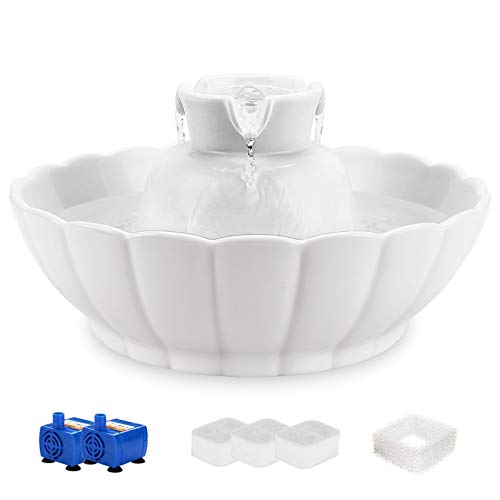
This fountain features a ceramic bowl that is heavy and stable, with a very quiet pump. The raindrop design provides a gentle, continuous stream. It is easy to clean and dishwasher safe. One trade-off is that the water capacity is only 60 ounces, requiring more frequent refills.
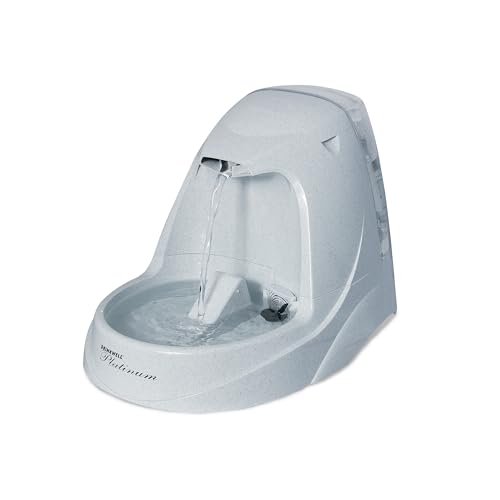
The PetSafe Drinkwell Mini has a small footprint (7.5 x 7.5 inches) perfect for countertops. It holds 50 ounces and has a free-falling stream that aerates water. The carbon filter reduces odors. A limitation is that the pump can be slightly noisy after a few months if not cleaned regularly.
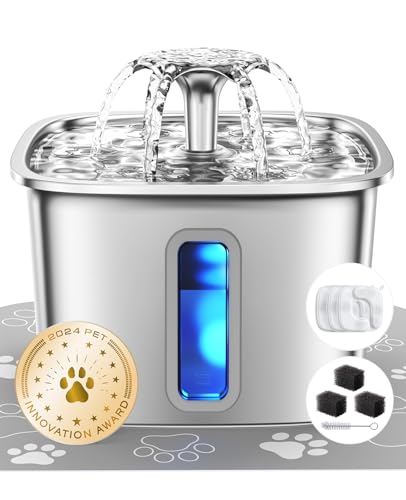
The Veken Pet Fountain offers a large 84-ounce capacity in a compact design. It has a ultra-quiet pump and three filter layers (sponge, activated carbon, ion-exchange resin). The LED indicator reminds you when to change the filter. However, the plastic construction may not be as durable as ceramic options.
This fountain has a unique three-tier design that creates a cascading waterfall, which many cats find irresistible. It includes a charcoal filter and a replaceable foam filter. The pump is very quiet. A downside is that the tiers can be difficult to disassemble and clean completely.
Measure the available space before buying. A fountain that is too large will clutter your home. Look for dimensions that fit your counter or corner without being easily knocked over.
02
Noise Level
A quiet pump is essential for small homes where noise carries. Check reviews for mentions of pump noise. Some fountains have adjustable flow that can reduce splashing noise.
03
Ease of Cleaning
Fountains need regular cleaning to prevent bacteria. Choose models that disassemble easily and are dishwasher safe. Avoid complex shapes with hard-to-reach crevices.
04
Water Capacity
A larger tank means less frequent refills but takes up more space. For a single cat, 50-60 ounces may suffice. For multiple cats or longer absences, consider 80+ ounces.
05
Filter Type and Availability
Most fountains use charcoal or foam filters. Ensure replacement filters are readily available and reasonably priced. Some fountains have proprietary filters that can be costly.
Living With It
Care, Cost and Maintenance
Daily Maintenance
Check the water level and top off as needed. Rinse the fountain bowl with fresh water to remove any debris. Ensure the pump is running smoothly.
Weekly Cleaning
Disassemble the fountain completely. Wash all parts with warm, soapy water (avoid abrasive cleaners). Use a small brush to clean the pump and any crevices. Rinse thoroughly before reassembling.
Filter Replacement
Replace the filter every 2 to 4 weeks, or as recommended by the manufacturer. A clogged filter reduces water flow and filtration. Some fountains have indicator lights to remind you.
Pro tip
Place the fountain away from the litter box and food bowls to prevent contamination and make it more appealing. Cats prefer to drink in a separate, quiet area.
Frequently asked questions
How often should I change the water in my cat's fountain?
You should change the water completely every 2 to 3 days, even if the fountain has a filter. Stagnant water can grow bacteria. Daily top-offs are fine, but a full change ensures freshness. Also clean the bowl at each change.
Is a fountain better than a regular water bowl?
Many cats prefer moving water, which encourages them to drink more. Fountains also aerate the water, keeping it oxygenated and fresher. However, fountains require regular cleaning and filter changes. For cats that dislike fountains, a wide, shallow bowl may be better.
Can I use tap water in my cat's fountain?
Yes, tap water is generally fine, but if your tap water is hard or has a strong taste, consider filtered or bottled water. The fountain's filter will remove some impurities. Avoid distilled water as it lacks minerals.
How do I clean the pump in my cat's fountain?
Disconnect the pump from power. Disassemble the pump housing and remove the impeller. Use a small brush (like a pipe cleaner) to remove any debris. Rinse all parts with warm water. Reassemble and ensure it runs quietly. Do this weekly.
My cat is not using the fountain. What should I do?
First, ensure the fountain is clean and the water is fresh. Some cats are scared of the noise or movement. Try placing the fountain next to their regular water bowl initially. You can also try a different flow setting or a fountain with a still water reservoir.
Are plastic fountains safe for cats?
Plastic fountains are generally safe, but some cats may develop feline acne from plastic contact. If your cat has chin breakouts, switch to a ceramic or stainless steel fountain. Plastic can also scratch over time, creating hiding spots for bacteria.
How long do cat fountain filters last?
Most filters last 2 to 4 weeks, depending on water quality and usage. Hard water may clog filters faster. Replace the filter when you notice reduced flow or a change in water taste. Some fountains have a filter change indicator.
Can I put the fountain in the dishwasher?
Check the manufacturer's instructions. Many plastic and ceramic parts are top-rack dishwasher safe. Stainless steel parts are usually dishwasher safe. However, pump and electrical components should never go in the dishwasher. Hand wash those.
Why does my cat's fountain make noise?
Noise often comes from a clogged pump or low water level. First, check the water level and refill if low. If noise persists, clean the pump thoroughly. Air bubbles can also cause noise; let the fountain run for a few minutes to purge air.
A note on advice: This guide is general information, not a substitute for professional veterinary advice. Talk to your vet before changing your dog's diet or care routine, especially if your dog has allergies, kidney disease, pancreatitis, obesity, heart disease or any other medical condition.
Transparency
How we made this guide
How we chose. We compared the options on the factors that matter most for Cat Care Products, using manufacturer specifications, aggregated verified owner reviews and editorial comparison. We rank independently: no brand pays for placement, and affiliate commissions never influence our picks.
How it was written. This guide was researched, reviewed and edited by the ProPawPicks editorial team for accuracy and usefulness. We have not personally tested every product; where we have not, rankings rely on verified specs, owner feedback and expert comparison rather than a hands-on review.
Affiliate disclosure. ProPawPicks is reader-supported. If you buy through links on our site, we may earn a commission at no extra cost to you. See our affiliate disclosure.
Some links below are affiliate links. If you buy through them we may earn a small commission at no extra cost to you. Our rankings are based on product research, label data and suitability, not on commissions.