Quick answer
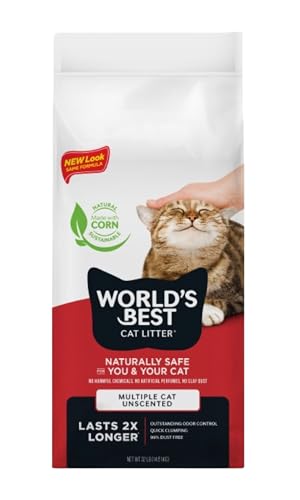
Our top pick is Dr. Elsey’s Precious Cat Ultra Unscented Clumping Clay Litter. It forms rock-hard clumps, controls odor well, and is virtually dust-free, making it ideal for Persian kittens. If you prefer a natural option, World’s Best Cat Litter Multiple Cat Unscented is a close second, though it may track more. For budget-conscious owners, Arm & Hammer Clump & Seal Platinum delivers excellent odor control at a lower price.
What to consider for Clumping Cat Litter For Persian Kittens
Persian kittens have flat faces and long coats, making them prone to respiratory issues and litter tracking. A clumping litter must be low-dust to avoid inhalation problems and unscented to prevent aversion. The clumps should be firm to avoid crumbling and sticking to fur. Additionally, the litter should be soft on paws to encourage use. Multi-cat households need a litter that controls odor effectively without heavy perfumes.
What to look for in a cat litter or litter-area product
Strong clumping and odor control are essential to keep the box fresh and minimize ammonia buildup. Low dust is critical for Persian kittens’ sensitive airways; choose litters labeled as 99% dust-free. Low tracking helps keep the area clean, especially with long-haired cats. Multi-cat suitability ensures the litter can handle multiple users without odor overload. Unscented options are best to avoid deterring kittens from using the box.
How we chose these picks
- Evaluated clumping strength based on manufacturer claims and customer reviews.
- Prioritized low-dust formulations to protect respiratory health.
- Selected unscented or lightly scented options to avoid litter box aversion.
- Considered tracking control features like larger particle size or special formulas.
- Reviewed odor control performance for multi-cat households.
- Included a range of price points to suit different budgets.
- Checked that products are widely available on Amazon with reliable ratings.
- Never ranked a product higher just because it pays a commission.
What to avoid
- Heavily scented litters that can put kittens off the box and cause respiratory irritation.
- High-dust clay litters that aggravate breathing issues in flat-faced breeds.
- A box that is too small or too few boxes for the number of cats; follow the rule of one box per cat plus one extra.
- Sudden litter changes; always transition gradually over one to two weeks to avoid litter box aversion.
For more guidance, explore our cat guides, cat food, and cat care products.