Quick answer
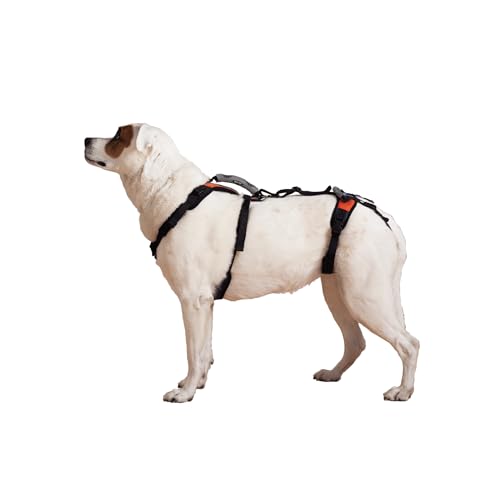
For most dogs with hip dysplasia, our editorial team rates the Ruffwear Web Master Harness as the best overall choice. It has a padded chest and belly panel plus a sturdy reinforced handle, so you can assist your dog up stairs and into the car without putting load on the neck or front legs alone. If your dog needs dedicated rear-end lifting, the GingerLead Support Sling fits better because it cradles the hips and groin directly. For full-body mobility support on a senior or post-surgery dog, the HELP EM UP Harness is the stronger pick, and budget shoppers who only need gentle daily walks should look at the Rabbitgoo No-Pull Harness.
What to consider for Dog Harness For Dogs With Hip Dysplasia
Hip dysplasia means the hip joint is loose or malformed, which leads to pain, stiffness, and reduced rear-leg strength. The harness goal is not pulling control. It is load redistribution and safe lifting. A dog with sore hips often struggles to stand up, climb stairs, jump into a car, or walk on slick floors, and grabbing a collar or scruff to help can hurt the neck and spine.
Look for a harness that spreads weight across the chest and belly rather than yanking from the shoulders. A padded, reinforced top handle lets you gently guide your dog upward to take pressure off the hips during the hardest moments, such as rising from a lying position. For more advanced cases, a rear support sling or a two-part lift harness that supports the hips directly is far more useful than a standard walking harness. Avoid anything that compresses the abdomen near the groin or sits tightly over the hip joints. Because hip dysplasia is a medical condition, talk with your veterinarian about your dog’s specific stage and any post-surgery restrictions before choosing a support method, and ask a certified trainer or rehab professional how to lift safely.
What to look for in a gear item (harness, collar, leash or muzzle)
Correct fit and sizing. Measure your dog’s chest girth at the widest point behind the front legs and the neck base, then match the brand size chart. A snug two-finger gap is the target. Loose harnesses shift and chafe, and over-tight ones restrict an already uncomfortable gait.
Durable hardware and materials. For a support harness that bears real weight, look for reinforced stitching, wide nylon or polyester webbing, and metal load-bearing D-rings or handles rather than thin plastic clips.
Safety features. Escape resistance matters for anxious or stiff dogs, a no-choke chest design protects the trachea, and reflective trim helps on early or late walks when many senior dogs prefer to go out.
Comfort and padding. Soft foam or fleece padding across the chest, belly, and any lifting straps prevents pressure points, which is critical when a dog is already managing joint pain.
No-pull design where relevant. A front clip can reduce lunging, but for dysplasia dogs the priority is gentle support, so a back or top handle setup is usually more appropriate than aggressive no-pull steering.
How we chose these picks
- We compared products using publicly available manufacturer specifications, size charts, and material details.
- We prioritized rear-end and full-body support features genuinely useful for hip and mobility issues, not just walking control.
- We checked that padded handles and lifting straps use reinforced stitching and metal or heavy-duty hardware.
- We read large volumes of verified owner feedback to surface real, repeated complaints rather than one-off issues.
- We confirmed each product is currently sold and available in a range of sizes from small to large dogs.
- We favored escape-resistant, no-choke designs that protect the neck and spine during assisted movement.
- We flagged honest trade-offs such as bulk, price, or difficulty putting the harness on a stiff dog.
- Never ranked a product higher just because it pays a commission.
What to avoid
- Ill-fitting sizes. A harness that is too loose slips and rubs sore areas, while one too tight restricts an already painful gait. Always measure and check the chart.
- Flimsy clips that fail on strong dogs. Thin plastic buckles can crack or pop under lifting load, which is dangerous when you are supporting your dog’s weight on stairs.
- Aversive tools used without professional guidance. Choke, prong, or shock collars are inappropriate for a dog in joint pain and should never be used without a qualified professional. The AVMA and APDT advise against aversive equipment.
- Retractable leashes near traffic. They give a stiff or unsteady dog too much room to wander and offer almost no control if your dog stumbles near a road.
For more help choosing gear and caring for a senior or special-needs dog, browse our dog guides, our dog health resources, and our dog care products section.