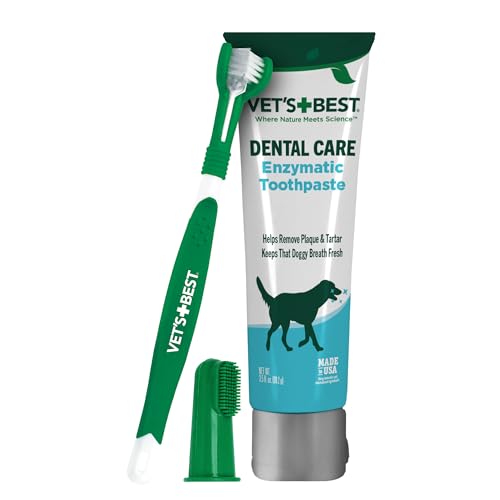
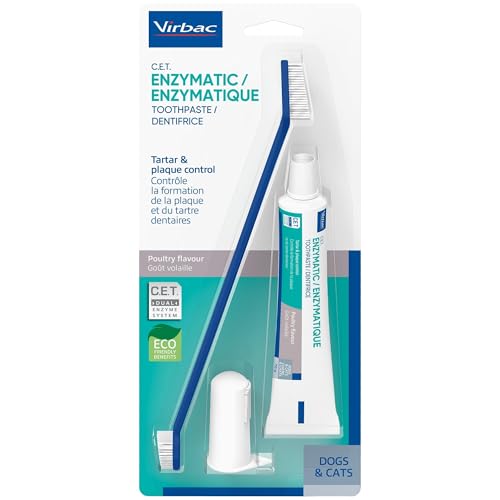
The best dog toothbrush for most owners is a dual-ended brush paired with enzymatic toothpaste, like the Vet's Best Dog Dental Kit, because it reaches both large molars and small front teeth while the toothpaste keeps working chemically between brushings. For dogs who resist a long-handled brush, a fingerbrush kit or vet-recommended dental wipes can bridge the gap until tolerance builds.
As a practicing veterinarian, I tell every owner the same thing: dental disease is the most common health problem I diagnose, and it is almost entirely preventable with a toothbrush. By age three, the majority of dogs already show signs of periodontal disease, and once plaque hardens into tartar it can only be removed under anesthesia. Daily brushing is the single most effective thing you can do at home to protect your dog’s teeth, gums and overall health.
When choosing a dog toothbrush, look for soft bristles, a head sized to your dog’s mouth, and a handle angle that reaches the back molars where plaque builds fastest. Just as important is pairing it with an enzymatic, dog-safe toothpaste, since human toothpaste contains fluoride and xylitol that are toxic to dogs. A kit that includes both the right brush and an enzymatic paste sets most owners up for success.
Why this matters Most owners scrub too hard and focus on the visible front teeth, but the real trouble starts on the outer surfaces of the upper back molars and the canines, where the salivary glands deposit minerals that turn plaque into tartar fastest. Angle the bristles at roughly 45 degrees toward the gumline and prioritize those rear outer surfaces; your dog rarely needs the inner surfaces brushed because the tongue helps keep them clean.
Pro tip Buy a kit that bundles the brush and enzymatic toothpaste rather than purchasing them separately, and let your dog taste the paste as a treat first so brushing becomes something they look forward to instead of something you fight over.