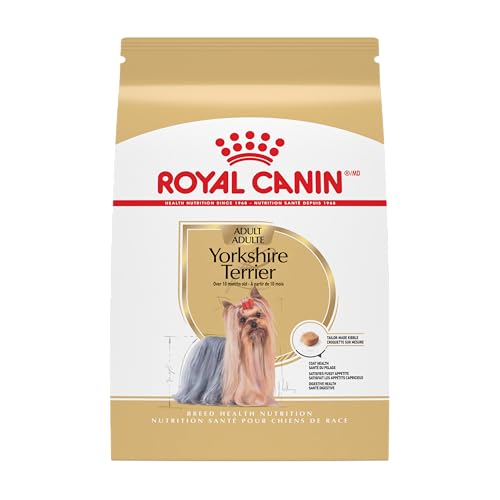
Quick answer
For most adult Yorkies, our top pick is Royal Canin Yorkshire Terrier Adult Dry Dog Food, because it uses a small, easy to pick up kibble shaped for tiny mouths, sets calorie density for a low activity small breed, and is formulated to meet AAFCO nutrient profiles for adult maintenance. If your Yorkie has a sensitive stomach, Hill’s Science Diet Small Paws Sensitive Stomach and Skin is a gentler grain inclusive option. For puppies, choose Royal Canin Yorkshire Terrier Puppy. On a budget, Diamond Naturals Small Breed Adult Chicken and Rice delivers a named meat first recipe at a lower price. For a protein forward grain inclusive choice, consider Wellness Complete Health Toy Breed. Always confirm the right life stage for your dog and consult your veterinarian before any diet change or if your dog has a medical condition.
What to consider for Dry Dog Food For Yorkie
Yorkshire Terriers are a toy breed, typically 4 to 7 pounds, and that small size drives almost every feeding decision. Their fast metabolism means they need calorie dense food in small portions, and toy breeds can be prone to low blood sugar (hypoglycemia), especially as puppies, so consistent meals matter. Talk to your veterinarian if you ever see weakness, wobbliness, or collapse.
Yorkies are also known for dental crowding and dental disease, so a kibble small enough for a tiny jaw is easier and safer to chew. Many Yorkies have sensitive stomachs and selective appetites, so a highly digestible recipe with a named meat first and limited fillers tends to suit them. Their long, fine coat benefits from omega fatty acids, and as a small breed they can be predisposed to luxating patella and tracheal issues, so keeping them lean is one of the kindest things you can do. Portion control and a calorie appropriate food help prevent the weight gain that small breeds put on quickly.
What to look for in a dog food
Start with the label. Look for an AAFCO complete and balanced statement for the correct life stage, either adult maintenance or growth, rather than a food labeled only as a treat or supplement. The first ingredient should be a named meat such as chicken, lamb, salmon, or deboned beef, not a vague unnamed meat meal.
For a typical adult Yorkie, practical targets are roughly 25 to 32 percent protein and 12 to 18 percent fat on a dry matter basis, though your dog’s ideal numbers depend on age, activity, and health, so treat these as general ranges and not medical rules. Because Yorkies are small and burn energy quickly, a calorie dense small breed formula, often around 380 to 450 calories per cup, lets you feed satisfying portions without overfeeding. Choose a small breed recipe rather than a large breed one, since kibble size and nutrient balance differ. Added omega 3 and omega 6 fatty acids support skin and a healthy coat, and glucosamine or chondroitin may support joints, though you should ask your veterinarian before relying on any food or supplement for a joint or skin condition.
How we chose these picks
- Prioritized recipes with a named meat as the first listed ingredient over vague meat meals.
- Confirmed each food carries an AAFCO complete and balanced statement for a defined life stage from publicly available product information.
- Favored small breed or toy breed formulas with small kibble suited to a Yorkie’s tiny jaw.
- Checked calorie density so owners can feed small, satisfying portions to an easily overfed toy breed.
- Looked for honest formulations with sensible protein and fat ranges rather than extreme marketing claims.
- Preferred grain inclusive options as a default given the ongoing FDA investigation into diet and canine heart disease.
- Weighed real owner reported trade offs such as palatability, stool quality, and price per pound.
- Never ranked a product higher just because it pays a commission.
What to avoid
- Foods that list an unnamed meat meal as the only protein source, since you cannot tell what animal it came from.
- Defaulting to grain free or legume heavy recipes. The FDA investigation into a potential link between certain grain free diets and canine dilated cardiomyopathy is ongoing, and grain inclusive food is the safer default unless your veterinarian advises otherwise.
- Feeding an all life stages food long term without checking it suits a toy breed, and never feed a large breed puppy formula to a small dog.
- Abrupt diet switches. Transition over 7 to 10 days, mixing increasing amounts of the new food into the old, to reduce stomach upset.
For more help choosing the right products, browse our dog guides, our dog food reviews, and our dog nutrition articles.


