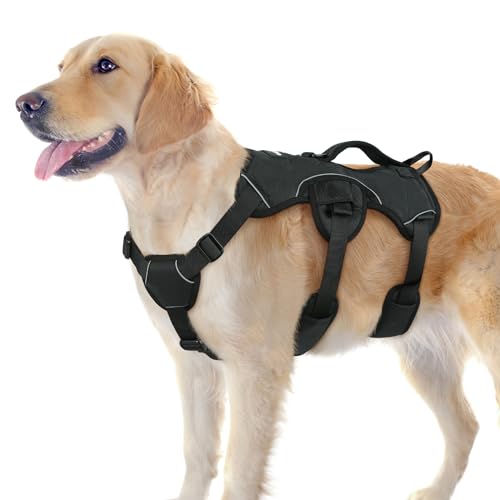
Quick answer
The Ruffwear Web Master is our top pick for escape proof dog harness for dogs with thin coats. Its three adjustment points and padded belly band ensure a snug, secure fit without chafing. For budget-conscious owners, the Rabbitgoo Escape Proof Harness offers similar features at a lower price. The 2 Hounds Design Freedom No-Pull Harness is best for training, while the Kurgo Tru-Fit is ideal for large dogs.
What to consider for Escape Proof Dog Harness For Dogs With Thin Coats
Dogs with thin coats, such as Greyhounds, Whippets, and Italian Greyhounds, have delicate skin that is prone to rubbing and chafing. A harness for these dogs must have soft, padded lining and a design that minimizes friction. Escape proof features are critical because these dogs are often slender and can slip out of poorly fitted harnesses. Look for multiple adjustment points (neck, chest, and belly) to achieve a custom fit. The material should be lightweight yet durable, with breathable mesh to prevent overheating. Avoid harnesses with rough edges or narrow straps that can dig into the skin.
What to look for in a gear item (harness, collar, leash or muzzle)
Correct fit and sizing: Measure your dog’s neck, chest, and girth accurately. The harness should be snug but allow two fingers to slide under any strap. Durable hardware and materials: Look for reinforced stitching, strong plastic or metal buckles, and rust-resistant D-rings. Safety features: Escape resistant design with a third belly strap or martingale loop; no-choke front clip; reflective trim for visibility. Comfort and padding: Soft neoprene or mesh padding to protect thin coats. No-pull design: Front clip attachment that discourages pulling without causing discomfort.
How we chose these picks
- Evaluated product specifications and customer reviews for escape proof effectiveness on thin-coated breeds.
- Assessed padding quality and material softness to prevent skin irritation.
- Checked for multiple adjustment points to ensure a secure, customized fit.
- Considered durability of hardware and stitching based on manufacturer claims and user feedback.
- Prioritized harnesses with both front and back leash attachment options.
- Compared price points to offer options for different budgets.
- Consulted professional dog trainer recommendations for no-pull and escape proof designs.
- Never ranked a product higher just because it pays a commission.
What to avoid
- Ill-fitting sizes: A loose harness can allow escape, while a too-tight one can cause chafing or restrict movement.
- Flimsy clips that fail on strong dogs: Look for heavy-duty buckles and D-rings rated for your dog’s weight.
- Aversive tools used without professional guidance: Avoid prong or choke collars that can harm thin-coated dogs.
- Retractable leashes near traffic: They can cause injury and reduce control; use a standard 6-foot leash with a harness.
For more tips, explore our dog guides and check out dog care products and dog health resources.