Quick answer
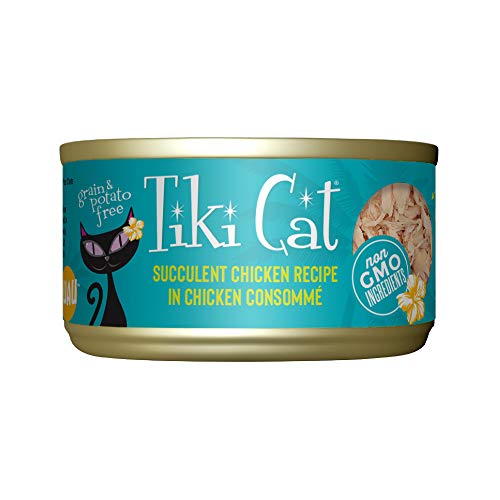
The best grain free cat food for weight loss is Wellness CORE Grain-Free Indoor Cat Food, thanks to its high protein, low fat formula that helps maintain lean muscle while reducing calories. For cats with sensitive stomachs, Blue Buffalo Freedom Grain-Free Indoor Cat Food is a great alternative. If you prefer wet food, Tiki Cat Puka Luau Succulent Chicken provides high moisture and protein with minimal carbs.
What to consider for Grain Free Cat Food For Weight Loss
When choosing a grain-free cat food for weight loss, look for a recipe that is high in animal protein (at least 40% on a dry matter basis) and low in carbohydrates (ideally under 20%). Avoid foods with high fat content, as fat is calorie-dense. Wet food can be beneficial because it has higher moisture content, which helps your cat feel full with fewer calories. Also consider your cat’s age and activity level; a senior cat may need fewer calories but more joint support. Always transition slowly over 7-10 days to avoid digestive upset.
What to look for in a cat food
Ensure the food is AAFCO complete and balanced for the appropriate life stage (adult maintenance or all life stages). The first ingredient should be a named meat (e.g., chicken, salmon) to guarantee high-quality animal protein. Cats require taurine, an essential amino acid, so verify it is added. For weight loss, look for a calorie content around 300-350 kcal per cup for dry food, and about 100-150 kcal per 3 oz can for wet food. Wet food helps with urinary health due to increased moisture. Also check for life-stage suitability; kitten and senior formulas have different nutrient profiles.
How we chose these picks
- Evaluated ingredient lists for named meat as first ingredient and absence of grains.
- Analyzed guaranteed analysis to ensure high protein (min 40% dry matter) and low fat (max 15% dry matter).
- Checked calorie content to confirm appropriate for weight loss (under 350 kcal/cup for dry).
- Reviewed AAFCO statements for completeness and life-stage appropriateness.
- Considered brand reputation and history of recalls.
- Read customer feedback on palatability and weight loss results.
- Compared price per pound to ensure value.
- Never ranked a product higher just because it pays a commission.
What to avoid
- Avoid foods with unnamed meat or meat by-products as the first ingredient; they may be lower quality.
- Steer clear of recipes with less than 30% protein on a dry matter basis; cats need protein for weight loss.
- Do not choose a food that lacks added taurine; taurine deficiency can cause heart and eye issues.
- Be cautious with all-life-stages foods for senior cats; they may have too many calories or unbalanced nutrients.
- Avoid abrupt diet changes; always transition over 7-10 days to prevent digestive upset.
For more guidance, browse our cat guides, cat food, and cat health sections.