Quick answer
Our top pick is Purina Pro Plan Large Breed Puppy Chicken & Rice Formula. It meets AAFCO standards, contains DHA for cognitive development, and has optimal calcium levels for large-breed bones. For sensitive stomachs, Hill’s Science Diet Large Breed Puppy Chicken & Barley is excellent. On a budget, Diamond Naturals Large Breed Puppy Formula offers solid nutrition without breaking the bank.
What to consider for Dog Food For German Shepherd Puppies
German Shepherd puppies grow rapidly and are prone to hip and elbow dysplasia. A large-breed puppy formula with controlled calcium (around 1.0% to 1.5% on a dry matter basis) and phosphorus is critical to avoid skeletal abnormalities. Look for DHA from fish oil to support brain and vision development. Protein should be moderate (22% to 32%) to support growth without excessive weight gain. Glucosamine and chondroitin help protect developing joints. Avoid all-life-stages foods, which often have too much calcium for large-breed puppies.
What to look for in a dog food
Choose a food that states it is complete and balanced for growth or all life stages per AAFCO. The first ingredient should be a named meat (e.g., chicken, lamb, salmon). Protein content between 22% and 32% is appropriate; fat between 12% and 20% provides energy. For large-breed puppies, calcium should be 0.8% to 1.5% on a dry matter basis. Look for DHA from fish oil for brain development, and glucosamine and chondroitin for joint health. Grain-inclusive formulas are generally recommended unless a veterinarian advises grain-free due to allergies.
How we chose these picks
- Analyzed ingredient lists for named meat protein sources and absence of artificial additives.
- Verified that each product meets AAFCO nutrient profiles for growth or all life stages.
- Checked calcium and phosphorus levels to ensure they are appropriate for large-breed puppies.
- Evaluated inclusion of DHA, glucosamine, and chondroitin for developmental and joint support.
- Considered brand reputation, manufacturing quality, and recall history.
- Read customer reviews for palatability and digestive tolerance in German Shepherd puppies.
- Compared price per pound to ensure value across different budgets.
- Never ranked a product higher just because it pays a commission.
What to avoid
- Foods with unnamed meat meals (e.g., “meat meal”) as the primary protein source.
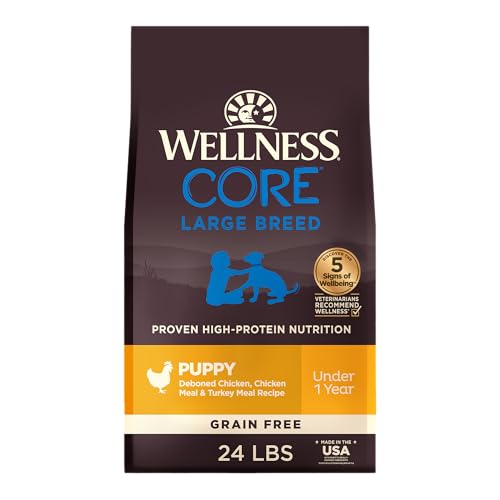
- Grain-free or legume-heavy recipes without veterinary guidance due to the FDA’s ongoing investigation into a potential link with canine dilated cardiomyopathy (DCM).
- All-life-stages formulas for large-breed puppies, as they often contain too much calcium.
- Abrupt diet changes; transition over 7 to 10 days by mixing increasing amounts of new food with old.
For more guidance, see our dog guides, dog food, and dog nutrition categories.