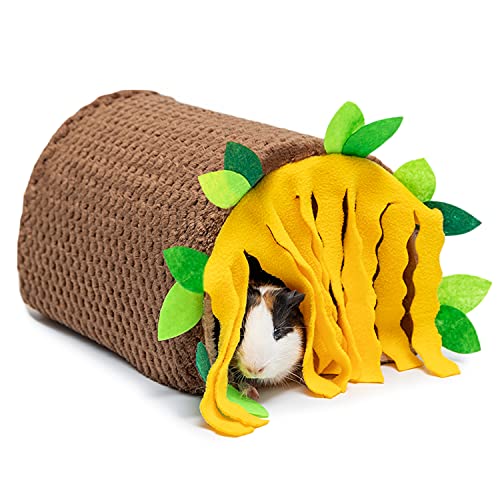
The best guinea pig hideout is a chew-safe, well-ventilated shelter that gives your cavy a true sense of security while standing up to daily gnawing and easy cleaning. For most owners, a sturdy wooden hut or a roomy plastic igloo offers the ideal balance of safety, comfort, and durability.
Guinea pigs are prey animals, which means a secure hideout is not a luxury but a genuine welfare requirement. In my clinical experience, cavies without a proper place to retreat show elevated stress behaviors, reduced appetite, and more frequent skin and respiratory issues. A good hideout lowers cortisol, encourages natural foraging and resting cycles, and gives shy or newly adopted pigs the confidence to settle into their space.
When choosing a hideout, prioritize chew-safe materials, adequate ventilation, and a footprint large enough for your pig to turn around comfortably. Avoid anything with cramped single-entry designs for nervous animals, since two exits prevent a dominant cage-mate from trapping another. Look for washable or wipe-clean surfaces, kiln-dried untreated wood or pet-safe plastic, and a stable base that will not tip when an excited guinea pig rockets inside.
Why this matters Many owners assume a guinea pig that refuses to use a hideout simply does not need one, but the opposite is usually true. A pig that stays exposed is often too anxious to commit to a single-exit shelter where it feels cornered, so switching to a two-entry hide or a tunnel frequently resolves the problem overnight. The behavior is about perceived escape routes, not preference for being out in the open.
Pro tip Buy two affordable hideouts instead of one premium model so you always have a clean, dry spare ready to swap in, which doubles the lifespan of each by letting them fully air out between uses.