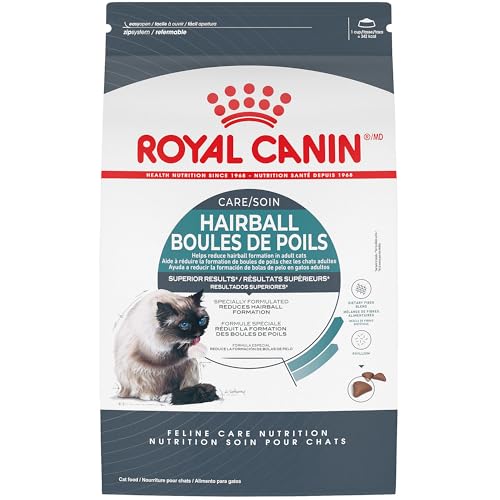
Quick answer
Our top pick is Royal Canin Hairball Care Dry Cat Food, formulated with a precise fiber blend to help reduce hairballs in multiple cats. For budget-conscious owners, Purina ONE Hairball Formula offers solid results at a lower price. If your cats have sensitive stomachs, Hill’s Science Diet Adult Hairball Control is an excellent choice.
What to consider for Hairball Control Cat Food For Multi Cat Apartments
In a multi-cat apartment, each cat may have different grooming habits and hairball frequency. Look for a food that provides balanced nutrition for all life stages (if you have kittens and seniors) and that all cats will eat willingly. The food should contain adequate fiber (around 3% to 5% crude fiber) to help move hair through the digestive tract, but not so much that it causes loose stools. Also consider the texture: dry kibble can help reduce plaque, while wet food adds moisture. Since multiple cats share the same bowl, choose a formula that is palatable to a variety of tastes.
What to look for in a cat food
First, ensure the food is AAFCO complete and balanced for the appropriate life stage (adult, kitten, or all life stages). Look for a named meat source (like chicken or salmon) as the first ingredient, providing high-quality animal protein. Cats require taurine, an essential amino acid, so the food must include added taurine (typically 0.1% on a dry matter basis). Moisture content matters: wet food (78%+ moisture) supports urinary health, while dry food (10% moisture) is more convenient. Finally, check for specific health claims like hairball control, which often rely on fiber sources such as psyllium or cellulose.
How we chose these picks
- Evaluated formulas specifically marketed for hairball control.
- Confirmed AAFCO nutritional adequacy statements for adult or all life stages.
- Checked that the first ingredient is a named animal protein.
- Reviewed fiber content and sources (e.g., psyllium, beet pulp, cellulose).
- Considered palatability and suitability for multiple cats with different preferences.
- Prioritized brands with a history of quality control and research.
- Compared price per pound to ensure value for multi-cat households.
- Never ranked a product higher just because it pays a commission.
What to avoid
- Avoid foods with unnamed meat or by-products as the first ingredient; they indicate lower protein quality.
- Steer clear of formulas that do not list added taurine; cats cannot synthesize enough on their own.
- Do not default to an all-life-stages food for a senior or kitten without checking the specific nutrient profile (e.g., lower phosphorus for seniors, higher protein for kittens).
- Avoid abrupt diet switches; transition over 7 to 10 days by mixing old and new food to prevent digestive upset.
For more guidance, explore our cat guides, cat food, and cat health resources.


