Quick answer
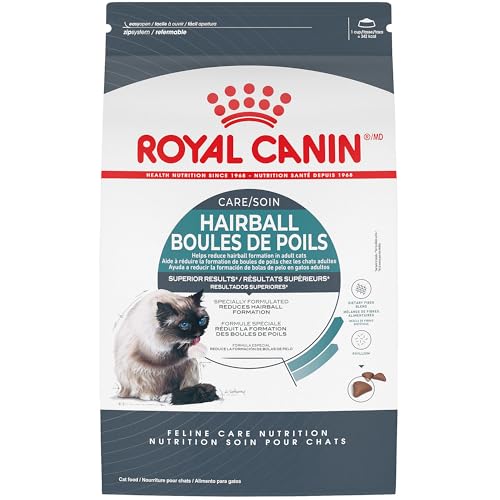
Our top pick is Hill’s Science Diet Adult Hairball Control & Healthy Weight Chicken Recipe. It combines natural fiber to reduce hairballs with balanced nutrition for weight gain. For cats needing extra calories, Royal Canin Hairball Care Dry Cat Food is a close runner-up. If your cat prefers wet food, Purina Pro Plan Hairball Management Salmon & Tuna Entree provides moisture and protein.
What to consider for Hairball Control Cat Food For Weight Gain
Choosing a hairball control cat food that also supports weight gain requires balancing fiber content with calorie density. Hairball formulas typically include extra fiber (like psyllium or cellulose) to help move hair through the digestive tract, but too much fiber can reduce calorie absorption. Look for foods with moderate fiber (around 3% to 5% crude fiber) and higher fat and protein to promote weight gain. Also consider the cat’s life stage, as kittens and seniors have different needs. Wet foods can be beneficial for hydration and may be easier to digest, but dry foods often have higher calorie density. Always consult your veterinarian before changing your cat’s diet, especially if your cat is underweight or has health issues.
What to look for in a cat food
When selecting a cat food for hairball control and weight gain, ensure it is AAFCO complete and balanced for your cat’s life stage (kitten, adult, or senior). The first ingredient should be a named meat source (e.g., chicken, salmon) to provide high-quality animal protein. Cats require taurine, an essential amino acid, so check that the food contains added taurine or naturally sufficient levels. Moisture content matters: wet food (canned) supports urinary health and can be more palatable, while dry food is calorie-dense. For weight gain, look for a recipe with at least 30% protein and 15% fat on a dry matter basis. Avoid foods with excessive carbohydrates or fillers. Finally, consider any specific needs like grain sensitivity or digestive issues.
How we chose these picks
- Evaluated ingredient lists for named meat as first ingredient and adequate protein and fat levels.
- Checked that each product is AAFCO complete and balanced for the appropriate life stage.
- Reviewed fiber content to ensure effective hairball control without overly diluting calories.
- Considered brand reputation and history of quality control.
- Read customer feedback to gauge palatability and effectiveness for weight gain and hairball reduction.
- Compared price per pound to offer options across budgets.
- Never ranked a product higher just because it pays a commission.
What to avoid
- Avoid foods with unnamed meat sources (e.g., “meat meal”) or very low animal protein content.
- Do not choose a food that lacks guaranteed taurine levels, as taurine deficiency can cause serious health issues.
- Be cautious with all-life-stages formulas for kittens or seniors; they may not meet specific needs.
- Avoid abrupt diet switches; transition over 7 to 10 days to prevent digestive upset.
For more guidance, explore our cat guides, cat food, and cat health resources.