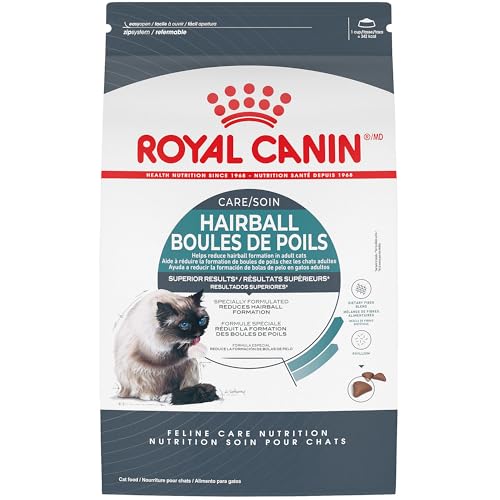
Quick answer
For most cats, our top pick is Royal Canin Hairball Care Dry Cat Food (Fish Flavor). It uses fish as the primary protein, is formulated to reduce hairballs, and supports skin and coat health. If your cat prefers wet food, Wellness CORE Grain-Free Pâté (Turkey & Duck) is excellent. For a budget-friendly option, Purina ONE Hairball Formula (Salmon) delivers solid results.
What to consider for Hairball Control Cat Food Without Chicken
When choosing a chicken-free hairball control cat food, look for a recipe that uses a named animal protein (like salmon, turkey, or duck) as the first ingredient. The food should contain adequate fiber (around 3% to 5% crude fiber) to help move hair through the digestive tract. Avoid artificial additives and ensure the formula meets AAFCO nutrient profiles for your cat’s life stage. Also consider your cat’s texture preference: dry kibble can help scrape hair from the tongue, while wet food adds moisture that aids digestion.
What to look for in a cat food
First, ensure the food carries an AAFCO statement of nutritional adequacy for the correct life stage (kitten, adult, or all life stages). Look for a named meat (e.g., salmon, turkey) as the first ingredient, not a by-product meal. Animal protein should be high, and taurine must be supplemented (cats cannot synthesize it). Moisture content matters: wet food (75-85% moisture) supports urinary health, while dry food is more calorie-dense. Finally, choose a formula tailored to your cat’s specific needs, such as hairball control or sensitive digestion.
How we chose these picks
- Evaluated ingredient lists to ensure no chicken or chicken by-products.
- Verified that each product is formulated for hairball control (fiber blend, natural lubricants).
- Checked for AAFCO nutritional adequacy statements for adult cats.
- Reviewed customer feedback on palatability and hairball reduction.
- Prioritized brands with strong quality control and transparent sourcing.
- Considered price per pound to offer options for different budgets.
- Included both dry and wet formulas to accommodate cat preferences.
- Never ranked a product higher just because it pays a commission.
What to avoid
- Avoid foods that list only vague protein sources like “meat meal” or “poultry by-product meal” without naming the animal.
- Steer clear of recipes with insufficient animal protein (less than 30% crude protein for dry food).
- Do not choose a food that lacks a taurine guarantee; taurine deficiency can cause serious health issues.
- Avoid using an all-life-stages food for a kitten or senior without verifying it meets their specific needs (e.g., calcium-phosphorus ratio for kittens).
- Never switch your cat’s diet abruptly; transition over 7 to 10 days to avoid digestive upset.
For more guidance, explore our cat guides, cat food reviews, and cat health articles.


