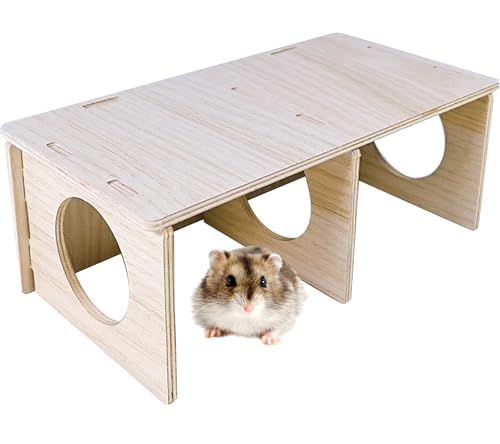
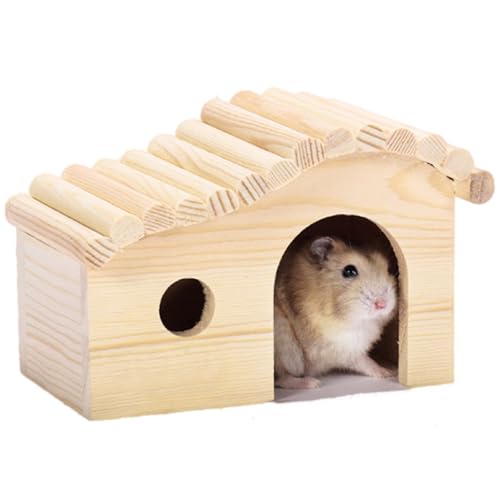
The best hamster hideout is a solid, untreated hardwood multi-chamber house that mimics a natural burrow while staying easy to lift and clean. For most owners I recommend the Acsist Wooden Hamster Hideout for its platform, food bowl, and ventilated design that supports natural nesting and hiding behavior.
60-65%
Hamster's day spent sleeping or resting in a hideout
2-3 chambers
Ideal layout to separate nesting from food hoarding
2-4 in.
Recommended interior height for adult Syrian hamsters
100%
Untreated, glue-free wood is the safest gnaw-proof material
A hideout is not a decoration. It is the single most important enrichment item in a hamster habitat, because hamsters are prey animals that sleep through the day and feel chronically stressed without a dark, enclosed place to retreat and hoard food. In my clinical experience, hamsters without a proper hideout show more bar-chewing, sleep disruption, and stress-linked behaviors than those given a secure multi-chamber house.
When choosing a hideout, prioritize untreated solid hardwood over painted or glued composites, since hamsters gnaw constantly and can ingest finishes or formaldehyde-based adhesives. Look for a hide sized to your species, multiple chambers for nesting versus food storage, adequate ventilation, and a removable roof so you can perform health checks without tearing apart the nest. The right pick balances natural burrowing instinct with the practical reality of weekly spot cleaning.
Why this matters Many owners assume a bigger or more elaborate hideout is always better, but an overcrowded multi-room hide can actually deter a nervous hamster if the chambers feel too open. The secret is snug nesting chambers paired with enough deep bedding outside the hide for digging, because the hide and the burrow work together rather than the hide replacing the dig.