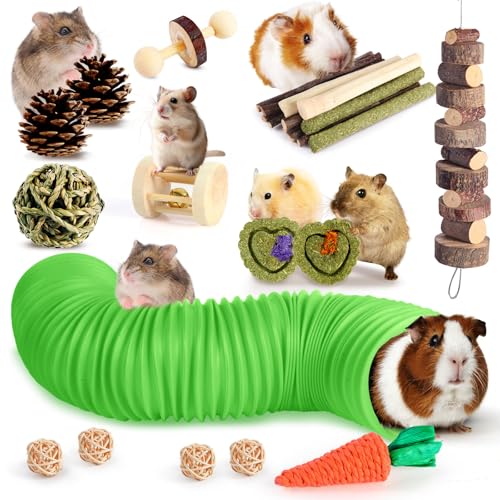
Hamsters are highly active rodents that, in the wild, run several kilometers a night and tunnel constantly. In captivity, that drive does not disappear, and without proper outlets it shows up as bar-chewing, cage-pacing, and stress-related behaviors. As a veterinarian, I view enrichment toys not as optional extras but as a core part of preventive care, supporting both dental health and psychological wellbeing.
When choosing toys, prioritize natural, untreated materials your hamster can safely gnaw, since their teeth grow continuously and need wearing down. Look for appropriate sizing for your species (Syrians need larger openings than dwarfs), good ventilation in any enclosed tunnel or hideout, and a mix of activities: tunneling, climbing, chewing, and hiding. Avoid plastics with small breakable parts and anything coated in paint, varnish, or glue.