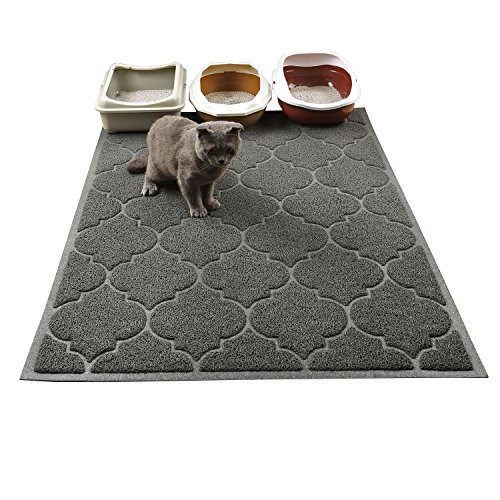
Quick answer
The PetFusion ToughGrip Premium Litter Mat is our top pick for cats with sensitive paws because its soft, non-slip silicone surface gently traps litter without irritating paw pads. For a budget-friendly alternative, the Gorilla Grip Original Litter Mat offers similar comfort. If you prefer a mat that doubles as a scratch pad, the Kitty City XL Cat Litter Mat is a great choice.
What to consider for Litter Mat For Cats With Sensitive Paws
Cats with sensitive paws may have allergies, injuries, or simply be more reactive to textures. The mat’s surface should be smooth and soft to avoid abrasion. Look for mats with a honeycomb or waffle pattern that traps litter without sharp edges. The material matters: silicone and soft rubber are gentler than hard plastic. Also consider the mat’s thickness and whether it lies flat to prevent tripping. Avoid mats with rough, scratchy surfaces that could cause paw pad irritation.
What to look for in a cat litter or litter-area product
When choosing a litter mat, consider these factors: strong clumping and odour control to keep the area clean, low dust to protect feline airways, low tracking to minimize mess, multi-cat suitability if you have more than one cat, and an unscented option for sensitive cats. A mat that is easy to clean and durable will also save you time and money.
How we chose these picks
- Evaluated surface texture for paw comfort and non-abrasiveness.
- Checked material softness and flexibility to avoid paw pad irritation.
- Assessed litter trapping efficiency without sharp edges.
- Considered ease of cleaning and maintenance.
- Reviewed customer feedback for durability and real-world use.
- Compared price and value across different brands and sizes.
- Ensured all picks are widely available on Amazon.
- Never ranked a product higher just because it pays a commission.
What to avoid
- Heavily scented litters that put cats off the box and may cause respiratory issues.
- High-dust clay litters for cats with breathing sensitivities.
- A box too small or too few boxes for the number of cats (rule: one box per cat plus one extra).
- Sudden litter changes; transition gradually over a week by mixing old and new litter.
For more guidance, check out our cat guides, cat care products, and cat health sections.