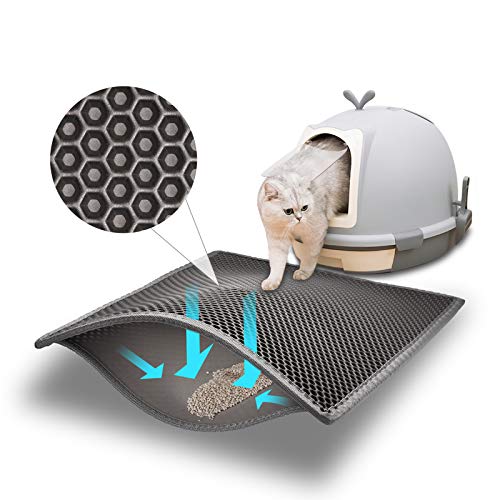
Quick answer
The Gorilla Grip Original Premium Cat Litter Mat is our top pick for wet food diets. Its deep honeycomb design traps moisture and litter effectively, keeping floors clean. For larger households, the PetFusion ToughGrip Mat offers superior coverage. Budget-conscious owners should consider the Frisco Large Cat Litter Mat. Each pick excels at absorbing moisture and simplifying cleanup.
What to consider for Litter Mat For Wet Food Diets
Cats on wet food diets often have higher water intake, leading to more urine volume and looser stools. This increases the risk of litter tracking and moisture spreading beyond the box. A good litter mat must absorb liquid quickly, prevent tracking, and be easy to clean. Look for mats with deep grooves or honeycomb patterns that trap litter and moisture. Also consider size: a larger mat provides more coverage. Materials like PVC or silicone are durable and easy to rinse. Avoid mats with fabric tops that can harbor odors.
What to look for in a cat litter or litter-area product
Strong clumping and odor control are critical to manage the increased waste from wet food diets. Low-dust litter protects feline airways, especially for cats with respiratory sensitivities. Low-tracking designs reduce scatter, which is vital when using a mat. Multi-cat households need litters that handle multiple users without odor breakthrough. Unscented options are best for cats sensitive to fragrances, as strong scents can deter litter box use.
How we chose these picks
- Evaluated mat materials for moisture absorption and ease of cleaning.
- Considered mat size and coverage area for different litter box setups.
- Reviewed customer feedback on durability and odor control.
- Assessed tracking reduction based on mat texture and design.
- Focused on products suitable for wet food diet waste characteristics.
- Selected mats compatible with various litter types (clumping, crystal, etc.).
- Prioritized value for money across different budgets.
- Never ranked a product higher just because it pays a commission.
What to avoid
- Heavily scented litters that may deter cats from using the box, especially those with sensitive noses.
- High-dust clay litters that can aggravate feline asthma or respiratory issues.
- A litter box that is too small or insufficient number of boxes for multi-cat homes (rule of thumb: one box per cat plus one).
- Sudden litter changes; always transition gradually over a week to avoid litter box aversion.
For more tips, visit our cat guides, cat food, and cat health sections.