Quick answer
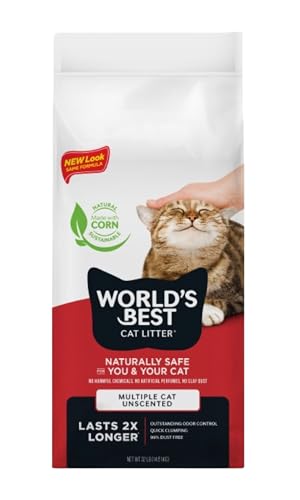
Our top pick is World’s Best Cat Litter Multiple Cat Unscented for its strong clumping, excellent odor control, and low-dust formula that suits larger cats. If your cat has allergies, consider Dr. Elsey’s Precious Cat Ultra Unscented for its 99.9% dust-free clay. For a plant-based option, Naturally Fresh Active Carbon Walnut Litter offers superior odor trapping.
What to consider for Natural Cat Litter For Cats Over 15 Lbs
Heavier cats produce more waste and need a litter that clumps tightly to prevent breakage during scooping. They also tend to dig deeper, so low-dust formulas protect their respiratory health. Odor control is critical because larger cats have stronger-smelling urine. Look for natural materials like corn, walnut, or wood that are both absorbent and biodegradable. The litter box should be large enough (at least 1.5 times the cat’s length) to accommodate their size.
What to look for in a cat litter or litter-area product
Strong clumping and odor control are essential for maintaining a clean box. Low dust is important for feline airways, especially in larger cats that may have breathing issues. Low tracking reduces mess around the house. Multi-cat suitability is a plus if you have more than one cat. An unscented option is best for sensitive cats who may avoid heavily perfumed litters.
How we chose these picks
- Evaluated clumping strength and odor control based on ingredient composition and user reviews.
- Prioritized low-dust formulas to protect respiratory health.
- Selected natural materials (corn, walnut, wood, paper) that are biodegradable and safe.
- Considered suitability for large cats: box size, weight of litter, and ease of scooping.
- Checked for unscented options to avoid deterring picky cats.
- Reviewed customer feedback for real-world performance with heavy cats.
- Never ranked a product higher just because it pays a commission.
What to avoid
- Heavily scented litters that can put cats off the box and cause respiratory irritation.
- High-dust clay litters that may worsen breathing issues in cats with asthma or allergies.
- A box that is too small or too few boxes for the number of cats, leading to avoidance.
- Sudden litter changes; always transition gradually over a week by mixing old and new litter.
For more guidance, check our cat guides, cat food, and cat health sections.


