Quick answer
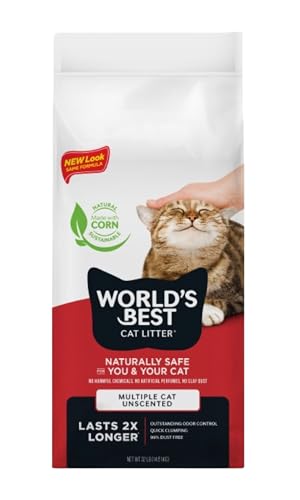
Our top pick is World’s Best Cat Litter Multiple Cat Unscented. Its large, dense granules track less than many natural litters, and it clumps firmly for easy scooping. For cats with respiratory sensitivity, the low-dust Feline Pine Original is a close runner-up. If you need maximum odour control in a multi-cat home, consider Dr. Elsey’s Ultra Unscented.
What to consider for Natural Cat Litter For Cats That Track Litter
Tracking is often worse with lightweight or fine-grained litters. Natural litters made from corn, wheat, pine, or walnut tend to have larger, heavier particles that stay in the box better. However, some natural litters break down into dust or small pieces that stick to paws. Look for litters with oversized granules or a pellet form. Also consider the texture: clumping litters may track more than non-clumping pellets, but they offer superior odour control. A good litter mat can catch what escapes.
What to look for in a cat litter or litter-area product
Strong clumping and odour control are essential to keep the box fresh between changes. Low dust protects feline airways, especially for cats with asthma or allergies. Low tracking reduces mess around the box. Multi-cat suitability ensures the litter holds up under heavy use. An unscented option is best for sensitive cats who may avoid perfumed litter.
How we chose these picks
- Evaluated particle size and shape for tracking potential based on manufacturer descriptions and user feedback.
- Compared clumping ability and odour control claims across natural litter brands.
- Checked for low-dust certifications or explicit low-dust formulations.
- Considered multi-cat performance and value per pound.
- Prioritised unscented or naturally scented options to avoid deterring cats.
- Read verified buyer reviews focusing on tracking and dust.
- Consulted veterinary and feline behaviour guidelines on litter preferences.
- Never ranked a product higher just because it pays a commission.
What to avoid
- Heavily scented litters: strong perfumes can put cats off using the box, leading to elimination issues.
- High-dust clay litters: fine dust can irritate cat lungs and worsen respiratory conditions.
- A box too small or too few boxes: each cat needs at least one box plus one extra; cramped boxes increase tracking and stress.
- Sudden litter changes: gradually mix new litter with old over a week to avoid litter box aversion.
For more advice, browse our cat guides and check out cat food and cat care products.


