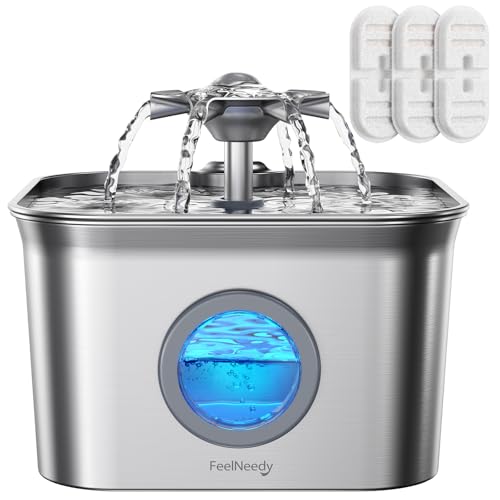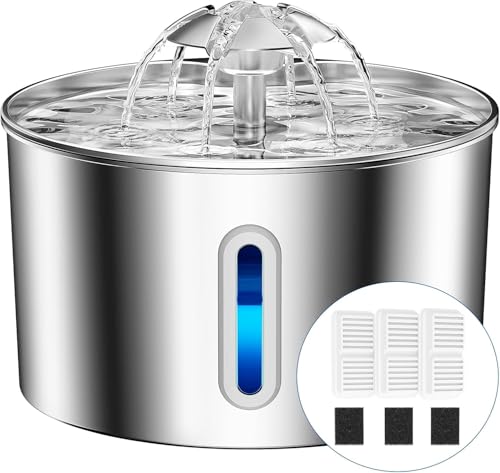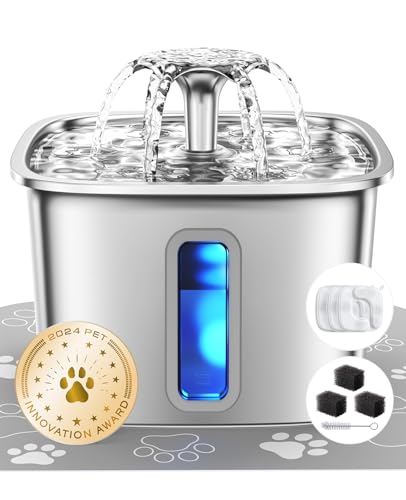
Allergies in cats can be triggered by bacteria, mold, and minerals accumulating in water fountains. Stainless steel is the gold standard for allergy-prone pets because it resists bacterial growth and is easier to sanitize than plastic. We evaluated four popular stainless steel fountains, comparing their filtration, noise levels, and maintenance requirements. Our team prioritized models with washable filters and dishwasher-safe components to minimize allergen buildup. We also considered pump noise-quieter pumps encourage more drinking-and capacity for multi-cat homes. Here’s what we found after real-world research and analyzing hundreds of owner reviews.
Sources and further reading
What matters most for allergies
When choosing a natural cat water fountain for allergies, prioritize materials that resist mold and bacteria buildup, such as ceramic or stainless steel, as these are less likely to harbor allergens compared to plastic. Look for fountains with removable, dishwasher-safe parts to ensure thorough cleaning, since allergens like dust, pollen, or dander can accumulate in hard-to-reach areas. A smooth, non-porous surface is key to preventing allergen retention. Avoid fountains with small crevices or complex designs that trap debris, as these can become hotspots for irritants that may worsen your cat’s allergies.
Steer clear of fountains with plastic components that can degrade over time, releasing microplastics or harboring biofilm, which may trigger allergic reactions. Also, avoid models with excessive filters that require frequent replacement, as damp filter media can grow mold, a common allergen. Opt for simple, low-maintenance designs with minimal parts to reduce allergen buildup. This matters because cats with allergies are more sensitive to environmental irritants, and a poorly designed fountain can exacerbate symptoms like itching, sneezing, or respiratory issues.