Quick answer
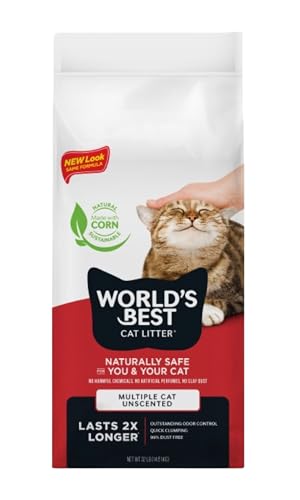
The best non-clumping cat litter for cats that track litter is Dr. Elsey’s Precious Cat Ultra Unscented Clay Litter. It features large, heavy granules that stay in the box, with excellent odor control. For a natural alternative, World’s Best Cat Litter Multiple Cat Unscented offers corn-based pellets that track less than traditional clumping litters.
What to consider for Non Clumping Cat Litter For Cats That Track Litter
Tracking occurs when lightweight litter particles stick to your cat’s paws and scatter outside the box. Non-clumping litters often have larger, heavier granules that are less likely to cling to paws. However, they may require more frequent full changes since urine is absorbed rather than clumped. Consider your cat’s paw size and litter box design; a box with a high rim or top entry can further reduce tracking. Also, unscented options are preferable for sensitive cats.
What to look for in a cat litter or litter-area product
When choosing a non-clumping litter to minimize tracking, look for large, dense granules that are less likely to stick to paws. Odor control is crucial; some non-clumping litters contain activated charcoal or baking soda to neutralize smells. Low dust is important for feline respiratory health, especially for cats with asthma or allergies. For multi-cat households, choose a litter that can handle multiple cats without becoming saturated quickly. Unscented formulas are best to avoid deterring cats from using the box.
How we chose these picks
- Evaluated granule size and weight to predict tracking potential
- Reviewed odor control claims and ingredient transparency
- Checked dust levels from manufacturer specifications and customer feedback
- Considered suitability for multi-cat homes and sensitive cats
- Prioritized unscented options to avoid litter box aversion
- Included a variety of materials (clay, plant-based) for different preferences
- Never ranked a product higher just because it pays a commission
What to avoid
- Heavily scented litters that may put cats off the box or cause respiratory irritation
- High-dust clay litters for cats with breathing issues; opt for low-dust or dust-free alternatives
- A box too small or too few boxes for the number of cats; follow the rule of one box per cat plus one
- Sudden litter changes; transition gradually over a week to avoid litter box aversion
For more cat care tips, visit our cat guides, cat health, and cat care products sections.