Quick answer
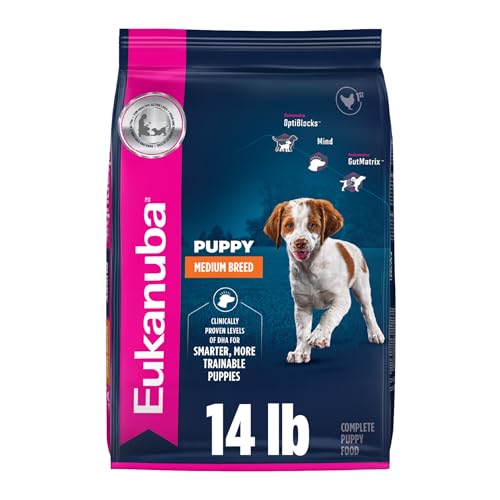
For most Australian Cattle Dog puppies, our top pick is Purina Pro Plan Puppy Chicken and Rice Formula. It leads with named chicken, carries an AAFCO complete-and-balanced statement for growth, includes guaranteed live probiotics, and provides the moderate protein and fat levels that suit an active medium breed without pushing rapid growth. If your puppy has a touchy stomach, Hill’s Science Diet Puppy Sensitive Stomach and Skin is a gentler choice. On a tight budget, Diamond Naturals Puppy Formula delivers solid named-meat nutrition for less. Want a grain-inclusive recipe with extra joint support, consider Eukanuba Puppy Medium Breed. For a different protein with whole-food extras, Wellness Complete Health Puppy rounds out the list.
What to consider for Puppy Food For Australian Cattle Dog
The Australian Cattle Dog, sometimes called the Blue Heeler or Queensland Heeler, is a compact, muscular working breed that typically matures around 35 to 50 pounds. That puts it firmly in the medium-breed category, so you generally want a medium-breed or all-breed puppy growth formula rather than a large-breed one. Heelers are famously energetic and were bred to drove cattle over long distances, so calorie needs while growing can be higher than for a couch-bound dog of the same size. The flip side is that this is a working dog people often keep busy, so it is easy to over-feed an active-looking puppy and create excess weight that strains developing joints.
Two breed-relevant health themes are worth flagging without overstating them. Australian Cattle Dogs have an above-average reported incidence of inherited deafness and of progressive retinal atrophy, neither of which is a nutrition problem, but both are reasons to keep up with your veterinarian. Joint health, including hip and elbow soundness, is the area where steady growth and sensible body condition genuinely help. Keeping a growing Heeler lean and feeding measured meals is one of the more practical things an owner can control. For any specific medical concern or before adding a supplement, talk to your veterinarian.
What to look for in a dog food
Start with the label. Look for an AAFCO complete-and-balanced statement for the correct life stage, which here means “growth” or “all life stages,” not “adult maintenance.” A statement that includes growth of large-size dogs is fine but not required for a medium breed. Next, check that a named meat such as chicken, lamb, or salmon, or a named meat meal, appears as the first ingredient rather than a vague “meat meal” or a grain. For an active medium-breed puppy, practical targets are often in the range of roughly 26 to 32 percent protein and about 12 to 20 percent fat on a dry-matter basis, with calorie density commonly around 350 to 450 kcal per cup, though exact needs vary by dog. These are general ranges, not medical rules, so feed to body condition and adjust with your vet’s input.
Because the Australian Cattle Dog is a medium breed, a standard medium-breed or all-breed puppy formula is appropriate; you do not need a large-breed puppy food, which is formulated to slow growth and control calcium for dogs expected to exceed roughly 50 to 70 pounds. Joint and omega support can be a nice extra: foods listing guaranteed omega-3 fatty acids, DHA for brain and eye development, or sources like fish oil and flaxseed may support a growing, active dog, though no food treats or prevents joint disease. Whatever you choose, transition gradually and monitor weight.
How we chose these picks
- Confirmed each product is a real, currently sold puppy formula from an established brand with a published ingredient panel.
- Prioritized recipes carrying an AAFCO complete-and-balanced statement for growth or all life stages.
- Required a named animal protein, such as chicken or lamb, at or near the top of the ingredient list.
- Favored protein, fat, and calorie levels that suit an active medium-breed puppy rather than a giant or toy breed.
- Considered grain-inclusive options as the safer default given the ongoing FDA investigation into diet and canine DCM.
- Looked for useful extras like DHA, omega-3 fatty acids, or guaranteed probiotics where the brand discloses them.
- Checked each brand against publicly posted FDA recall information at the time of writing and favored brands with no recent active growth-formula recalls.
- Never ranked a product higher just because it pays a commission.
What to avoid
- Recipes that list only an unnamed “meat meal” or generic “meat” as the protein source, with no species named.
- Defaulting to grain-free or legume-heavy recipes; the FDA investigation into a potential link between certain diets and canine dilated cardiomyopathy is ongoing, and grain-inclusive is the safer default unless your veterinarian advises otherwise.
- Feeding an all-life-stages or adult-maintenance food as the main diet during the puppy growth window, and avoid large-breed puppy formulas for this medium breed unless your vet recommends one.
- Abrupt diet switches; change foods over about 7 to 10 days to reduce the risk of stomach upset.
For more help raising a healthy, active Heeler, browse our dog guides, our dog food roundups, and our dog nutrition resources.