Quick answer
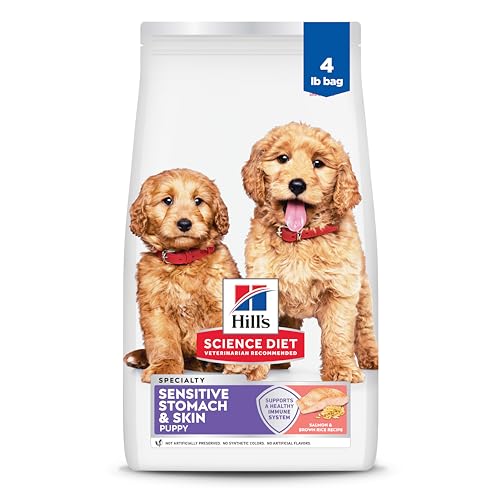
Our editorial team picks Purina Pro Plan Puppy Sensitive Skin & Stomach Salmon & Rice as the best overall for sensitive skin puppies. It combines high-quality salmon protein, easily digestible rice, and omega-6 fatty acids for skin health. For budget-conscious owners, Diamond Naturals Puppy Formula offers similar benefits at a lower price. If your puppy has severe sensitivities, Hill’s Science Diet Puppy Sensitive Skin & Stomach provides a limited-ingredient solution.
What to consider for Puppy Food For Sensitive Skin
Puppies with sensitive skin often have underlying food allergies or intolerances that manifest as itching, redness, or hot spots. The most common triggers are chicken, beef, dairy, and grains like wheat or corn. When choosing a food, look for a novel protein source such as salmon, lamb, or duck, and a single carbohydrate source like rice or sweet potato. Omega-3 and omega-6 fatty acids from fish oil or flaxseed help support a healthy skin barrier. Avoid artificial preservatives, colors, and flavors, as these can exacerbate sensitivities. Always transition your puppy slowly over 7 to 10 days to avoid digestive upset.
What to look for in a dog food
First, ensure the food has an AAFCO statement confirming it is complete and balanced for growth (puppies) or all life stages. Look for a named meat protein as the first ingredient, such as salmon or lamb. Protein content should be between 22% and 32% on a dry matter basis, fat between 8% and 20%. For large breed puppies, calcium levels should be around 1.0% to 1.5% to support proper bone development. Omega-3 fatty acids (EPA and DHA) from fish oil are beneficial for skin and coat health. Avoid foods with generic ‘meat meal’ as the sole protein source. If your puppy is a large breed, choose a large-breed-specific formula to control growth rate.
How we chose these picks
- Evaluated ingredient lists for novel proteins and limited ingredients suitable for sensitive skin.
- Confirmed each food meets AAFCO nutrient profiles for growth or all life stages.
- Checked for inclusion of omega-3 and omega-6 fatty acids from named sources like fish oil or flaxseed.
- Prioritized brands with a history of rigorous quality control and feeding-data reviews.
- Reviewed customer feedback for palatability and improvement in skin condition.
- Compared price per pound to ensure value across different budgets.
- Consulted veterinary nutrition guidelines and recommendations from organizations like WSAVA.
- Never ranked a product higher just because it pays a commission.
What to avoid
- Foods with an unnamed ‘meat meal’ as the primary protein source, as this can hide allergens.
- Defaulting to grain-free or legume-heavy recipes without veterinary guidance, due to the ongoing FDA investigation into a potential link with canine dilated cardiomyopathy (DCM). Grain-inclusive diets are generally safer unless your vet advises otherwise.
- All-life-stages food for a large-breed puppy, as it may contain excessive calcium or calories that can lead to skeletal issues.
- Abrupt diet switches; always transition over 7 to 10 days to minimize digestive upset.
Explore more of our dog guides, including dog food and dog health resources.