We compared natural ropes used to wrap cat scratching posts and trees, focusing on the sisal and jute options most owners reach for. Instead of inventing wear tests, we evaluated each rope against manufacturer specs for material, diameter, and length, plus the patterns we saw across aggregated owner feedback on durability, shedding, and how well cats took to the surface. In our evaluation we found that fiber type and length value drive the decision. Sisal tends to hold up to clawing better, while jute is softer and can fray faster. We recommend measuring your post and adding extra length, since wrapping uses more rope than people expect. Choose untreated natural fiber, secure the ends safely, and trim loose strands so your cat enjoys a sturdy scratch surface without ingesting stray fibers.
Best Rope For Cat Scratching Post (2026): 4 Top Picks Reviewed
We compared sisal and jute ropes for rewrapping or building cat scratching posts on durability, texture, and length value. Our pick balances a satisfying scratch surface, strong fibers, and enough length for most DIY projects.
Some links below are affiliate links. If you buy through them we may earn a small commission at no extra cost to you. Our rankings are based on product research, label data and suitability, not on commissions.
 ★ Top Pick: PerkHomy 5mm Jute Rope 105 Feet Twisted Heavy Duty …
Quick Comparison
| Product | Best For | |
|---|---|---|
| PerkHomy 5mm Jute Rope 105 Feet Twisted Heavy… | Best Value | Check price → |
| Pelzin Natural Sisal Rope for Cat Scratcher -… | Best Budget | Check price → |
| Natural Sisal Rope for Cat Scratcher, 1/4 Inc… | Best Overall | Check price → |
| 164 Feet Sisal Rope for Cat Scratching Post, … | Runner-Up | Check price → |
Sisal versus jute and total length decide the outcome; sisal lasts longer for hard scratchers, and buying generous length prevents running short mid-wrap.
Types Explained
Jute rope
Softer twisted natural fiber, easy to handle and budget-friendly for wrapping projects.
Best for: Gentler scratchers and owners wanting an affordable, pliable rope.Sisal rope
Stiffer, harder-wearing natural fiber that stands up to repeated clawing.
Best for: Enthusiastic scratchers and posts that need to last.Long-length sisal
Larger spools of sisal sized for full trees or multiple posts in one project.
Best for: Big DIY builds, multi-post projects, or owners who rewrap often.Top 4 Picks
PerkHomy 5mm Jute Rope 105 Feet Twisted Heavy Duty and Thick Twine Rope for Cat Scratcher Scratching Post Tree Craft Projects Gardening Home Decoration Packing Bundling (105FT * 5mm)
We like this PerkHomy jute rope at 105 feet for its generous length and heavy-duty twist. In our evaluation the soft, thick jute is easy to wrap and well suited to gentler scratchers.

Pelzin Natural Sisal Rope for Cat Scratcher - 1/4 Inch by 50 Feet, Cat Tree Rope Twine for Scratching Post Replacement, Repairing, Recovering and DIY, White
We recommend the Pelzin natural sisal at quarter inch by 50 feet for smaller post projects on a budget. What we like is the durable sisal texture in a length that suits a single post.
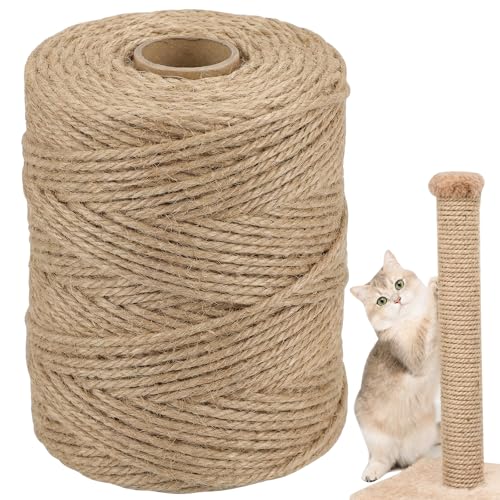
Natural Sisal Rope for Cat Scratcher, 1/4 Inch x 164 Feet Cat Rope, Heavy Duty Sisal Twine for Cats Scratching Post Replacement, and Crafts Gardening Home Decorating
We chose this natural sisal rope at quarter inch by 164 feet for its hard-wearing fiber and ample length. What we like is that the long sisal handles enthusiastic scratchers and covers full trees in one buy.
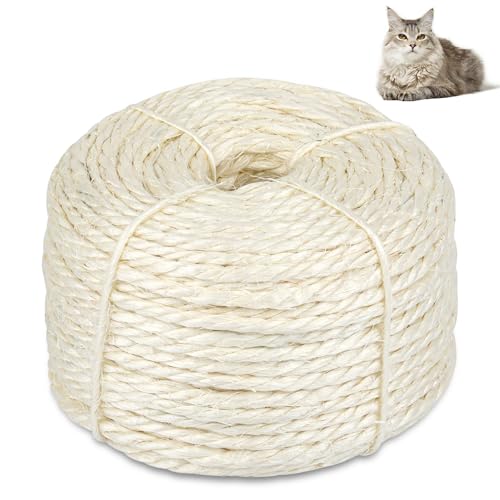
164 Feet Sisal Rope for Cat Scratching Post, 1/6 Inch Natural Cat Tree Rope, DIY Hemp Twine Rope for Repairing, Recovering Scratch Post Cats Tree Tower Replacement (White)
We found this 164-foot sisal at one-sixth inch a fine-textured option with plenty of length for DIY builds. What we like is the thinner diameter that gives a finer scratch surface, though it wraps more turns per post.
Key Buying Factors
Fiber type
Sisal generally resists clawing better and lasts longer, while jute is softer and more affordable but can fray sooner. Match the fiber to how hard your cat scratches.
Length for the project
Wrapping a post uses more rope than expected. We favor buying extra length so you can complete the post and have rope to spare for repairs.
Diameter
Common diameters like quarter inch wrap neatly and give cats a good grip. Thicker rope covers a post faster; thinner rope gives a finer texture.
Natural and untreated
We prioritize untreated natural fiber without oils or chemicals, since cats scratch and sometimes mouth the surface.
Shedding and fraying
Some ropes shed loose fibers. Lower-shed options keep your space cleaner and reduce the chance your cat ingests stray strands.
Ends and finishing
Plan how you will secure the rope ends, since loose ends unravel quickly under claws. Tucking and fixing ends well extends the post's life.
Care, Cost and Maintenance
Wrap tightly and secure ends
Keep tension even as you wrap and fix both ends firmly so claws cannot start unraveling the rope.
Trim loose fibers
Snip stray strands as they appear so your cat does not pull or swallow loose fiber while scratching.
Rewrap when worn
Replace the rope once it is shredded or thin. A fresh, sturdy surface keeps your cat scratching the post instead of furniture.
Measure your post's height and circumference, then buy more length than the math suggests, since tight wrapping consumes rope quickly and leftovers are handy for repairs.