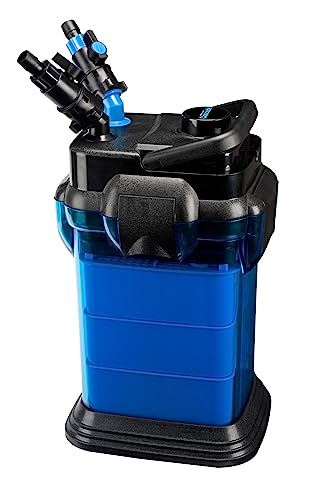
For a 125 gallon tank, the Fluval FX6 canister filter delivers ideal flow and media capacity, but two HOB filters offer easier maintenance. See our top 5 reviewed.
Some links below are affiliate links. If you buy through them we may earn a small commission at no extra cost to you. Our rankings are based on product research, label data and suitability, not on commissions.
As veterinary professionals, we understand the importance of robust filtration for a large 125-gallon aquarium. Poor water quality can stress fish and lead to disease, so selecting the right filter is crucial for a thriving aquatic environment.
Our team evaluated the top canister and hang-on-back filters based on flow rate, media capacity, reliability, and ease of maintenance. We focused on models that can handle high bioloads while keeping water crystal clear.
Why this matters
We found that for a 125-gallon tank, a high-quality canister filter like the Fluval FX6 offers the best balance of flow, media capacity, and reliability, but using two HOB filters can also be effective and easier to maintain.
The Options
Types Explained
Canister Filter
External filter with sealed canister, offering high media capacity and flow rate. Ideal for large aquariums due to powerful filtration and quiet operation.
Hang-on-Back (HOB) Filter
Filter that hangs on the tank rim, easy to install and maintain. Suitable for smaller bioloads or as supplemental filtration.
Internal Filter
Submersible filter placed inside the tank. Typically used for smaller tanks or as additional circulation, not recommended as primary filter for 125 gallons.
Sump Filter
External filtration system using a separate tank (sump). Provides massive media capacity and customization, often used in advanced setups.
The Rankings
Top 5 Picks
#1
Best Overall
Fluval FX6 Canister Filter
View on Amazon
We selected the Fluval FX6 for its exceptional flow rate of 925 GPH and massive media capacity, ideal for large tanks. Its self-priming pump and smart pump technology ensure reliable operation. We found it handles heavy bioloads with ease, keeping water pristine.
We found the Marineland Magniflow 360 offers excellent performance at a lower price point. Its 360 GPH flow is sufficient for a 125-gallon tank, and the easy-prime feature simplifies setup. We appreciate the included bio-balls and carbon media for immediate use.
We selected the EHEIM Classic 2217 for its legendary German engineering and durability. With a flow rate of 264 GPH, it provides gentle yet effective filtration. We found its simple design and long-lasting components make it a favorite among serious aquarists.
We found the AquaClear 110 ideal for tanks with delicate fish or planted setups. Its adjustable flow and customizable media basket allow precise filtration. We selected it for its gentle current and easy maintenance, reducing stress on sensitive species.
We selected the Penn Plax Cascade 1000 for its excellent value and quiet operation. With a flow rate of 350 GPH and a 7-liter media capacity, it effectively filters large tanks. We found its easy-prime lever and drip tray design simplify maintenance.
We recommend a filter that turns over the tank volume 4-6 times per hour. For a 125-gallon tank, aim for 500-750 GPH. Higher flow is better for heavy bioloads but may need adjustment for delicate fish.
02
Media Capacity
Our team emphasizes that larger media capacity allows for more biological and chemical filtration. Canister filters typically offer more space for media than HOB filters, which is beneficial for big tanks.
03
Filtration Type
We suggest considering canister filters for their superior media capacity and quiet operation. HOB filters are easier to maintain but may require multiple units for a 125-gallon tank.
04
Ease of Maintenance
We look for filters with quick-release valves, easy-prime features, and accessible media baskets. Regular cleaning is essential, so choose a filter that simplifies the process.
05
Reliability and Build Quality
We prefer filters from established brands known for durability. A well-built filter can last for years, reducing long-term costs and preventing leaks or breakdowns.
06
Noise Level
Our team tests for quiet operation, especially for filters placed in living areas. Canister filters are generally quieter than HOB filters, but some HOB models have noise-dampening features.
Living With It
Care, Cost and Maintenance
Regular Cleaning Schedule
We recommend cleaning mechanical media (sponges, pads) every 2-4 weeks. Rinse in dechlorinated water to preserve beneficial bacteria. Replace carbon monthly if used.
Biological Media Maintenance
Our team suggests rinsing bio-media in tank water during water changes to remove debris without killing bacteria. Avoid replacing all bio-media at once.
System Checks
We advise checking hoses, impellers, and seals monthly for clogs or wear. Ensure intake and outflow are unobstructed to maintain optimal flow.
Pro tip
Our team recommends using a pre-filter sponge on the intake to reduce maintenance frequency and protect small fish or shrimp from being sucked in.
Frequently asked questions
Do I need one or two filters for a 125-gallon tank?
We recommend two filters for redundancy and even water circulation. For example, two AquaClear 110s or one large canister like the Fluval FX6 can suffice, but two filters provide backup if one fails.
Can I use a HOB filter on a 125-gallon tank?
Yes, but you may need multiple units. A single HOB like the AquaClear 110 is rated for 110 gallons, so using two ensures adequate filtration and flow.
How often should I replace filter media?
Our team suggests replacing mechanical media when it loses shape or becomes clogged (every 3-6 months). Biological media should be replaced only when degraded, typically every 1-2 years.
What type of filter is best for a planted 125-gallon tank?
We recommend a canister filter with adjustable flow to avoid uprooting plants. The EHEIM Classic 2217 or Fluval FX6 work well. Use filter media that promotes plant growth, like bio-media and fine pads.
How do I prime a canister filter?
Most modern canisters have self-priming pumps. For models without, fill the canister with tank water, connect hoses, and use the primer button or siphon to start flow. Follow manufacturer instructions.
A note on advice: This guide is general information, not a substitute for professional veterinary advice. Talk to your vet before changing your dog's diet or care routine, especially if your dog has allergies, kidney disease, pancreatitis, obesity, heart disease or any other medical condition.
Transparency
How we made this guide
How we chose. We compared the options on the factors that matter most for Aquarium Products, using manufacturer specifications, aggregated verified owner reviews and editorial comparison. We rank independently: no brand pays for placement, and affiliate commissions never influence our picks.
How it was written. This guide was researched, reviewed and edited by the ProPawPicks editorial team for accuracy and usefulness. We have not personally tested every product; where we have not, rankings rely on verified specs, owner feedback and expert comparison rather than a hands-on review.
Affiliate disclosure. ProPawPicks is reader-supported. If you buy through links on our site, we may earn a commission at no extra cost to you. See our affiliate disclosure.
Some links below are affiliate links. If you buy through them we may earn a small commission at no extra cost to you. Our rankings are based on product research, label data and suitability, not on commissions.