Quick answer
The Netherland Dwarf is the smallest rabbit breed at about 1.1 to 2.5 lb, but its size does not mean it needs a small home. Give it a solid-floor enclosure of roughly 8 to 12 sq ft plus a connected run of about 24 to 32 sq ft, or free-roam time every day. For most homes an x-pen like the MidWest Homes 8-panel setup, or a modular cage such as the Ferplast Krolik 120 paired with a pen, gives far more usable floor than a standard commercial cage. Solid floors, a low doorway, and a hide matter more than a fancy multi-level tower.
Why size matters for a Netherland Dwarf
Netherland Dwarfs are lively, energetic, and sometimes skittish. A cramped cage leaves a small, fast rabbit with nowhere to run, which feeds boredom, weight gain, and stress behaviors. A tiny body does not shrink the need to hop, stand up on the hind legs, and stretch out fully. Rabbits also move in binkies, quick twisting jumps, and they need clear floor to do it safely. Floor space beats height every time, so a wide footprint with a connected run or daily out-of-cage exercise does more for health than any accessory or extra level. Think of the cage as a home base and the run or free-roam area as the real living space.
What to look for
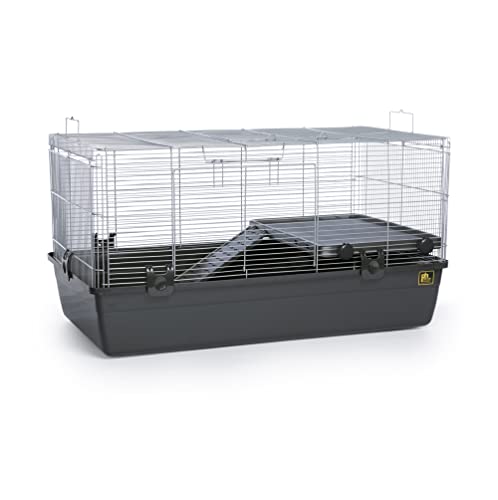
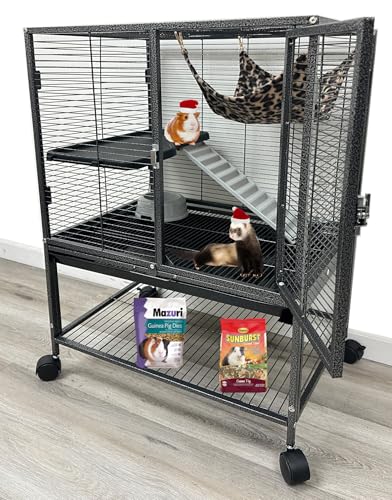
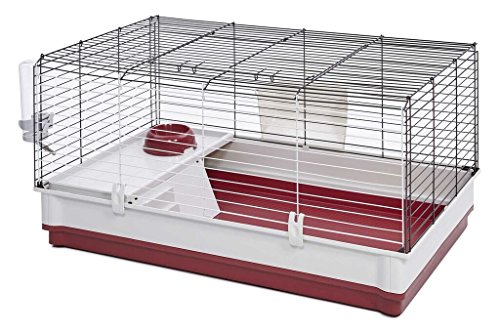
Prioritize continuous floor space in square feet, not just cage length. Choose a solid plastic floor or add a mat over any wire, which protects delicate feet from sore hocks. A low, easy-access doorway suits a rabbit that sits close to the ground and helps a skittish bunny come and go without fear. Add a covered hide, a hay and litter station in one corner, and modular or x-pen designs that expand as needed. The Prevue base and Living World cage both work well when opened into a pen, and the Deluxe two-tier cage suits a rabbit that likes a low platform, as long as the main floor stays roomy.
How we chose
We compared real enclosures on usable floor area, floor safety, doorway height, and how easily each expands into a run. We favored solid or matted floors, low front-opening doors, and layouts that reach the 8 to 12 sq ft cage plus 24 to 32 sq ft run target. Cages that only work as a small box scored lower, even with tight bar spacing, because space is the welfare factor that matters most for this breed.
What to avoid
Skip bare wire floors, tall narrow cages that waste height, and marketing that calls a small cage fine because the rabbit is small. Avoid setups with high sills a tiny rabbit must jump, and never rely on cage time alone. If you cannot connect a run, plan several hours of supervised free-roam daily. When in doubt about foot problems or stress, ask a rabbit-savvy vet.