Quick answer
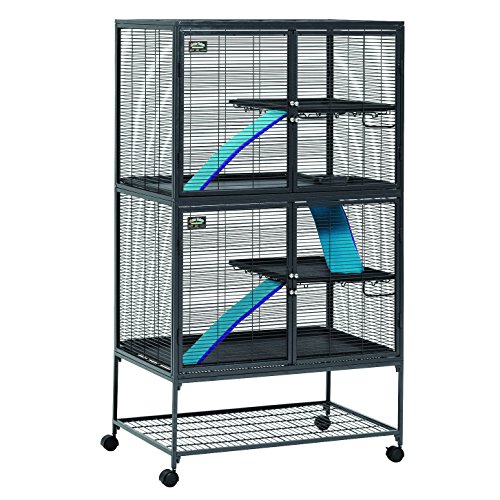
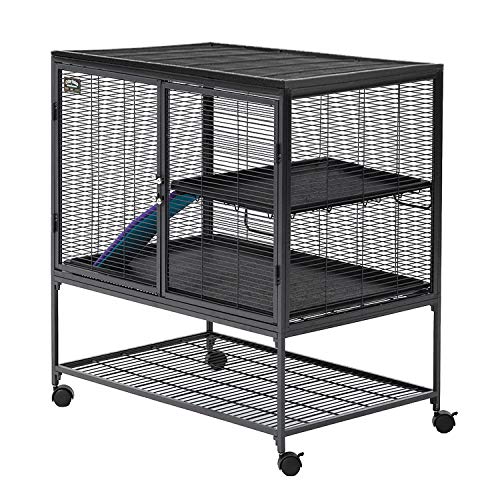
Buy the biggest multi-level wire cage you can fit, not a glass tank. For most keepers the Critter Nation by MidWest Homes is the best overall pick: tall, roomy, with half-inch bar spacing, deep bedding pans and full-width doors. On a budget the Kaytee My First Home Multi-Level gives good vertical space, and the Prevue Feisty Ferret Home is a strong barred alternative with excellent airflow. Whatever you choose, rats are social, so size up and keep them in pairs.
Why cage size and ventilation matter
Rats are large, active and clever, and they must be kept in same-sex pairs or groups, so floor space adds up fast. A cramped home causes stress, fighting and boredom. Ventilation matters just as much: rats are highly prone to respiratory disease, and a glass tank or aquarium traps ammonia from urine, which irritates their airways. An open wire cage lets air move freely and keeps ammonia down. If you notice sneezing, wheezing or porphyrin staining, see an exotics vet, but good airflow prevents many problems in the first place. Height helps too, because rats are natural climbers and use every level you give them. This is why keepers reach for tall multi-level cages rather than a single wide box.
What to look for
Prioritize horizontal bars and multiple levels so rats can climb, plus a big footprint. Bar spacing should be about half an inch for young rats and does so they cannot escape or get their heads stuck; roughly one inch can suit large adult males. Insist on solid shelves and ramps, because bare wire mesh floors cause bumblefoot and sore hocks. You also want a deep base pan for bedding and secure locking doors, since rats are talented escape artists. Add hammocks and tunnels for enrichment. Powder-coated metal resists chewing far better than thin plastic, and a modular frame lets you expand as your group grows.
How we chose
We compared popular rat cages on size, bar spacing, floor design, ventilation, chew resistance and how easy each is to clean. We favored tall modular designs like the Critter Nation and Ferret Nation that you can expand, along with well-built barred options from MidWest, Prevue and Savic. We weighted welfare features, such as solid platforms and deep pans, over looks or price.
What to avoid
Skip glass tanks, aquariums and plastic bin-style habitats: they ventilate poorly and are far too small for a group. Avoid wire-floor cages, wide bar spacing that lets a rat slip through, and flimsy plastic that heavy chewers destroy. One tiny cage for a lone rat is the most common mistake, so plan for a pair in a large multi-level wire home from the start. Cheap cages with wide bars, shallow trays or no locking doors tend to disappoint fast, so it usually pays to buy the roomiest quality wire cage your budget and space allow.