Quick Answer
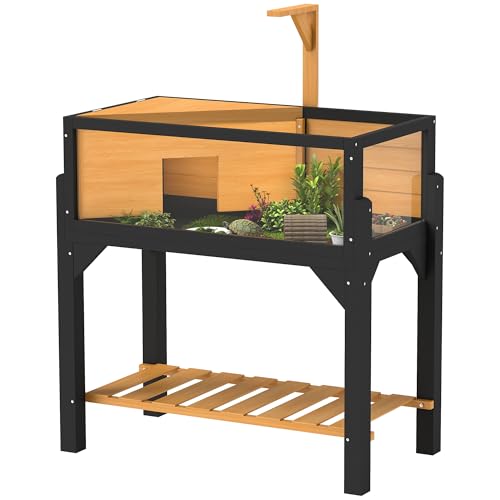
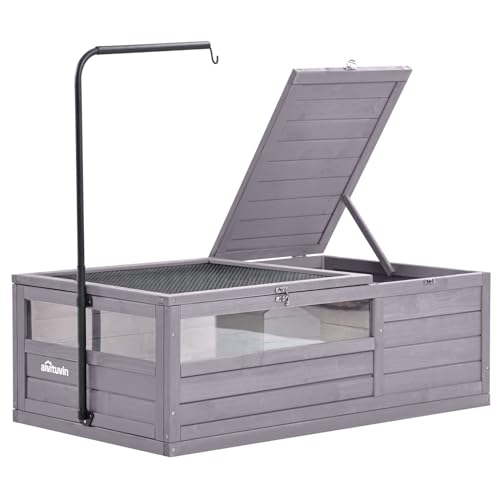
The best cage for a tortoise is the one that gives the most usable floor space, and for most indoor keepers that means an open-topped tortoise table rather than a closed glass tank. An open table improves ventilation and lets you spread a proper temperature and lighting gradient across a long, low footprint. Wooden tortoise houses and front-opening vivariums can work well too, especially for species from drier or cooler regions, but the right choice depends on your specific tortoise and your home climate. Whatever style you pick, prioritise length and width over height, since tortoises roam and graze rather than climb.
Why It Matters
Tortoises are long-lived, slow-growing animals that need room to walk, forage, and thermoregulate by moving between warm and cool zones. A cramped enclosure can lead to stress, poor appetite, and shell or bone problems over time. Ventilation matters because stagnant, damp air in a sealed tank can contribute to respiratory issues in species that prefer drier conditions. Getting the enclosure right from the start also saves money, because a table sized for an adult avoids repeated upgrades. These are general welfare points, not medical advice, so confirm the details for your species and consult an exotics or reptile vet if anything seems off.
What to Look For
Start with floor space and aim well above the minimum for your species, then check for a secure structure that a strong tortoise cannot push open or climb out of. You want room for a basking heat source at one end and a cooler shaded end, plus a UVB light that reaches the animal without glass or dense mesh blocking it. Look for a base deep enough to hold a suitable substrate, easy access through front or top openings, and a design that is simple to spot clean. A hide and a shallow, sturdy water dish should fit comfortably without eating up walking space.
How We Chose
We focused on enclosures that deliver real usable floor space, honest ventilation, and secure construction, then weighed how well each style suits common pet tortoise species. We compared manufacturer specifications such as dimensions, materials, opening style, and cleaning features rather than claiming hands-on lab testing we did not do. We favoured designs that make it practical to build a proper heat and UVB gradient and that hold substrate without leaking or warping. Where a product is really a reptile terrarium adapted for tortoise use, we say so, because fit depends heavily on the individual species and setup.
What to Avoid
Avoid tall, narrow tanks that waste height a tortoise cannot use and trap humid, stale air. Be cautious with fully sealed glass boxes for dry-climate species, and with flimsy lids or latches a determined tortoise can shove aside. Do not assume one enclosure suits every tortoise, since a Russian, a Hermann, and a sulcata have very different space needs, and a hatchling kit will be outgrown quickly. Finally, avoid skipping the essentials that go inside the cage, correct UVB, a basking heat source, the right substrate, a hide, and shallow water, because the box alone does not make a healthy habitat.