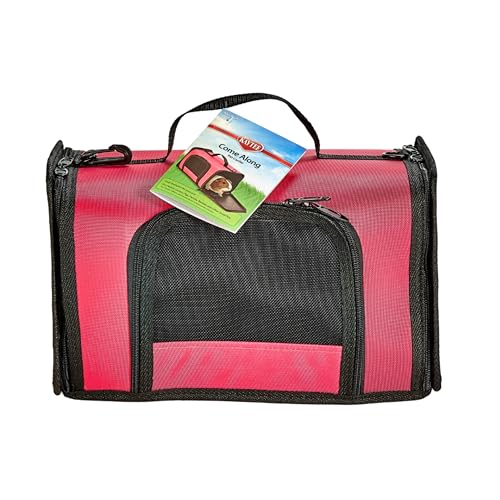
Quick answer
For most pet mice, a small solid-base carrier with a fine wire or mesh top and a tight, chew-resistant latch is the safest pick. Our top choice is the Kaytee Come Along Carrier Medium, which pairs a smooth plastic floor with a secure top for good airflow and no easy gaps. The Prevue Playtop Travel Carrier is a solid budget option, and the Living World Deluxe Transport Carrier suits longer trips or a bonded pair. Match the carrier to a short journey, add familiar bedding, and keep the trip calm.
Why escape-proof and chew-resistant matters
Mice are tiny and driven to squeeze through the smallest openings. A gap that looks harmless to you can be a doorway to a loose mouse in a car or waiting room. Mice also chew constantly, and thin or soft plastic can be gnawed through faster than owners expect. That is why the build has to be genuinely secure: small ventilation holes or fine mesh, a snug locking door, and hard surfaces that resist teeth. A carrier that fails on either point turns a quick trip into a lost pet.
What to look for
Prioritize a solid smooth base so delicate feet stay protected and cleanup is easy. Choose fine ventilation, either small holes or tight wire, that lets fresh air move without leaving a gap wide enough to slip through. Confirm the latch clicks firmly and cannot be nosed open, and check the seams and corners for weak points a mouse could chew. Add a pinch of the mouse’s own bedding, a small hide, and a safe chew so it feels secure, and line the floor with something non-slip so footing stays steady when the carrier moves. Keep the overall size snug rather than roomy, since a tight, covered space usually calms a nervous mouse.
How we chose
We focused on small-animal carriers built for rodents rather than oversized cat or dog boxes with wide bars that a mouse can slip between. We compared floor design, ventilation size, latch security, chew resistance, weight, and ease of cleaning, then favored models sized for one mouse or a same-sex pair that already live together. Owner feedback on real durability and secure closure guided the final ranking, and we leaned toward carriers that stay quiet and dark inside, since that combination does the most to keep a small, easily startled animal settled during a trip.
What to avoid
Skip carriers with bar or gap spacing wide enough for a mouse to push through, and avoid flimsy plastic that chews quickly. Do not use wire floors, which can cause sore feet. Never mix unfamiliar mice in one carrier, since they may fight. Keep the carrier out of direct sun and away from cold drafts, because mice stress easily and are sensitive to temperature. For anything beyond a short move or a routine trip, ask your vet how best to transport a sick or fragile mouse.

