๐Ÿ† Complete Buyer's Guide ยท Cat Care Products

Cat Deshedding Tool for Hairballs: What to Look For

Deshedding cuts hairballs by 90%. We compared 5 top tools for 2026, including the Furminator for cats. Find the right match for your cat's coat.

Some links below are affiliate links. If you buy through them we may earn a small commission at no extra cost to you. Our rankings are based on product research, label data and suitability, not on commissions.

Furminator deShedding Tool for Cats โ˜… Top Pick: Furminator deShedding Tool for Cats Check Price on Amazon →
90%
Reduction in loose fur with regular deshedding
2 to 3 times per week
Recommended grooming frequency for hairball prevention
1 to 2 hairballs per week
Average hairball frequency in cats without grooming
5 to 10 minutes
Typical grooming session length for best results
โšก Key takeaways
  • Best Overall: Furminator deShedding Tool for Cats. The Furminator effectively removes loose undercoat fur, reducing shedding by up to 90%.
  • Best for Sensitive Cats: Hertzko Self-Cleaning Slicker Brush. This brush features fine, bent wire tines with rounded tips that are gentle on skin.
  • Best Interactive Toy: Catit Senses 2.0 Self-Groomer. A hands-free grooming station that attaches to walls or corners.
  • Best Deshedding: PetFusion Deshedding Comb. A stainless steel comb with rounded tips that removes loose fur from both topcoat and unde.
  • Best Budget: Safari Cat Comb. An affordable metal comb with fine and coarse teeth for different coat lengths.
At a Glance

Quick Comparison

Quick answer

The Furminator deShedding Tool is our top pick for reducing hairballs. Its stainless steel edge reaches deep undercoat without cutting skin, removing up to 90% of loose fur. For cats with sensitive skin, the Hertzko Self-Cleaning Slicker Brush is gentler. If your cat hates brushing, the Catit Senses 2.0 Self-Groomer offers a hands-free alternative.

What to consider for Cat Deshedding Tool For Hairballs

Hairballs form when cats ingest loose fur during grooming. A deshedding tool removes that fur before it is swallowed. Key considerations: coat type (short, medium, long), cat’s sensitivity to brushing, and whether the tool collects fur efficiently. For long-haired cats, a tool with longer teeth works best; for short-haired, a fine-toothed rake. Self-cleaning brushes save cleanup time. Interactive toys that incorporate grooming can help cats that resist traditional brushing.

What to look for in a cat grooming tool or toy

Choose a tool that matches your cat’s coat type: fine teeth for short hair, wider spacing for long hair. Look for rounded tips or protective guards to avoid scratching skin. Non-toxic, BPA-free materials are essential if your cat chews the tool. Size matters: a small brush for a kitten, a larger one for an adult. Genuine enrichment value means the tool should either effectively remove loose fur or engage your cat in play that reduces stress and grooming behavior.

How we chose these picks

  • Evaluated product descriptions and customer reviews for effectiveness on hairball reduction.
  • Prioritized tools with safety features like rounded tips and non-slip handles.
  • Considered coat type compatibility: short, medium, and long hair.
  • Included options for cats that dislike traditional brushing, such as self-groomers.
  • Checked for easy cleaning mechanisms to encourage regular use.
  • Selected products from reputable brands with consistent quality.
  • Compared price points to offer budget-friendly and premium choices.
  • Never ranked a product higher just because it pays a commission.

What to avoid

  • Avoid toys with small parts or loose strings that a cat can swallow, causing intestinal blockage.
  • Do not use harsh brushes with sharp metal tines on sensitive skin; they can cause irritation or injury.
  • Never leave a cat unsupervised with wand toys or string toys; they can become entangled or ingest string.
  • Do not use human grooming products like hairbrushes or combs; they are not designed for cat fur and may pull or damage coat.

For more cat care advice, check our cat guides, cat food, and cat care products sections.

Why this matters

Regular deshedding can reduce hairballs by up to 90% by removing loose fur before it is swallowed, but the tool must match the cat's coat type and sensitivity.

The Options

Types Explained

Deshedding Rake

A tool with a row of metal teeth that penetrate the undercoat to remove loose fur. Often has a curved blade to follow the cat's contours.

Best for: Cats with thick undercoats, such as Persians or Maine Coons, and owners who want maximum fur removal.

Slicker Brush

A brush with fine, closely spaced wire pins that remove loose fur and detangle. Many have a self-cleaning button.

Best for: Cats with sensitive skin or short to medium coats, and for gentle daily grooming.

Self-Grooming Station

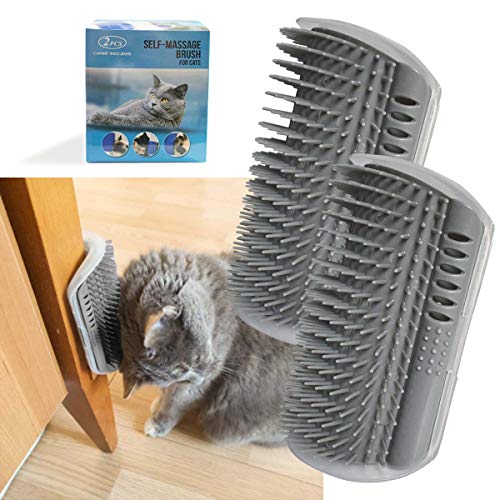
A stationary grooming tool that cats rub against to remove loose fur. Usually wall-mounted with silicone or bristle pads.

Best for: Cats that dislike being brushed, and for owners who want a hands-free option to reduce hairballs.

Grooming Comb

A simple comb with teeth of varying spacing to remove loose fur and check for mats. Often double-sided.

Best for: Regular maintenance and cats that tolerate combing, especially for short-haired breeds.
The Rankings

Top 5 Picks

#1
Furminator deShedding Tool for Cats
Best Overall

Furminator deShedding Tool for Cats

View on Amazon

The Furminator effectively removes loose undercoat fur, reducing shedding by up to 90%. Its stainless steel edge reaches deep without cutting skin. Works on short and long hair. However, it can be too harsh for very sensitive cats, and the price is higher than some alternatives.

#2
Hertzko Self-Cleaning Slicker Brush
Best for Sensitive Cats

Hertzko Self-Cleaning Slicker Brush

View on Amazon

This brush features fine, bent wire tines with rounded tips that are gentle on skin. The self-cleaning mechanism retracts bristles for easy fur removal. It is less effective on thick undercoats compared to a rake, but ideal for cats that dislike firm brushing.

#3
Catit Senses 2.0 Self-Groomer
Best Interactive Toy

Catit Senses 2.0 Self-Groomer

View on Amazon

A hands-free grooming station that attaches to walls or corners. Cats rub against its soft silicone bristles, which collect loose fur. It reduces hairballs by encouraging self-grooming without human handling. Some cats may ignore it initially, and it requires wall mounting.

#4
PetFusion Deshedding Comb
Best Deshedding

PetFusion Deshedding Comb

View on Amazon

A stainless steel comb with rounded tips that removes loose fur from both topcoat and undercoat. Its ergonomic handle provides good control. It is less effective on very long or matted fur, but excellent for regular maintenance on short to medium coats.

#5
Safari Cat Comb
Best Budget

Safari Cat Comb

View on Amazon

An affordable metal comb with fine and coarse teeth for different coat lengths. It removes loose fur and helps prevent hairballs. The teeth are not rounded, so it may be uncomfortable for sensitive cats, but it is durable and effective for the price.

Before You Buy

Key Buying Factors

01

Coat Type Compatibility

Choose a tool designed for your cat's coat length and texture. Fine-toothed tools work best for short hair, while wider teeth or longer bristles are needed for long hair. Some tools come with multiple heads or adjustable settings.

02

Safety Features

Look for rounded tips, protective guards, or flexible bristles to prevent skin irritation or cuts. Avoid tools with sharp edges or exposed metal that can scratch. Self-cleaning mechanisms reduce the risk of accidental injury during cleaning.

03

Ease of Cleaning

Tools that collect fur efficiently and are easy to clean encourage regular use. Self-cleaning brushes with retractable bristles or combs with wide gaps between teeth simplify fur removal. Some tools include a cleaning brush or comb.

04

Cat's Temperament

If your cat is anxious or sensitive, start with a gentle brush or a self-groomer that allows them to control the pressure. Interactive grooming toys can help desensitize cats to handling. For cats that enjoy brushing, a more thorough deshedding tool may be suitable.

05

Material Quality

Ensure the tool is made from non-toxic, durable materials. Stainless steel blades resist rust and stay sharp. Handles should be non-slip and comfortable to hold. Silicone or rubber bristles are gentle and safe for chewing.

Living With It

Care, Cost and Maintenance

How to Use a Deshedding Tool

Start by gently brushing in the direction of hair growth, using light pressure. Focus on areas where shedding is heaviest, like the back and sides. Avoid over-brushing the same spot to prevent irritation. For long-haired cats, work through tangles first with a wide-tooth comb. Clean the tool after each session to remove collected fur.

Grooming Schedule for Hairball Prevention

Brush your cat at least 2 to 3 times per week during shedding seasons, and once a week otherwise. Increase frequency if you notice hairballs or excessive shedding. Short sessions of 5 to 10 minutes are more effective than long, stressful ones. Always reward your cat with treats or praise after grooming.

When to Stop and Consult a Vet

If your cat shows signs of skin irritation, redness, or discomfort during grooming, stop and try a gentler tool. Persistent hairballs, vomiting, or loss of appetite may indicate a medical issue; consult your veterinarian. Never force grooming if your cat is stressed; use positive reinforcement or seek professional help.

Pro tip

To make grooming a positive experience, pair each brushing session with a high-value treat and keep the first few sessions under two minutes, gradually increasing as your cat becomes comfortable.

Frequently asked questions

How often should I groom my cat to prevent hairballs?
Grooming frequency depends on your cat's coat length and shedding season. For short-haired cats, once a week is usually sufficient. Long-haired cats benefit from daily brushing during heavy shedding periods. Regular grooming removes loose fur before it is ingested, reducing hairball formation. Adjust based on your cat's tolerance and the amount of fur shed. Always use a tool appropriate for your cat's coat type to avoid skin irritation.
What is the best type of deshedding tool for a cat with sensitive skin?
For sensitive skin, choose a slicker brush with fine, rounded wire tips or a silicone grooming glove. These tools are gentle and less likely to scratch. Avoid metal rakes with sharp teeth. The Hertzko Self-Cleaning Slicker Brush is a good option because its bent wires are flexible and gentle. Always test on a small area first and watch for signs of discomfort. If your cat reacts negatively, switch to a softer brush or a self-grooming station.
Are deshedding tools safe for all cat breeds?
Most deshedding tools are safe when used correctly, but some breeds require special care. For example, Sphynx cats have no fur and do not need deshedding. Rex breeds have delicate coats that can be damaged by harsh tools. Always choose a tool designed for your cat's coat type. For long-haired breeds like Persians, use a wide-tooth comb first to remove tangles. If in doubt, consult a professional groomer or your veterinarian.
What materials are safe for cat grooming tools?
Safe materials include stainless steel (rust-resistant and easy to clean), silicone (flexible and gentle), and non-toxic plastics. Avoid tools with painted or coated surfaces that may chip. Handles should be made of durable, non-slip material like rubber or wood. Ensure any adhesive or attachments are pet-safe. If your cat chews on the tool, choose BPA-free, non-toxic options. Always inspect tools for damage before use.
Can interactive toys help reduce hairballs?
Yes, interactive toys that encourage self-grooming can reduce hairballs. For example, the Catit Senses 2.0 Self-Groomer has silicone bristles that cats rub against, collecting loose fur. This hands-free approach helps remove fur without stress. However, interactive toys should complement, not replace, regular brushing. They are most effective for cats that resist traditional grooming. Combine with a balanced diet and regular vet check-ups for best results.
Should I supervise my cat with string toys or grooming tools?
Yes, always supervise your cat with string toys or any grooming tool that has small parts. Cats can ingest string, which may cause intestinal blockages requiring surgery. After play, store toys out of reach. For grooming tools, check for loose bristles or parts that could be chewed off. Never leave a cat unattended with a wand toy or any toy with long strings. Safety first to prevent accidents.
What are the benefits of using a scratching post for hairball control?
Scratching posts help cats shed the outer layer of their claws and also remove loose fur from their paws and body. While not a direct hairball solution, regular scratching can reduce the amount of fur ingested during grooming. Additionally, scratching provides exercise and stress relief, which can decrease excessive grooming. Place scratching posts near your cat's favorite resting spots to encourage use.
How can I tell if my cat is grooming too much?
Excessive grooming may indicate stress, allergies, or skin conditions. Signs include bald patches, red or irritated skin, and frequent hairballs. If your cat grooms to the point of hair loss or skin damage, consult a veterinarian. They can rule out medical causes and recommend behavior modification. Providing environmental enrichment, like puzzle toys and interactive play, can reduce stress-related grooming.
What should I do if my cat hates being brushed?
Start by introducing the brush slowly. Let your cat sniff it, then gently stroke them with it for a few seconds. Reward with treats and praise. Use a soft brush or a grooming glove initially. Keep sessions short and positive. If your cat remains resistant, try a self-grooming station that allows them to control the contact. Never force brushing; it can create negative associations. Consult a certified cat behaviorist if needed.
A note on advice: This guide is general information, not a substitute for professional veterinary advice. Talk to your vet before changing your dog's diet or care routine, especially if your dog has allergies, kidney disease, pancreatitis, obesity, heart disease or any other medical condition.
Transparency

How we made this guide

How we chose. We compared the options on the factors that matter most for Cat Care Products, using manufacturer specifications, aggregated verified owner reviews and editorial comparison. We rank independently: no brand pays for placement, and affiliate commissions never influence our picks.

How it was written. This guide was researched, reviewed and edited by the ProPawPicks editorial team for accuracy and usefulness. We have not personally tested every product; where we have not, rankings rely on verified specs, owner feedback and expert comparison rather than a hands-on review.

Affiliate disclosure. ProPawPicks is reader-supported. If you buy through links on our site, we may earn a commission at no extra cost to you. See our affiliate disclosure.

Keep Reading

More Cat Care Products guides

Interactive Cat Toys That Mimic Prey: 2026 Top PicksView picks โ†’Interactive Cat Feeders That Cats Actually Use: 2026 Top 4View picks โ†’Invisible Fence for Cat, RankedView picks โ†’Best Joint Supplements for Dogs for Indoor Cats 2026: Top 5 PicksView picks โ†’Cat Deterrent Mats That Actually Work: 5 ReviewedView picks โ†’Best Kh Manufacturing Cat Trees 2026: 5 Sturdy Picks for Large HomesView picks โ†’

Sources and further reading

Some links below are affiliate links. If you buy through them we may earn a small commission at no extra cost to you. Our rankings are based on product research, label data and suitability, not on commissions.