๐Ÿ† Complete Buyer's Guide ยท Cat Care Products

Cat Scratching Post for Cats with Sensitive Paws, Reviewed

Cats with sensitive paws need the right scratch post. This guide compares 5 top choices, including the SmartCat Ultimate, with tips on texture preferences for happy scratching.

Some links below are affiliate links. If you buy through them we may earn a small commission at no extra cost to you. Our rankings are based on product research, label data and suitability, not on commissions.

SmartCat Ultimate Scratching Post โ˜… Top Pick: SmartCat Ultimate Scratching Post Check Price on Amazon →
32 inches
Average Height of Top Picks
3+ years
Typical Lifespan of Sisal Posts
80%
Cats Prefer Vertical Scratching (ASPCA)
2 to 4 months
Cardboard Scratcher Replacement Interval
โšก Key takeaways
  • Best Overall: SmartCat Ultimate Scratching Post. This 32-inch tall post features a thick layer of natural sisal rope that is tightly wound.
  • Best for Horizontal Scratching: KONG Naturals Cat Scratcher. Made from corrugated cardboard with a smooth surface, this scratcher is very gentle on paw.
  • Best Multi-Surface: Molly and Friend Lotus Cat Scratching Post. This post combines soft plush carpet and sisal rope, giving cats a choice.
  • Best for Lounging and Scratching: PetFusion Ultimate Cat Scratcher Lounge. This curved cardboard scratcher doubles as a lounge, with a smooth surface that is easy on.
  • Best Budget: Frisco 32-Inch Cat Scratching Post with Toy. This affordable post features a sisal-wrapped column and a plush top perch.
At a Glance

Quick Comparison

Quick answer

Our top pick is the SmartCat Ultimate Scratching Post for its sisal rope texture that is gentle yet satisfying, plus a sturdy base that prevents tipping. For cats that prefer horizontal scratching, the KONG Naturals Cat Scratcher offers a corrugated cardboard surface that is easy on paws. If your cat needs a tall post for full stretching, the Molly and Friend Lotus Cat Scratching Post combines soft carpet and sisal.

What to consider for Cat Scratching Post For Cats With Sensitive Paws

Cats with sensitive paws often have conditions like hyperesthesia, allergies, or paw pad injuries. The scratching material must be soft enough to avoid irritation but durable enough to satisfy the scratching instinct. Sisal rope is a common choice, but some cats find it too rough; alternatives like carpet or cardboard can be gentler. The post should be stable to prevent wobbling, which can startle a sensitive cat. Height matters too: a post that allows full stretching without forcing the cat to stand on tiptoes reduces paw strain. Finally, consider placement in a quiet, low-traffic area to minimize stress.

What to look for in a cat scratching post for sensitive paws

Look for materials that are soft on paw pads: sisal rope with a fine weave, plush carpet, or corrugated cardboard. Avoid rough jute or abrasive fabrics. The base must be wide and heavy to prevent tipping; a wobbly post can cause anxiety. Height should accommodate your cat’s full stretch (typically 30 to 36 inches for adult cats). Multiple scratching surfaces (vertical and horizontal) give options. Also consider posts with added features like dangling toys or perches, but ensure they don’t create sharp edges. Finally, choose a design that blends into your home to encourage regular use.

How we chose these picks

  • Evaluated scratching materials for softness and durability based on manufacturer specifications and customer feedback.
  • Prioritized posts with stable, wide bases to prevent tipping and reduce startle risk.
  • Selected products with heights suitable for full-body stretching of average adult cats.
  • Considered variety in scratching surfaces (sisal, carpet, cardboard) to cater to different paw sensitivities.
  • Checked for absence of loose parts, sharp edges, or toxic adhesives.
  • Reviewed price points to offer options for different budgets without compromising quality.
  • Focused on products from reputable brands known for pet safety and customer service.
  • Never ranked a product higher just because it pays a commission.

What to avoid

  • Scratching posts with rough or abrasive sisal that can abrade sensitive paw pads.
  • Unstable posts that wobble or tip over easily, causing fear and potential injury.
  • Posts with dangling strings or small parts that could be chewed off and swallowed.
  • Products treated with strong chemical scents or dyes that may irritate paws or respiratory systems.
  • Posts that are too short, forcing the cat to crouch or not fully stretch, which can lead to frustration.

For more guidance, explore our cat guides, cat care products, and cat health resources.

Why this matters

Cats with sensitive paws often benefit from scratching posts with multiple surface options, as individual texture preferences vary widely. Offering both vertical and horizontal scratchers can increase acceptance.

The Options

Types Explained

Vertical Sisal Posts

Tall posts wrapped in sisal rope, often with a base. They satisfy the instinct to scratch upward and stretch. Best for cats that enjoy vertical scratching.

Best for: Cats that stretch and scratch on furniture legs or walls.

Horizontal Cardboard Scratchers

Flat or slightly curved cardboard pads that lie on the floor. They are gentle on paws and can be infused with catnip. Best for cats that scratch carpets or rugs.

Best for: Cats with very sensitive paws or those that prefer scratching low to the ground.

Combination Scratching Posts

Posts with multiple surfaces like sisal, carpet, and platforms. They offer variety and often include perches or toys. Best for cats that need options.

Best for: Households with multiple cats or a single cat with varied preferences.

Wall-Mounted Scratchers

Scratching pads that attach to walls, saving floor space. They can be placed at any height and are stable. Best for cats that scratch walls or for small spaces.

Best for: Cats that enjoy vertical scratching but need a stable, space-saving solution.
The Rankings

Top 5 Picks

#1
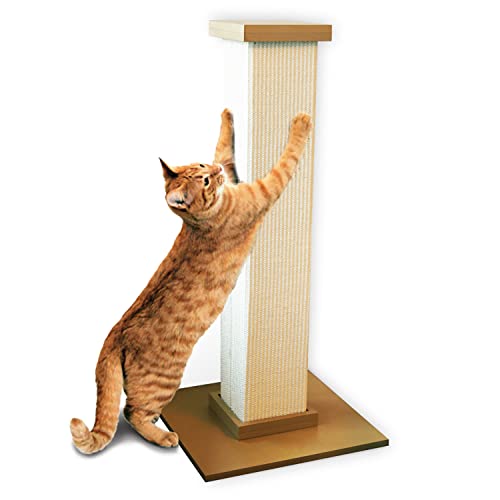
SmartCat Ultimate Scratching Post
Best Overall

SmartCat Ultimate Scratching Post

View on Amazon

This 32-inch tall post features a thick layer of natural sisal rope that is tightly wound but smooth enough for sensitive paws. Its wide, heavy base prevents tipping, and the simple design encourages use. However, the sisal can still be slightly rough for extremely sensitive cats, and the base may slide on hardwood floors without a rug underneath.

#2
KONG Naturals Cat Scratcher
Best for Horizontal Scratching

KONG Naturals Cat Scratcher

View on Amazon

Made from corrugated cardboard with a smooth surface, this scratcher is very gentle on paws. It lies flat, allowing cats to scratch without putting weight on their pads. The included catnip attracts cats to use it. A downside is that cardboard produces dust and may need replacement every few months, and it is not suitable for cats that prefer vertical scratching.

#3
Molly and Friend Lotus Cat Scratching Post
Best Multi-Surface

Molly and Friend Lotus Cat Scratching Post

View on Amazon

This post combines soft plush carpet and sisal rope, giving cats a choice. The carpet is particularly gentle on sensitive paws. It stands 28 inches tall with a sturdy wooden base. One limitation is that the carpet can snag claws if it becomes loose, and the post may wobble slightly if not placed on a level surface.

#4
PetFusion Ultimate Cat Scratcher Lounge
Best for Lounging and Scratching

PetFusion Ultimate Cat Scratcher Lounge

View on Amazon

This curved cardboard scratcher doubles as a lounge, with a smooth surface that is easy on paws. It supports both horizontal and slightly angled scratching. The recycled cardboard is eco-friendly and gentle. However, it is not as durable as sisal posts and may need replacement every 6 to 12 months depending on use.

#5
Frisco 32-Inch Cat Scratching Post with Toy
Best Budget

Frisco 32-Inch Cat Scratching Post with Toy

View on Amazon

This affordable post features a sisal-wrapped column and a plush top perch. The sisal is medium-rough but acceptable for many sensitive cats. It includes a dangling toy for play. The base is smaller than premium models, so it may tip over with vigorous scratching, and the toy string could be a hazard if chewed.

Before You Buy

Key Buying Factors

01

Material Softness

The scratching surface should be gentle on paw pads. Sisal rope with a fine weave, plush carpet, or smooth cardboard are good options. Avoid rough jute or abrasive fabrics that can cause irritation.

02

Stability

A wobbly post can startle a sensitive cat and discourage use. Look for a wide, heavy base or wall-mountable designs. The post should not tip over even when the cat leans its full weight.

03

Height

Cats need to fully stretch to maintain muscle health. A post should be at least 30 inches tall for adult cats. Taller posts also allow for a satisfying full-body scratch.

04

Scratching Orientation

Some cats prefer vertical scratching, others horizontal. Offering both types can cater to individual preferences. Combination posts with multiple surfaces are ideal for picky cats.

05

Safety and Toxicity

Ensure the post is free from toxic glues, dyes, or chemical treatments. All materials should be pet-safe. Avoid posts with small parts that can be chewed off and swallowed.

Living With It

Care, Cost and Maintenance

Cleaning the Scratching Post

Vacuum sisal and carpet posts weekly to remove loose fibers and dirt. For cardboard scratchers, brush off debris and flip the pad to use the other side. Replace cardboard when worn.

Encouraging Use

Place the post near your cat's favorite sleeping or resting area. Rub catnip on the surface or use a toy to demonstrate scratching. Reward your cat with treats when they use the post.

When to Replace

Replace sisal posts when the rope becomes frayed or loose, as this can snag claws. Cardboard scratchers should be replaced when they lose shape or produce excessive dust. Typically every few months to a year.

Pro tip

To make a new scratching post more appealing, rub it with a clean cloth that has your cat's scent from their cheeks or paws. This familiar scent encourages them to claim the post as their own.

Frequently asked questions

How often should I replace a scratching post?
The replacement frequency depends on the material and how much your cat uses it. Sisal posts can last 2 to 5 years if the rope remains tight and intact. Cardboard scratchers typically need replacement every 2 to 4 months, as they wear down and produce dust. Inspect regularly for loose fibers or instability, and replace if the post becomes a safety hazard.
Is sisal rope safe for cats with sensitive paws?
Sisal rope is generally safe, but its roughness can vary. For sensitive paws, look for a fine, tightly wound sisal that is less abrasive. Some cats may still find it irritating; in that case, consider carpet or cardboard alternatives. Always monitor your cat's paws for redness or excessive licking after use.
Can a scratching post help with claw health?
Yes, scratching helps cats shed the outer layers of their claws, keeping them sharp and healthy. A good post encourages this natural behavior, reducing the risk of overgrown claws. However, regular nail trims are still recommended to prevent splitting or snagging.
What is the best height for a scratching post?
The ideal height allows your cat to fully stretch without standing on tiptoes. For most adult cats, a post of 30 to 36 inches is sufficient. Kittens or smaller cats may prefer shorter posts, but a taller post accommodates growth. If your cat is a large breed, consider a post over 36 inches.
Should I get a vertical or horizontal scratcher?
Observe your cat's natural scratching habits. If they scratch furniture legs or walls, a vertical post is best. If they scratch carpets or rugs, a horizontal scratcher may be preferred. Many cats enjoy both, so offering one of each can satisfy their instincts.
How do I stop my cat from scratching furniture?
Place scratching posts near the furniture your cat targets. Use deterrents like double-sided tape on furniture or citrus sprays. Reward your cat when they use the post. Consistency is key; avoid punishment, as it can increase stress. If the problem persists, consult a certified cat behaviorist.
Are cardboard scratchers safe for cats?
Yes, cardboard scratchers are generally safe. They are made from recycled materials and are non-toxic. However, some cats may ingest small pieces, which can cause gastrointestinal issues. Monitor your cat and replace the scratcher if it becomes too worn or starts shedding large pieces.
Can I use catnip to attract my cat to the scratching post?
Absolutely. Catnip can encourage use, especially for cats that respond to it. Sprinkle dried catnip on the post or use catnip-infused toys. Note that not all cats react to catnip; for those, try silver vine or valerian root as alternatives.
What should I do if my cat ignores the scratching post?
First, ensure the post is stable and placed in a high-traffic area or near their sleeping spot. Try different materials (sisal, carpet, cardboard) to see what your cat prefers. Play with your cat near the post using a wand toy to associate it with positive experiences. Patience and positive reinforcement are key.
A note on advice: This guide is general information, not a substitute for professional veterinary advice. Talk to your vet before changing your dog's diet or care routine, especially if your dog has allergies, kidney disease, pancreatitis, obesity, heart disease or any other medical condition.
Transparency

How we made this guide

How we chose. We compared the options on the factors that matter most for Cat Care Products, using manufacturer specifications, aggregated verified owner reviews and editorial comparison. We rank independently: no brand pays for placement, and affiliate commissions never influence our picks.

How it was written. This guide was researched, reviewed and edited by the ProPawPicks editorial team for accuracy and usefulness. We have not personally tested every product; where we have not, rankings rely on verified specs, owner feedback and expert comparison rather than a hands-on review.

Affiliate disclosure. ProPawPicks is reader-supported. If you buy through links on our site, we may earn a commission at no extra cost to you. See our affiliate disclosure.

Keep Reading

More Cat Care Products guides

Indoor cat fences: best invisible dog fence for cats in 2026View picks โ†’Cat Deterrent Mats That Actually Work: 5 ReviewedView picks โ†’Best Kh Manufacturing Cat Trees 2026: 5 Sturdy Picks for Large HomesView picks โ†’Recommended Kitten ChowView picks โ†’Best Kitten Food DIY 2026: Top 5 Reviewed by VetsView picks โ†’Buyer’s Guide: Best Kitten Food for Allergies (2026)View picks โ†’

Sources and further reading

Some links below are affiliate links. If you buy through them we may earn a small commission at no extra cost to you. Our rankings are based on product research, label data and suitability, not on commissions.