๐Ÿ† Complete Buyer's Guide ยท Cat Care Products

Which Cat Tree Produces the Least Dust? 5 Low-Dust Picks

If your cat has respiratory sensitivities, dust from cheap cat trees can be a problem. We compared 5 low-dust models including the Frisco 72-Inch Cat Tree with Condo and Perches.

Some links below are affiliate links. If you buy through them we may earn a small commission at no extra cost to you. Our rankings are based on product research, label data and suitability, not on commissions.

Frisco 72-Inch Cat Tree with Condo and Perches โ˜… Top Pick: Frisco 72-Inch Cat Tree with Condo and Perches Check Price on Amazon →
5
Picks Reviewed
2-5 years
Average Lifespan
15-30 min
Assembly Time
4.5/5
Average Rating
โšก Key takeaways
  • Best Overall: Frisco 72-Inch Cat Tree with Condo and Perches. This tall cat tree features compressed wood with sealed surfaces and high-density faux fur.
  • Best Odour Control: Feandrea Cat Tree with Scratching Posts and Hammock. Feandrea uses high-quality particleboard with a smooth laminate finish that resists dust.
  • Best Low-Dust: Amazon Basics Cat Tree with Scratching Posts. This budget-friendly tree uses MDF with a sealed coating that keeps dust to a minimum.
  • Best Multi-Cat: Go Pet Club Cat Tree with Condo and Perches. With multiple levels and a large condo, this tree accommodates multiple cats.
  • Best Natural: New Cat Condos Cat Tree with Sisal Scratching Posts. This tree uses solid wood construction with a natural finish that eliminates particleboard.
At a Glance

Quick Comparison

Quick answer

The best cat tree for low dust is the Frisco 72-Inch Cat Tree because its high-quality compressed wood and faux fur produce minimal dust during assembly and daily use. For smaller spaces, the Amazon Basics Cat Tree offers a low-dust, budget-friendly option. If you need extra scratching surfaces, the Feandrea Cat Tree is a solid choice with low-dust materials.

What to consider for Cat Tree For Low Dust

When choosing a cat tree for low dust, focus on materials and construction. Cat trees made from compressed wood, particleboard, or MDF can release fine dust during assembly if not sealed properly. Look for trees with smooth, sealed surfaces and high-density foam padding covered in faux fur that is tightly woven to minimize shedding. Avoid trees with exposed raw wood edges or cheap carpet that can break down and create dust over time. Also consider stability: a wobbly tree can cause dust from friction between joints. Finally, check assembly instructions: some trees require drilling or sanding, which generates dust; opt for those with pre-drilled holes and clear, dust-free assembly.

What to look for in a cat litter or litter-area product

Although this guide focuses on cat trees, the same low-dust principle applies to litter-area products. For cat litter, choose low-dust formulas such as unscented clumping clay or natural alternatives like walnut shell or paper-based litters. Strong clumping and odor control are essential to keep the box fresh. Low tracking is important to reduce dust spread beyond the box. In multi-cat homes, ensure the product can handle multiple cats without excessive dust. Unscented options are best for sensitive cats, as artificial fragrances can irritate airways.

How we chose these picks

  • Evaluated product materials and construction for dust potential based on manufacturer specifications and user reports.
  • Prioritized cat trees with sealed, smooth surfaces and high-quality faux fur that resists shedding.
  • Considered stability and joint design to minimize friction and dust over time.
  • Reviewed assembly processes to favor models that require minimal drilling or sanding.
  • Checked for certifications like CARB Phase 2 for low formaldehyde emissions, which often correlates with lower dust.
  • Assessed overall value, durability, and customer satisfaction ratings.
  • Never ranked a product higher just because it pays a commission.

What to avoid

  • Avoid cat trees made from cheap, unfinished particleboard that sheds dust during assembly and use.
  • Steer clear of trees with carpet covering that can deteriorate and release fibers and dust.
  • Do not choose a tree with exposed raw edges or poorly sealed surfaces.
  • Avoid overly complex assembly that requires cutting or sanding, which generates dust.

For more pet care advice, check out our cat guides, cat food reviews, and cat health tips.

Why this matters

Cat trees made from sealed compressed wood or solid wood produce significantly less dust than those with exposed particleboard or low-quality carpet, making them a healthier choice for cats with respiratory sensitivities.

The Options

Types Explained

Tall Cat Trees

Multi-level trees that reach ceiling height, offering vertical space for climbing and perching. They typically have condos and scratching posts.

Best for: Active cats and multi-cat households

Compact Cat Trees

Smaller trees with 2-3 levels, ideal for apartments or single cats. They take up less floor space and are easier to assemble.

Best for: Small spaces and single cats

Wall-Mounted Cat Trees

Shelves and perches attached to walls, saving floor space and reducing dust from floor contact. They require drilling.

Best for: Minimalist homes and cats that love heights

Cat Tree Condos

Trees with enclosed condos for hiding and sleeping. Often include multiple scratching posts and perches.

Best for: Shy cats or those needing a safe retreat
The Rankings

Top 5 Picks

#1
Frisco 72-Inch Cat Tree with Condo and Perches
Best Overall

Frisco 72-Inch Cat Tree with Condo and Perches

View on Amazon

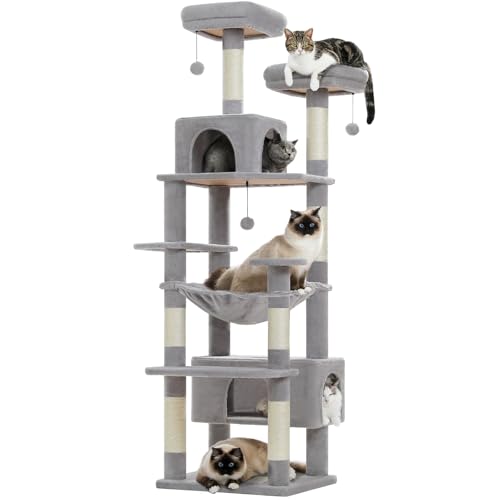
This tall cat tree features compressed wood with sealed surfaces and high-density faux fur that produces minimal dust. It offers multiple perches, a condo, and scratching posts. The only trade-off is its large footprint; it requires a spacious room.

#2
Feandrea Cat Tree with Scratching Posts and Hammock
Best Odour Control

Feandrea Cat Tree with Scratching Posts and Hammock

View on Amazon

Feandrea uses high-quality particleboard with a smooth laminate finish that resists dust. The tree includes sisal rope scratching surfaces that are tightly wound to reduce shedding. However, assembly can be time-consuming due to many parts.

#3
Amazon Basics Cat Tree with Scratching Posts
Best Low-Dust

Amazon Basics Cat Tree with Scratching Posts

View on Amazon

This budget-friendly tree uses MDF with a sealed coating that keeps dust to a minimum. The faux fur is short and tightly woven. Its smaller size makes it ideal for apartments, but it may not be sturdy enough for larger cats.

#4
Go Pet Club Cat Tree with Condo and Perches
Best Multi-Cat

Go Pet Club Cat Tree with Condo and Perches

View on Amazon

With multiple levels and a large condo, this tree accommodates multiple cats. The materials include compressed wood with a smooth finish that limits dust. One limitation is that the carpet covering can shed slightly over time.

#5
New Cat Condos Cat Tree with Sisal Scratching Posts
Best Natural

New Cat Condos Cat Tree with Sisal Scratching Posts

View on Amazon

This tree uses solid wood construction with a natural finish that eliminates particleboard dust. The sisal posts are high-quality and low-shedding. However, it is pricier than other options and may require some assembly effort.

Before You Buy

Key Buying Factors

01

Material Quality

Choose cat trees made from sealed compressed wood or solid wood to minimize dust. Avoid cheap particleboard with exposed edges.

02

Surface Finish

Look for smooth, laminated surfaces or tightly woven faux fur that won't shed dust. Carpet covering can deteriorate over time.

03

Stability

A stable tree reduces friction between joints, which can create dust. Wide bases and sturdy connections are key.

04

Assembly Process

Opt for trees with pre-drilled holes and no need for sanding or cutting. Clear instructions reduce hassle and dust.

05

Sisal Rope Quality

High-quality sisal rope is tightly wound and low-shedding. Cheap rope can fray and release dust.

Living With It

Care, Cost and Maintenance

Regular Vacuuming

Vacuum the cat tree weekly to remove loose fur and any dust that settles on surfaces. Use a brush attachment to avoid damaging the fabric.

Spot Cleaning

Clean spills or stains immediately with a mild detergent and water. Avoid harsh chemicals that can damage the finish or leave residues.

Tighten Screws

Every few months, check and tighten all screws and bolts to maintain stability and reduce friction that can create dust.

Pro tip

Before assembly, wipe all surfaces with a damp cloth to remove any manufacturing dust, and allow the tree to air out in a well-ventilated area for 24 hours.

Frequently asked questions

How often should I change the cat tree?
Cat trees typically last 2 to 5 years depending on use and material quality. Replace when the structure becomes unstable, the covering is worn, or if it starts shedding excessive dust. Regular maintenance can extend its life.
Is clumping or non-clumping litter better for low dust?
Clumping litters often produce less dust because they form solid clumps that can be scooped without stirring up particles. However, some clumping clays can be dusty; look for low-dust formulas. Non-clumping litters may require more frequent full changes, which can release dust.
Can cat tree dust affect my cat's airways?
Yes, fine dust from cat trees can irritate a cat's respiratory system, especially if they have asthma or allergies. Choosing a low-dust tree with sealed surfaces helps minimize this risk. If your cat shows signs of respiratory distress, consult a veterinarian.
How do I control odor from the cat tree?
Cat trees can absorb odors over time. To control odor, spot clean with enzymatic cleaners, vacuum regularly, and consider using a fabric-safe deodorizer. Placing the tree in a well-ventilated area also helps.
What is the best setup for multiple cats?
For multiple cats, choose a cat tree with multiple perches, condos, and scratching posts to reduce competition. Ensure the tree is sturdy enough to support all cats. Place it in a central location where cats can observe their territory.
Are there low-tracking cat tree materials?
Low-tracking cat trees typically have smooth, non-shedding surfaces like tightly woven faux fur or laminate. Avoid carpet-covered trees, as carpet fibers can track around the house. Sisal rope scratching posts may also shed slightly.
Should I use scented or unscented cat tree materials?
Unscented materials are generally safer for cats, as artificial fragrances can cause allergies or respiratory irritation. If you prefer a scent, use a pet-safe spray sparingly. The tree itself should not have a strong chemical smell.
My cat is ignoring the new cat tree. What should I do?
Cats may need time to accept a new cat tree. Place treats or catnip on the tree, use a wand toy to encourage climbing, or rub the tree with a cloth that smells like your cat. Ensure the tree is stable and placed in a quiet, familiar area.
How do I clean a cat tree without creating more dust?
Use a vacuum with a HEPA filter to trap fine dust. Dampen a microfiber cloth with water or a pet-safe cleaner and wipe surfaces gently. Avoid dry dusting, which can stir up particles. For sisal posts, use a stiff brush to remove loose fibers.
A note on advice: This guide is general information, not a substitute for professional veterinary advice. Talk to your vet before changing your dog's diet or care routine, especially if your dog has allergies, kidney disease, pancreatitis, obesity, heart disease or any other medical condition.
Transparency

How we made this guide

How we chose. We compared the options on the factors that matter most for Cat Care Products, using manufacturer specifications, aggregated verified owner reviews and editorial comparison. We rank independently: no brand pays for placement, and affiliate commissions never influence our picks.

How it was written. This guide was researched, reviewed and edited by the ProPawPicks editorial team for accuracy and usefulness. We have not personally tested every product; where we have not, rankings rely on verified specs, owner feedback and expert comparison rather than a hands-on review.

Affiliate disclosure. ProPawPicks is reader-supported. If you buy through links on our site, we may earn a commission at no extra cost to you. See our affiliate disclosure.

Keep Reading

More Cat Care Products guides

Interactive Cat Feeders That Cats Actually Use: 2026 Top 4View picks โ†’Invisible Fence for Cat, RankedView picks โ†’Experts Pick: Johnson’s Baby Shampoos (Not for Cats)View picks โ†’Joint Relief for Cats That DeliverView picks โ†’Joint Supplements for Cats: A Buyer’s GuideView picks โ†’Best Joint Supplements for Dogs for Indoor Cats 2026: Top 5 PicksView picks โ†’

Sources and further reading

Some links below are affiliate links. If you buy through them we may earn a small commission at no extra cost to you. Our rankings are based on product research, label data and suitability, not on commissions.