Quick answer
The best chew toys for gerbils are untreated apple, willow, and pear wood, plain cardboard, and mineral or pumice chews that safely wear down teeth. Our top pick is the Kaytee Perfect Chew apple wood variety, with the Ware Willow Chew Cubes and Living World Assorted Wood Chews as reliable everyday gnawing. For cheap, endless enrichment, add plain toilet roll tubes and cardboard scraps. The goal is simple: keep several safe, untreated chews available at all times so your gerbil always has something to gnaw.
Why chewing matters for gerbils
Gerbil teeth grow continuously for their entire life, so constant gnawing is not optional. Chewing is how gerbils wear their teeth down and keep them at a healthy length. Without enough to chew, the front teeth can overgrow, which is painful and can stop a gerbil eating altogether. Gerbils are among the most dedicated chewers of all small pets, even more so than hamsters, so they need plenty of chew items on offer at all times, not just one block forgotten in a corner. Spreading chews around the tank also encourages the natural digging and foraging that keeps a gerbil active and content.
What to look for
Choose untreated, natural materials: apple, willow, and pear sticks, plain cardboard such as toilet rolls and boxes, hardwood blocks, seagrass and grass mats, coconut shells, and pumice or mineral chews. Good chews double as enrichment and burrow material, so items your gerbil can shred, carry, and tunnel through earn their place twice over. Offer a mix of soft wood like willow and harder wood so the teeth wear evenly. Sizes in the 1 to 4 inch range suit most gerbils. Rotate items every few days to keep interest high, and buy multipacks so a fresh chew is always ready.
How we chose
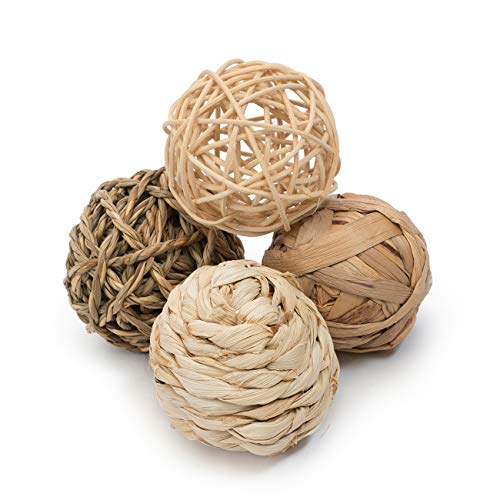
We prioritized untreated wood and digestible plant materials, sizes gerbils can hold and gnaw without a choking risk, and value, since dedicated chewers destroy toys quickly. Products like the Niteangel grass balls and Oxbow Enriched Life loofah and hay sets scored well because they combine textures gerbils instinctively shred and forage. We favored simple, honest materials over painted novelty toys, and gave extra credit to staples like cardboard that cost nothing yet keep a gerbil busy for hours. Every named pick uses digestible, untreated materials with no dyes or coatings.
What to avoid
Avoid treated, painted, or varnished wood, cedar and strongly aromatic pine, whose oils can irritate a gerbil’s airways, plastic your gerbil can gnaw off and swallow, and anything dyed with unknown ingredients. Plastic is the biggest risk, since swallowed shards can cause an intestinal blockage. Also skip glossy, inked, or glued cardboard and any wood treated with pesticide. Replacing chews as they get destroyed is completely normal and healthy, not a sign of a bad toy. Cardboard is cheap, safe, and one of the best chews you can give a gerbil.