Quick answer
The best cooling accessory for a chinchilla is a chew-safe granite or marble chill stone, such as the emours Chinchilla Chiller granite stone. Chinchillas lie flat on the cool surface to shed heat, and unlike a gel mat, solid stone cannot be chewed apart or swallowed. A marble or ceramic tile works the same way, and a supervised gel pad can be a comfort extra. Just remember the real fix for the heat is a cool room, not the stone itself.
Why chinchillas overheat so easily
Chinchillas have the densest fur of any land mammal, with roughly 60 hairs growing from a single follicle, and they evolved in the cold, high Andes. That thick coat traps heat, and chinchillas cannot pant or sweat efficiently, so they overheat dangerously fast. They are at serious risk above about 25 C (77 F), and high humidity makes it far worse by blocking what little cooling they can manage. Heat stroke is a leading cause of chinchilla death. The safest target is a room kept around 15 to 21 C (60 to 70 F) and never above about 24 C (75 F).
What to look for
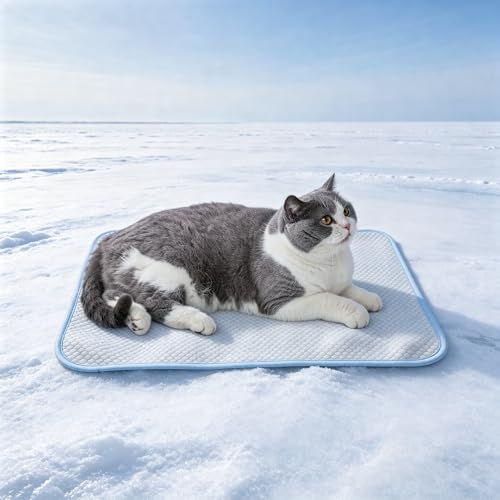
Prioritise a solid, chew-proof material. Natural granite, marble, or high-fired ceramic stays cool on its own, cannot leak, and survives constant gnawing. Pick a slab heavy enough that your chinchilla cannot tip it, wide enough to lie flat on, and easy to wipe clean daily. A non-porous surface matters too, so urine and odours do not soak in. Avoid anything with loose filling, refrigerated coolants that create condensation, and coatings your pet could nibble. If you use a gel mat like the K&H Coolin’ Pet Pad, treat it as a supervised extra only, because chewed gel can cause a dangerous intestinal blockage that may need emergency veterinary care.
How we chose
We focused on chew safety first, then how reliably each option stays cool without refrigeration, how stable it is inside a cage, and how simple it is to keep clean. Stone and ceramic picks like the emours granite chiller and the Kaytee stoneware dish rose to the top because they are effectively indestructible and stay cool with no power or refrigeration. Gel mats were ranked lower and flagged as supervised-only, since a chinchilla that chews one can be harmed by the filling. Above all, every pick is only an add-on to a properly cooled room.
What to avoid
Do not rely on a cooling mat instead of a cool room. In summer that usually means air conditioning, because a stone alone cannot save a chinchilla in a hot room. Skip freezing a mat rock solid, which chills too aggressively, and never trap your pet on one surface, so always leave a normal-temperature area to move to. Learn the emergency signs of heat stroke: bright red ears, drooling, lying flat, lethargy, and fast breathing. If you see these, cool your chinchilla gradually and contact an exotics vet immediately.