Some links below are affiliate links. If you buy through them we may earn a small commission at no extra cost to you. Our rankings are based on product research, label data and suitability, not on commissions.
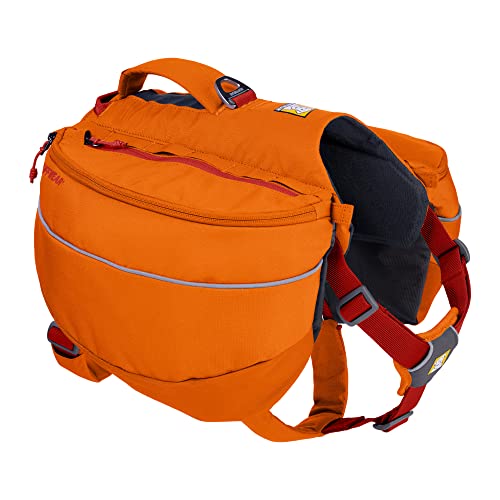
The Ruffwear Approach Pack is our top pick for deep-chested dogs because its adjustable saddlebags and padded chest strap accommodate a deep ribcage without chafing. For a budget-friendly option, the OneTigris Tactical Backpack offers good adjustability. The Kurgo Baxter is excellent for smaller deep-chested breeds like the Boston Terrier.
What to consider for Dog Backpack For Deep Chested Dogs
Deep-chested dogs have a narrow, deep ribcage that requires a backpack with adjustable chest straps and a wide girth to prevent the pack from shifting sideways. The pack should sit behind the shoulder blades to allow full range of motion. Look for padding over the sternum and a design that doesn’t press on the trachea. Weight distribution is critical: packs with saddlebags that sit low on the sides can cause imbalance. A handle on top helps you assist your dog over obstacles.
What to look for in a gear item (harness, collar, leash or muzzle)
For a dog backpack, the primary gear is the pack itself, but it attaches to a harness or collar. Look for a backpack with a built-in harness that has a front clip for no-pull training, as deep-chested dogs are prone to pulling. The harness should have a padded chest plate to distribute weight and prevent pressure points. Durable hardware like metal D-rings and reinforced stitching is essential for heavy loads. Reflective trim improves visibility. Ensure the pack is escape-proof with a secure belly strap and adjustable neck. Padding on the underside prevents rubbing on the dog’s chest.
How we chose these picks
Evaluated fit for deep-chested breeds using manufacturer sizing charts and customer feedback from owners of Dobermans, Great Danes, and Greyhounds.
Checked adjustability: multiple points of adjustment (chest, belly, and neck) to accommodate a deep, narrow chest.
Assessed padding and comfort features, especially over the sternum and under the belly.
Verified weight capacity and load distribution design to avoid overloading the dog.
Considered safety features: reflective elements, handle for control, and escape-resistant buckles.
Read verified Amazon reviews for durability and real-world performance.
Prioritized brands with a reputation for quality outdoor gear.
Never ranked a product higher just because it pays a commission.
What to avoid
Avoid backpacks that are too long and extend past the ribcage, restricting hip movement.
Steer clear of flimsy plastic buckles that can break under load; opt for metal or reinforced plastic.
Do not use a backpack with a martingale or choke collar attachment; use a harness to distribute weight safely.
Never overload the pack; follow the manufacturer’s weight limit (typically 10-15% of body weight).
Avoid packs with narrow chest straps that dig into the sternum.
Deep-chested dogs have a unique body shape that requires a backpack with a narrow but adjustable chest strap and high-riding saddlebags to prevent shifting and maintain balance.
The Options
Types Explained
Saddlebag Backpack
Two pouches on each side, balanced load. Best for hiking and carrying gear.
Best for: Active dogs on long walks or hikes.
Tactical Backpack
MOLLE webbing for attaching accessories, often with a handle. Durable and customizable.
Best for: Working dogs or owners who want to attach pouches.
Hydration Backpack
Includes a water bladder and tube for hydration on the go.
Best for: Hot weather hikes where water access is limited.
Minimalist Day Pack
Lightweight, low-profile design for small loads. Often less padding.
Best for: Short trips or small deep-chested breeds.
The Rankings
Top 5 Picks
#1
Best Overall
Ruffwear Approach Pack
View on Amazon
The Approach Pack features a padded chest strap and adjustable saddlebags that sit high on the sides, ideal for deep chests. It has a front clip for no-pull training and a handle. The trade-off is the higher price and limited color options.
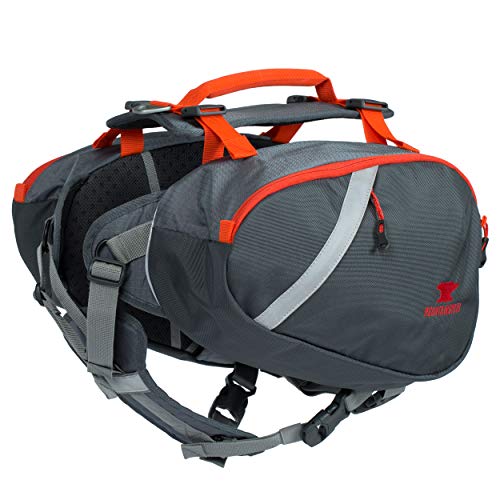
This pack offers multiple adjustment points and a MOLLE system for customization. It fits deep-chested dogs well with a wide belly strap. However, the padding is less substantial than premium options, and the chest strap may rub on very short-coated breeds.
Designed for small to medium dogs, the Baxter has a low-profile fit that works for Boston Terriers and Miniature Pinschers. It includes a front clip and reflective trim. The downside is that the weight capacity is limited to 10 pounds, not suitable for larger loads.
The DayPak has a streamlined design with a chest strap that stays clear of the throat. It includes a handle and reflective piping. However, the padding is minimal, and the pack may shift on very active dogs without a belly strap.
This pack offers a custom fit with adjustable chest and belly straps, and the saddlebags are removable. It is built for heavy loads and has a handle. The main limitation is that it is bulkier and may not suit dogs with a very deep but narrow chest.
Deep-chested dogs need a backpack with multiple adjustment points on the chest and belly to prevent shifting. Look for straps that can be tightened independently to accommodate a narrow ribcage.
02
Padding and comfort
Padding over the sternum and under the belly prevents chafing. Mesh lining helps with breathability. Ensure the padding is thick enough to distribute weight without adding bulk.
03
Weight capacity and distribution
The pack should have a clear weight limit and saddlebags that sit high on the sides to keep the load close to the dog's center of gravity. Low-hanging bags can cause imbalance.
04
Safety features
Reflective trim, a top handle for control, and escape-proof buckles are essential. A front clip for leash attachment helps with no-pull training and prevents pressure on the neck.
05
Durability and materials
Reinforced stitching, ripstop nylon, and metal D-rings ensure the pack withstands rough use. Check for water resistance if hiking in wet conditions.
Living With It
Care, Cost and Maintenance
Cleaning
Most backpacks are hand-washable with mild soap and warm water. Remove all straps and buckles before washing. Air dry completely to prevent mildew.
Storage
Store in a cool, dry place away from direct sunlight. Avoid folding the pack tightly to prevent creases that can weaken fabric.
Inspection
Check buckles, stitching, and D-rings regularly for wear. Replace any damaged parts immediately to avoid failure during use.
Pro tip
When fitting a backpack, place it on your dog and adjust the chest strap so it sits just behind the shoulder blades. Then tighten the belly strap snugly but not tight enough to indent the skin.
Frequently asked questions
How do I measure my deep-chested dog for a backpack?
Measure the girth around the widest part of the chest, just behind the front legs. Also measure the length from the base of the neck to the base of the tail. Most manufacturers provide sizing charts based on these measurements. For deep-chested dogs, ensure the chest strap can be tightened enough to prevent slipping without restricting breathing.
Are these backpacks effective for no-pull training?
Many backpacks include a front chest clip for leash attachment, which helps discourage pulling by turning the dog sideways when they pull. However, the backpack itself is not a training tool; it's for carrying gear. For dedicated no-pull training, consider a harness with a front clip like the Ruffwear Front Range. The backpack can be used alongside it.
Can a deep-chested dog escape from a backpack?
Escape is possible if the backpack is not properly fitted. Look for designs with a secure belly strap and adjustable neck. Some packs have a secondary safety strap. Always test the fit at home first. Deep-chested dogs can slip out if the chest strap is too loose, so tighten it so you can fit two fingers between the strap and the dog.
Should I use a harness or collar with a backpack?
Always use a harness with a backpack. The harness distributes the weight of the pack across the chest and shoulders, avoiding pressure on the neck. Collars can cause trachea damage, especially in deep-chested breeds prone to collapsing trachea. Many backpacks come with a built-in harness, but a separate harness may offer better fit.
What materials are best for durability?
Look for 600-denier or higher ripstop nylon or polyester. Reinforced stitching at stress points, metal D-rings, and YKK zippers indicate quality. Avoid packs with plastic buckles for load-bearing straps; opt for metal or heavy-duty plastic. Water-resistant coatings add longevity.
How do I wash a dog backpack?
Most backpacks can be hand washed with a mild detergent and warm water. Remove all removable parts. Do not machine wash or dry as it can damage the fabric and padding. Air dry away from direct heat. For stubborn dirt, use a soft brush.
Will a backpack fit a small deep-chested breed like a Boston Terrier?
Yes, but you need a pack designed for small dogs, such as the Kurgo Baxter. Measure carefully because small deep-chested breeds have a narrow chest but may need a longer strap. Avoid packs that are too long and extend past the ribcage. Look for packs with a weight capacity appropriate for the dog's size.
What is the maximum weight a dog should carry in a backpack?
General guidance is 10 to 15 percent of the dog's body weight. For deep-chested dogs, start at 10 percent to avoid strain. Puppies under 18 months should not carry weight. Always consult your veterinarian before starting weight-bearing activities.
Are there any safety concerns with using a backpack on a deep-chested dog?
Yes. Deep-chested dogs are prone to bloat (GDV), and while a backpack does not cause bloat, excessive exercise with a heavy load may increase risk. Ensure the pack does not restrict breathing or movement. Watch for signs of fatigue or discomfort. Never leave a backpack on unsupervised.
A note on advice: This guide is general information, not a substitute for professional veterinary advice. Talk to your vet before changing your pet's diet or care routine, especially if your pet has allergies, kidney disease, pancreatitis, obesity, heart disease or any other medical condition.
Transparency
How we made this guide
How we chose. We compared the options on the factors that matter most for Dog Care Products, using manufacturer specifications, aggregated verified owner reviews and editorial comparison. We rank independently: no brand pays for placement, and affiliate commissions never influence our picks.
How it was written. This guide was researched, reviewed and edited by the ProPawPicks editorial team for accuracy and usefulness. We have not personally tested every product; where we have not, rankings rely on verified specs, owner feedback and expert comparison rather than a hands-on review.
Affiliate disclosure. ProPawPicks is reader-supported. If you buy through links on our site, we may earn a commission at no extra cost to you. See our affiliate disclosure.
Some links below are affiliate links. If you buy through them we may earn a small commission at no extra cost to you. Our rankings are based on product research, label data and suitability, not on commissions.