๐Ÿ† Complete Buyer's Guide ยท Dog Care Products

Dog Brush for New Owners: 5 Top Picks (2026 Guide)

Avoid over-brushing: learn the right technique with our picks, including the Hertzko Self-Cleaning Slicker Brush. Brush 3-4 times a week for a healthy coat.

Some links below are affiliate links. If you buy through them we may earn a small commission at no extra cost to you. Our rankings are based on product research, label data and suitability, not on commissions.

Hertzko Self-Cleaning Slicker Brush โ˜… Top Pick: Hertzko Self-Cleaning Slicker Brush Check Price on Amazon →
3 to 4 times per week
Recommended brushing frequency for most dogs
75%
Of shedding can be reduced with regular brushing
7.5
Ideal dog skin pH (neutral to slightly alkaline)
5 to 10 minutes
Average grooming session for first-time owners
โšก Key takeaways
  • Best Overall: Hertzko Self-Cleaning Slicker Brush. The Hertzko Self-Cleaning Slicker Brush is our top pick because it effectively removes loo.
  • Best for Sensitive Skin: Burt's Bees Slicker Brush with Natural Bristles. This brush combines metal pins with natural boar bristles to gently remove loose hair and.
  • Best for Double Coats: FURminator deShedding Tool for Dogs. The FURminator is renowned for reducing shedding in double-coated breeds like Huskies and.
  • Best Budget: GoPets Dematting Comb & Deshedding Brush Set. This two-in-one set offers a dematting comb for tangles and a deshedding brush for loose h.
  • Best Deshedding: Andis Premium Large Pin Brush. The Andis Premium Pin Brush features ball-tipped stainless steel pins that glide through l.
At a Glance

Quick Comparison

Quick answer

For most first-time owners, the Hertzko Self-Cleaning Slicker Brush is the best all-around pick. Its fine, bent wires gently remove loose fur and tangles without scratching skin, and the self-cleaning button makes cleanup a breeze. If your dog has a thick double coat, the FURminator deShedding Tool is better for reducing shedding. For sensitive-skinned pups, the Burt’s Bees Slicker Brush with natural bristles is a gentle alternative.

What to consider for Dog Brush For First Time Owners

Before buying a brush, identify your dog’s coat type: short, long, curly, double, or wiry. Each requires a specific brush to avoid discomfort or damage. For example, a slicker brush works for most coats, but a bristle brush is better for short, smooth coats. Also consider your dog’s sensitivity: some dogs dislike metal tines. A brush with rounded tips or rubber bristles can be more comfortable. Finally, ease of cleaning matters: self-cleaning brushes save time and reduce mess.

What to look for in a grooming product (shampoo, brush, clipper or wipe)

When choosing a grooming product, match it to your dog’s coat type: slicker brushes for medium to long hair, bristle brushes for short hair, and de-shedding tools for heavy shedders. Look for dog-safe ingredients with a pH balanced for dogs (around 7.5) to avoid skin irritation. For clippers, ensure blades are ceramic or stainless steel and stay sharp; dull blades pull hair. Low noise is crucial for nervous dogs; many modern clippers and brushes are designed to be quiet. Ease of use includes ergonomic handles and simple cleaning mechanisms.

How we chose these picks

  • Evaluated brushes based on coat type compatibility and safety features.
  • Reviewed customer feedback for real-world performance and durability.
  • Considered ease of use for first-time owners, including cleaning and handling.
  • Checked for gentle bristle tips or rounded pins to avoid scratching.
  • Included options across price points to suit different budgets.
  • Focused on brands with established reputation in pet grooming.
  • Never ranked a product higher just because it pays a commission.

What to avoid

  • Human shampoo: wrong pH for dogs, can cause skin irritation and dryness.
  • Harsh fragrances: can irritate sensitive skin or cause allergic reactions.
  • Dull clipper blades: pull hair, cause pain, and may lead to matting.
  • Brushing a matted coat without detangling first: causes pain and skin damage; use a detangling spray or seek professional help.

For more guidance, explore our dog guides, dog care products, and dog health sections.

Why this matters

Most first-time owners over-brush their dogs, which can cause skin irritation. Brushing 3 to 4 times a week is sufficient for most coats, and always brush in the direction of hair growth.

The Options

Types Explained

Slicker Brush

A rectangular brush with fine, bent wire bristles that remove loose fur and tangles. Ideal for medium to long coats and dogs that shed moderately.

Best for: Dogs with medium to long hair, such as Golden Retrievers, Collies, and Spaniels.

Bristle Brush

A brush with natural or synthetic bristles that smooth the coat and distribute natural oils. Best for short, smooth coats.

Best for: Short-haired breeds like Beagles, Boxers, and Dalmatians.

Pin Brush

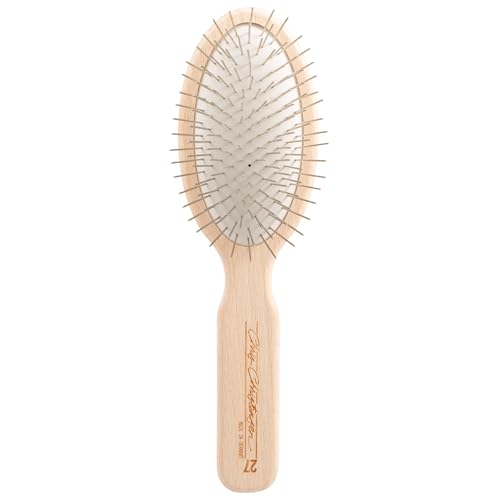
A brush with long, rounded metal pins set in a cushioned base. It gently detangles and fluffs long or curly coats without scratching.

Best for: Long-haired or curly-coated breeds like Poodles, Shih Tzus, and Yorkshire Terriers.

De-shedding Tool

A tool with a stainless steel edge that reaches under the topcoat to remove loose undercoat hair. Reduces shedding significantly.

Best for: Double-coated breeds that shed heavily, such as Huskies, German Shepherds, and Labrador Retrievers.
The Rankings

Top 5 Picks

#1
Hertzko Self-Cleaning Slicker Brush
Best Overall

Hertzko Self-Cleaning Slicker Brush

View on Amazon

The Hertzko Self-Cleaning Slicker Brush is our top pick because it effectively removes loose fur and tangles with fine, bent wires that are gentle on the skin. The self-cleaning button retracts bristles for easy hair removal, a huge plus for first-time owners. However, the bristles may be too soft for very thick or heavily matted coats, requiring a sturdier tool for those cases.

#2
Burt's Bees Slicker Brush with Natural Bristles
Best for Sensitive Skin

Burt's Bees Slicker Brush with Natural Bristles

View on Amazon

This brush combines metal pins with natural boar bristles to gently remove loose hair and distribute oils without scratching. It's ideal for dogs with sensitive skin or those nervous about grooming. The wooden handle offers a comfortable grip. A limitation is that the bristles may not penetrate thick undercoats as effectively as a dedicated de-shedding tool.

#3
FURminator deShedding Tool for Dogs
Best for Double Coats

FURminator deShedding Tool for Dogs

View on Amazon

The FURminator is renowned for reducing shedding in double-coated breeds like Huskies and Golden Retrievers. Its stainless steel edge reaches under the topcoat to remove loose undercoat hair without cutting the coat. However, it should be used with care to avoid over-brushing, and it's not suitable for dogs with short, smooth coats or skin conditions.

#4
GoPets Dematting Comb & Deshedding Brush Set
Best Budget

GoPets Dematting Comb & Deshedding Brush Set

View on Amazon

This two-in-one set offers a dematting comb for tangles and a deshedding brush for loose hair, all at an affordable price. The stainless steel blades are sharp yet safe when used correctly. It's a great starter kit for first-time owners on a budget. The main trade-off is that the deshedding brush may not be as durable as premium brands after extended use.

#5
Andis Premium Large Pin Brush
Best Deshedding

Andis Premium Large Pin Brush

View on Amazon

The Andis Premium Pin Brush features ball-tipped stainless steel pins that glide through long or curly coats without scratching. It's excellent for daily brushing to prevent mats and remove loose hair. The cushioned base adds comfort. One downside is that it may not effectively remove undercoat in heavy shedders, requiring a separate de-shedding tool.

Before You Buy

Key Buying Factors

01

Coat Type Compatibility

Choose a brush designed for your dog's specific coat: slicker for medium to long hair, bristle for short hair, pin for curly or silky coats, and de-shedding tool for double coats. Using the wrong brush can cause discomfort or fail to remove loose hair.

02

Bristle or Pin Material

Look for rounded tips or ball-tipped pins to prevent skin scratches. Stainless steel is durable and easy to clean, while natural bristles (like boar) are gentle and help distribute oils. Avoid sharp or uneven tips.

03

Ease of Cleaning

Self-cleaning brushes with a retractable bristle mechanism save time and reduce mess. Brushes with removable pads or easy-to-wipe surfaces are also convenient. A brush that's hard to clean may harbor bacteria.

04

Handle Ergonomics

A comfortable, non-slip handle reduces hand fatigue during grooming sessions. Rubberized or wooden handles with a good grip are preferable, especially for longer grooming sessions.

05

Dog's Comfort and Temperament

If your dog is anxious or sensitive, start with a softer brush like a bristle or rubber curry. Introduce brushing gradually with treats. Some dogs dislike the sound or sensation of metal tines; a brush with silicone or rubber bristles can be a better choice.

Living With It

Care, Cost and Maintenance

How to Brush Your Dog Properly

Start by brushing in the direction of hair growth using gentle, long strokes. For mats, use a detangling spray and work from the edges inward. Always reward your dog with treats and praise. Brush sensitive areas like the belly and legs with extra care.

Cleaning and Maintaining Your Brush

Remove hair from the brush after each use. For self-cleaning brushes, press the button to retract bristles. Wash brushes with mild soap and water weekly, and dry thoroughly. Replace brushes when bristles become bent or broken to avoid scratching.

When to Seek Professional Grooming

If your dog has severe matting, skin issues, or is extremely anxious, consult a professional groomer or veterinarian. For breeds with complex grooming needs (e.g., Poodle clips), professional help is recommended at least every 6 to 8 weeks.

Pro tip

To make grooming a positive experience, pair each brushing session with a high-value treat and keep the first few sessions under 5 minutes. Gradually increase time as your dog becomes comfortable.

Frequently asked questions

How often should I brush my dog?
Frequency depends on coat type. Short-haired dogs may need brushing once a week, while medium to long-haired dogs benefit from 3 to 4 times per week. Double-coated breeds should be brushed daily during shedding season. Over-brushing can irritate skin, so adjust based on your dog's comfort and coat condition.
How do I choose a brush based on my dog's coat type?
For short, smooth coats, use a bristle brush or rubber curry. For medium to long hair, a slicker brush works well. Curly or wiry coats need a pin brush or slicker. Double-coated breeds require a de-shedding tool to remove undercoat. Always check the manufacturer's recommendations for your dog's breed.
What should I look for in a brush for a dog with sensitive skin?
Choose a brush with rounded or ball-tipped pins to avoid scratching. Natural boar bristles are gentle and help distribute oils. Avoid brushes with sharp or uneven tines. A brush with a cushioned base can also reduce pressure. Test on a small area first and watch for signs of discomfort.
What is the ideal pH for dog grooming products?
Dog skin has a pH of around 7.5, which is neutral to slightly alkaline. Human products (pH around 5.5) are too acidic and can disrupt the skin barrier. Always use dog-specific shampoos and conditioners. For brushes, pH is not a factor, but avoid harsh chemicals on the brush that might transfer to the skin.
Are de-shedding tools safe for all dogs?
De-shedding tools are safe when used correctly on dogs with a double coat or heavy shedding. They should not be used on dogs with short, single coats or on irritated skin. Overuse can cause hair breakage or skin abrasions. Follow the manufacturer's instructions and brush gently, especially on sensitive areas.
How do I choose a clipper for a first-time owner?
Look for clippers with ceramic or stainless steel blades that stay sharp. Choose a model with adjustable blade lengths and low noise. Cordless clippers offer more freedom but require battery management. Start with a longer guard to avoid cutting too short. Always clean and oil blades after use.
How do I deal with mats in my dog's coat?
Never pull or cut mats with scissors, as you may injure the skin. Use a detangling spray and a dematting comb or slicker brush to gently work through the mat from the edges. For severe mats, seek professional grooming. Prevent mats by brushing regularly, especially in areas like behind the ears and under the legs.
What ingredients should I avoid in dog grooming products?
Avoid products with parabens, phthalates, artificial fragrances, and dyes, as they can irritate skin. Also avoid alcohol, which dries the skin. Look for natural ingredients like oatmeal, aloe vera, and coconut oil. Always choose products labeled specifically for dogs, as human products may contain harmful ingredients.
My dog is scared of brushing. What can I do?
Introduce the brush slowly: let your dog sniff it, then gently touch it to their back while giving treats. Start with short sessions (1 to 2 minutes) and gradually increase. Use a soft brush and positive reinforcement. If anxiety persists, consult a certified trainer or veterinarian for behavior modification techniques.
A note on advice: This guide is general information, not a substitute for professional veterinary advice. Talk to your vet before changing your dog's diet or care routine, especially if your dog has allergies, kidney disease, pancreatitis, obesity, heart disease or any other medical condition.
Transparency

How we made this guide

How we chose. We compared the options on the factors that matter most for Dog Care Products, using manufacturer specifications, aggregated verified owner reviews and editorial comparison. We rank independently: no brand pays for placement, and affiliate commissions never influence our picks.

How it was written. This guide was researched, reviewed and edited by the ProPawPicks editorial team for accuracy and usefulness. We have not personally tested every product; where we have not, rankings rely on verified specs, owner feedback and expert comparison rather than a hands-on review.

Affiliate disclosure. ProPawPicks is reader-supported. If you buy through links on our site, we may earn a commission at no extra cost to you. See our affiliate disclosure.

Keep Reading

More Dog Care Products guides

Interactive Dog Toys, ComparedView picks โ†’Invisible Dog Fence for Large Dogs: 5 Best Picks (2026)View picks โ†’Best Invisible Dog Fence for Small Dogs 2026: 5 Top Picks ReviewedView picks โ†’Which Invisible Dog Fence Is Best? 5 Top PicksView picks โ†’Iris Puppy Playpens: 4 Best Reviewed (2026)View picks โ†’Best Robot Vacuum for Pets? Our 5 Top Picks TestedView picks โ†’

Sources and further reading

Some links below are affiliate links. If you buy through them we may earn a small commission at no extra cost to you. Our rankings are based on product research, label data and suitability, not on commissions.