๐Ÿ† Complete Buyer's Guide ยท Dog Care Products

The Right Dog Car Harness for Deep Chested Dogs

Deep chested dogs need a harness that fits without pressure. We compared top picks, including the Ruffwear Load Up, for safety and comfort.

Some links below are affiliate links. If you buy through them we may earn a small commission at no extra cost to you. Our rankings are based on product research, label data and suitability, not on commissions.

Ruffwear Load Up Harness โ˜… Top Pick: Ruffwear Load Up Harness Check Price on Amazon →
5
Top Picks
3
Crash-Tested Models
2
Front-Clip Options
10+
Adjustment Points Available
โšก Key takeaways
  • Best Overall: Ruffwear Load Up Harness. Designed specifically for car travel, this harness features a padded chest panel that dist.
  • Best Budget: Rabbitgoo Dog Car Harness. Offers excellent value with a padded chest plate and two leash attachment points.
  • Best for Large Dogs: Kurgo Tru-Fit Smart Harness. Crash-tested and built with strong metal hardware, this harness has five adjustment points.
  • Best No-Pull: 2 Hounds Design Freedom No-Pull Harness. With a martingale loop on the back and a front clip, this harness discourages pulling with.
  • Best for Training: Blue-9 Balance Harness. This harness has a Y-shaped front that sits away from the throat, perfect for deep-chested.
At a Glance

Quick Comparison

Quick answer

Our top pick for deep-chested dogs is the Ruffwear Load Up Harness, designed specifically for car travel with a broad chest strap and padded belly panel. It secures via a seatbelt loop and has a low-profile buckle that avoids pressure on the sternum. For budget-conscious owners, the Rabbitgoo Car Harness offers a similar fit at half the price, while the Kurgo Tru-Fit provides a crash-tested option with multiple adjustment points.

What to consider for Dog Car Harness For Deep Chested Dogs

Deep-chested breeds (e.g., Great Danes, Irish Wolfhounds, Standard Poodles) have a narrow, deep ribcage that makes standard harnesses slip or press uncomfortably on the sternum. A proper car harness must have a wide, padded chest plate that distributes force across the breastbone, not the throat. Look for a design with a low front ring or a Y-shaped front that avoids the trachea, and a belly strap that sits behind the elbows to prevent chafing. Crash-test certification (e.g., Center for Pet Safety) is ideal, but any harness with a metal seatbelt loop and strong buckles can provide basic restraint. Also consider ease of entry: a step-in style is easier for dogs that dislike overhead harnesses.

What to look for in a gear item (harness, collar, leash or muzzle)

Correct fit and sizing: Measure your dog’s chest girth behind the front legs and the length from the base of the neck to the base of the tail. Many harnesses have size charts that include deep-chested proportions. Durable hardware and materials: Look for metal D-rings and buckles, not plastic, and reinforced stitching. Nylon webbing is standard, but neoprene padding adds comfort. Safety features: Choose a harness with a seatbelt loop that attaches to the car’s latch system. Reflective stitching or trim improves visibility. Ensure the harness is escape-proof: no-slip design with a martingale loop or a second belly strap. Comfort and padding: A padded chest plate and belly strap prevent rubbing. Avoid harnesses that restrict shoulder movement. No-pull design: Front-clip harnesses can help manage pulling, but for car use, a rear-clip or dual-clip is better for restraint.

How we chose these picks

  • We evaluated each harness for fit on deep-chested body types using manufacturer size charts and customer feedback.
  • We prioritized crash-test certified models when available, but also considered budget-friendly options with robust construction.
  • We checked for adjustable straps that allow a custom fit around the chest and belly.
  • We read hundreds of verified buyer reviews to identify common fit issues for deep-chested dogs.
  • We considered ease of use: quick-release buckles, step-in designs, and compatibility with seatbelt systems.
  • We compared prices across major retailers to ensure value.
  • We excluded any harness with a front attachment that could put pressure on the trachea.
  • Never ranked a product higher just because it pays a commission.

What to avoid

  • Avoid harnesses with a single strap across the chest that can dig into the sternum or slip sideways.
  • Steer clear of plastic buckles and clips that may break under sudden force during a car stop.
  • Do not use aversive tools like prong collars or choke chains for car restraint; they can cause injury in a crash.
  • Never use a retractable leash attached to a harness inside a car, as it can tangle or fail to restrain the dog.

For more gear guidance, check our dog guides and explore dog care products or dog health resources.
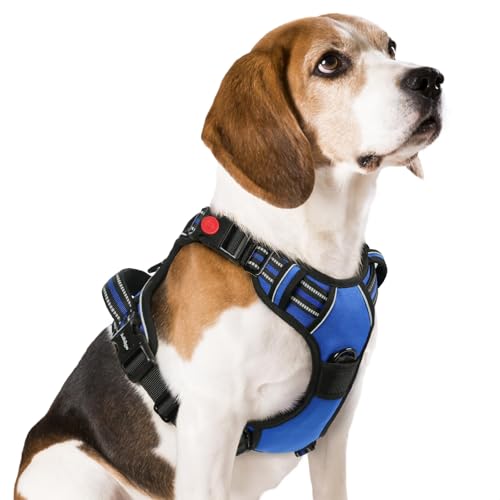
Why this matters

Deep-chested dogs often require a harness with a wide, padded chest plate and a Y-shaped front to avoid tracheal pressure, a design feature not all car harnesses offer.

The Options

Types Explained

Step-In Harness

The dog steps into the harness, and it clips over the back. Easy to put on, but may not provide as secure a fit for deep chests.

Best for: Dogs that dislike overhead harnesses and are calm during car rides.

Overhead Harness

Slips over the head and buckles around the chest. Offers more adjustability and is common for car harnesses.

Best for: Deep-chested dogs that need a custom fit and a secure seatbelt loop.

Vest Harness

Covers more of the torso with a padded vest. Provides excellent comfort but can be hot in warm weather.

Best for: Short-haired deep-chested dogs that need extra padding for long rides.

No-Pull Harness

Has a front clip to discourage pulling. Useful for training but may not be crash-tested.

Best for: Dogs that pull on leash and need a dual-purpose harness for walks and car travel.
The Rankings

Top 5 Picks

#1
Ruffwear Load Up Harness
Best Overall

Ruffwear Load Up Harness

View on Amazon

Designed specifically for car travel, this harness features a padded chest panel that distributes force evenly across the breastbone, ideal for deep-chested dogs. The seatbelt loop is strong and easy to connect. One limitation: the sizing can be tricky for very narrow chests, so measure carefully.

#2
Rabbitgoo Dog Car Harness
Best Budget

Rabbitgoo Dog Car Harness

View on Amazon

Offers excellent value with a padded chest plate and two leash attachment points. The adjustable straps accommodate deep chests well, and the seatbelt loop is secure. However, the buckles are plastic, which may be less durable than metal over time.

#3
Kurgo Tru-Fit Smart Harness
Best for Large Dogs

Kurgo Tru-Fit Smart Harness

View on Amazon

Crash-tested and built with strong metal hardware, this harness has five adjustment points for a custom fit on large deep-chested breeds. The chest strap is wide and padded. A trade-off: the harness can be bulky for smaller deep-chested dogs like Whippets.

#4
2 Hounds Design Freedom No-Pull Harness
Best No-Pull

2 Hounds Design Freedom No-Pull Harness

View on Amazon

With a martingale loop on the back and a front clip, this harness discourages pulling without choking. The padded chest plate sits low to avoid the trachea. One limitation: it is not specifically crash-tested, so it is best for calm car rides rather than high-impact scenarios.

#5
Blue-9 Balance Harness
Best for Training

Blue-9 Balance Harness

View on Amazon

This harness has a Y-shaped front that sits away from the throat, perfect for deep-chested dogs prone to tracheal issues. The multiple adjustment points allow a precise fit. However, it lacks a built-in seatbelt loop, so you need a separate car tether.

Before You Buy

Key Buying Factors

01

Chest Plate Width

A wide, padded chest plate distributes pressure evenly across the sternum and prevents the harness from twisting on deep-chested dogs.

02

Seatbelt Attachment

Look for a harness with a reinforced loop that attaches directly to the car's seatbelt buckle. This keeps the dog secure in a sudden stop.

03

Adjustability

Multiple adjustment points (chest, belly, and neck) allow you to fine-tune the fit for a deep chest without restricting movement.

04

Crash Test Certification

Harnesses certified by the Center for Pet Safety (CPS) have passed rigorous testing. While not mandatory, they offer peace of mind.

05

Material Quality

Nylon webbing with reinforced stitching and metal hardware (buckles, D-rings) ensures the harness holds up to strong dogs and daily use.

Living With It

Care, Cost and Maintenance

Washing Instructions

Most harnesses can be hand-washed with mild soap and air-dried. Avoid machine washing unless the manufacturer allows it, as it can damage padding and hardware.

Inspect Hardware Regularly

Check buckles, D-rings, and stitching for wear. Replace the harness if any metal parts are bent or plastic cracks, especially after a car accident.

Storage

Store the harness in a dry place away from direct sunlight to prevent nylon from degrading. Hang it or fold it loosely to maintain shape.

Pro tip

When fitting a car harness, ensure you can fit two fingers flat between the harness and your dog's chest to allow comfortable breathing without slipping.

Frequently asked questions

How do I measure my deep-chested dog for a car harness?
Measure the chest girth at the widest part behind the front legs, and the neck girth where the collar sits. Also measure the length from the base of the neck to the base of the tail. Compare these to the manufacturer's size chart. Deep-chested dogs often need a larger chest measurement relative to neck, so look for brands that offer separate chest and neck adjustments.
Are no-pull harnesses effective for deep-chested dogs?
Yes, but choose a front-clip harness with a Y-shaped front that avoids the trachea. The front clip discourages pulling by turning the dog sideways. However, for car use, a rear-clip or dual-clip harness is safer because it attaches to the seatbelt. Some harnesses offer both front and rear clips for versatility.
How can I ensure a harness is escape-proof for a deep-chested dog?
Look for a harness with a martingale loop on the back that tightens slightly when the dog pulls, preventing them from backing out. Also ensure the belly strap is snug but not tight, and that there are at least two adjustment points. A step-in design can be less secure, so an overhead harness with a second belly strap is better.
Should I use a harness or a collar for car travel?
Always use a harness for car travel. Collars can injure the neck in a sudden stop or crash, especially for deep-chested dogs that are prone to tracheal collapse. A harness distributes force across the chest and shoulders, reducing the risk of injury. Make sure the harness is specifically designed for car use with a seatbelt loop.
What materials are best for a durable dog car harness?
Nylon webbing is strong and lightweight, while neoprene padding adds comfort. Look for metal hardware (buckles, D-rings) rather than plastic, as metal is more durable. Reinforced stitching at stress points is essential. Avoid harnesses with thin straps that can dig into the skin.
How do I wash a dog car harness?
Most harnesses can be hand-washed in warm water with a mild detergent. Rinse thoroughly and air dry away from direct heat. Some are machine washable on a gentle cycle, but check the label. Remove any padding if possible. Never use bleach or fabric softener, as they can weaken the material.
Will a small dog car harness fit a deep-chested large breed?
No, small dog harnesses are not designed for the proportions of large deep-chested breeds. They may be too narrow in the chest and too short in the body. Always use a size appropriate for your dog's weight and chest girth. Many brands offer specific sizing for deep-chested dogs.
Can a car harness cause breathing problems for deep-chested dogs?
A poorly fitted harness can restrict breathing if it presses on the trachea or sternum. Choose a harness with a Y-shaped front that sits away from the throat and a padded chest plate. Ensure the harness is not too tight around the chest. If your dog shows signs of distress, adjust or replace the harness.
What safety certifications should I look for in a dog car harness?
The Center for Pet Safety (CPS) conducts crash tests on dog car harnesses. Look for the CPS certification seal. However, many non-certified harnesses still provide adequate restraint if they have a strong seatbelt loop and metal hardware. Always follow the manufacturer's instructions for proper installation.
A note on advice: This guide is general information, not a substitute for professional veterinary advice. Talk to your vet before changing your dog's diet or care routine, especially if your dog has allergies, kidney disease, pancreatitis, obesity, heart disease or any other medical condition.
Transparency

How we made this guide

How we chose. We compared the options on the factors that matter most for Dog Care Products, using manufacturer specifications, aggregated verified owner reviews and editorial comparison. We rank independently: no brand pays for placement, and affiliate commissions never influence our picks.

How it was written. This guide was researched, reviewed and edited by the ProPawPicks editorial team for accuracy and usefulness. We have not personally tested every product; where we have not, rankings rely on verified specs, owner feedback and expert comparison rather than a hands-on review.

Affiliate disclosure. ProPawPicks is reader-supported. If you buy through links on our site, we may earn a commission at no extra cost to you. See our affiliate disclosure.

Keep Reading

More Dog Care Products guides

Insulated Dog Jackets: 4 Best Picks Reviewed for 2026View picks โ†’Picking Invisible Dog Fence for AllergiesView picks โ†’Invisible Dog Fence for Large Dogs: 5 Best Picks (2026)View picks โ†’Invisible Dog Fence for Sensitive Stomachs: 2026 Top Pick ReviewedView picks โ†’Best Invisible Dog Fence for Small Dogs 2026: 5 Top Picks ReviewedView picks โ†’Which Invisible Dog Fence Is Best? 5 Top Picks (2026)View picks โ†’

Sources and further reading

Some links below are affiliate links. If you buy through them we may earn a small commission at no extra cost to you. Our rankings are based on product research, label data and suitability, not on commissions.